Mar 13, 2012
So what you are doing is talking about raising the cost of home healthcare to people who can't really afford it, and putting people out of work who can't get the job.
The Public Record
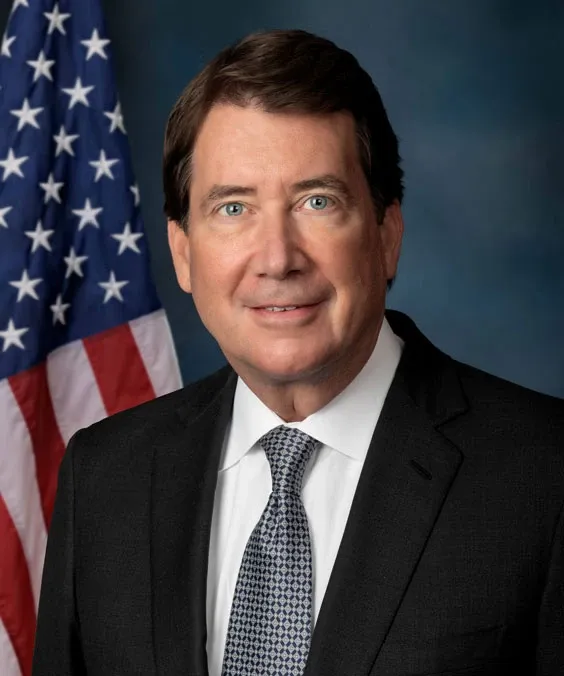
Lamar Alexander is a prominent American politician and attorney who served as a United States Senator from Tennessee from 2003 to 2021. A member of the Republican Party, he was previously the Governor of Tennessee from 1979 to 1987 and held the position of U.S. Secretary of Education under President George H.W. Bush from 1991 to 1993. Throughout his career, Alexander has focused on education reform, energy policy, and bipartisan cooperation in Congress.
So what you are doing is talking about raising the cost of home healthcare to people who can't really afford it, and putting people out of work who can't get the job.
One of the reasons we don't have money for the dams and locks that it should be funding is this Olmsted Lock.
Well, that's very important and another part, Madam Chairman, of making good use of the taxpayer dollars.
Well, we agree, Dr. Chu, that we ought to have the most powerful computer if we are going to maintain our competitive position in the world.
the Olmsted Lock on the Ohio River is increasing from $2 billion to $3 billion this year, a 50-percent increase, and it's soaking up all the money that could be used for other priority projects.
My reading of history suggests that long-term subsidies--and 20 years is long-term--tend to cause costs to stay high instead of introduce the competition that cause costs to go lower.
Well, if you put them out of work with higher costs caused by your overtime rule, they will really have a hard time making ends meet.
I think we should apply that to what we are doing and use the creative talent of our Nobel Prize winning Energy Secretary.
I want to talk about the plutonium facility and how you're going to deal with that.
Well, that is dramatic news for the people of the Southeastern United States which I've not heard before.
I think we need to take a big look at these two trust funds, and think bigger than the funds.
We need $372 billion more for nuclear weapons modernization than your budget recommends.
Well, you have come to a conclusion that I certainly support, in recognition of the unusually good facilities you have in Memphis.
Well, the answer can be 'Yes' or 'No', Madam. Did you, or will you, follow the SBA's recommendation? Yes or no?
We need to be really creative and think of what is the simplest way to do this right, not what is the most complicated way to do it right.
The problem with the Harbor Trust Fund, of course, it has a lot of money in it, we just can't spend it.
I'd like to talk about the two big projects, the uranium project at Oak Ridge and the New Mexico project on plutonium.
isn't the idea that the research and development (R&D) project is ready to be demonstrated for 2 years.
I would like to discuss the so-called companionship exemption under the Fair Labor Standards Act (FLSA).
Did you consult with any Medicaid director in any State about the increased healthcare costs?
Even the possibility that it might close at the end of 2013 is a startling development to me if that's what you're saying.
Isn't the question, is the project ready to receive funding for a 2-year demonstration about whether it works or not?
Politicians like Lamar Alexander