Mar 3, 2010
I think there's a lot of uncertainty out there right now, with the State DOTs and highway programs, about what the funding levels are going to be, and I would like to see us get to work on a highway bill this year.
The Public Record
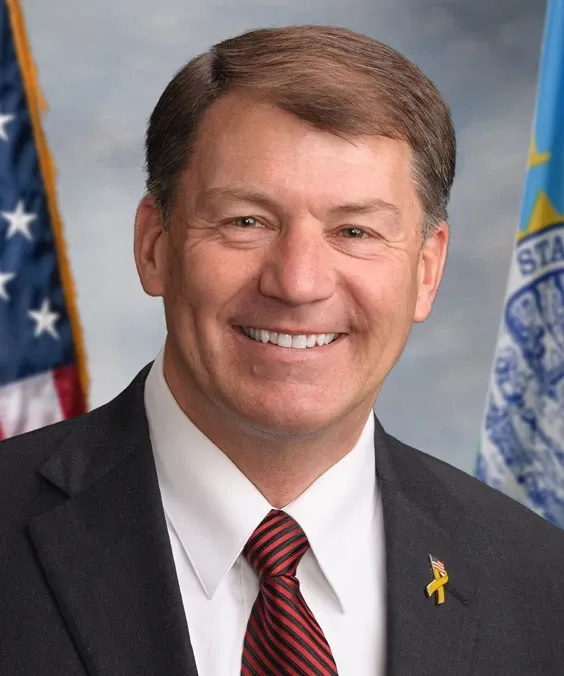
John Randolph Thune is an American politician serving as the senior United States senator from South Dakota since 2005. A member of the Republican Party, Thune has been a prominent figure in national politics, focusing on issues such as immigration enforcement, border security, and federal worker compensation. He has played a significant role in shaping Republican policy in Congress and has been involved in various legislative initiatives throughout his tenure.
I think there's a lot of uncertainty out there right now, with the State DOTs and highway programs, about what the funding levels are going to be, and I would like to see us get to work on a highway bill this year.
I would--the only thing I would say--and, Mr. Chairman, I think this is one of those issues that really ought to--it would be more appropriately considered, by this committee, as part of an authorizing bill.
I think the questions that need to be answered are, When was the problem first identified? Was Toyota too slow to react?
It just seems like the example of a pilot who lives in Hawaii and operates out of Florida--it--just as a practical matter.
On the 1-year anniversary of this very tragic crash, we continue to try and get answers, and continue to try and come up with policies that we think make sense and that will prevent anything like this from ever happening in the future.
I'm just trying to think about what our role is, in terms of a worldwide problem.
Thank you, Mr. Chairman. And I want to thank you and the Ranking Member for holding today's hearing on a very important and oftentimes overlooked subject, cybersecurity, which, as we've heard, has great consequence for our security and our…
I think we have to remember that we're under constant attack. Our critical infrastructure and the Internet backbone of our economy remain extremely vulnerable to these cyber attacks.
And there are multiple government agencies that deal with, and have some role in preventing, cyber attacks.
And there was a recent GAO report that states that cyber attacks could cost our economy $100 billion annually in the near future.
Individual Russian entities continue to provide assistance to Iran's ballistic missile programs.
It seems to me at least that these directed energy type weapons have great potential to transform our future deterrence capability.
I appreciate the doubts that have been expressed by some about the concept of operations in an actual conflict.
As part of the PAA to European missile defense, my understanding is the administration is now seeking to establish a ground-based SM-3 missile defense site in Romania by 2015.
I appreciate that. I think sometimes too, though, that it gives them an out, a convenient out, an excuse at some point in the future.
I'm concerned that the administration may not fully implement its Phased Adaptive plans for missile defense in Europe.
This administration has attempted to make as clear as possible in the Missile Defense Review that it will do everything necessary to defend the U.S. Homeland.
Long-range strike capabilities contribute to the Air-Sea battle concept by helping to eliminate or limit the effectiveness of adversary anti-access.
How do you believe these reductions would be apportioned between the B-52 and B-2, and at what level of reduction do you become nervous about the viability of the bomber leg of the triad?
What are your views of this successful test of the Airborne Laser program, and do you think it marks the beginning of a revolution in military affairs?
I am very interested in any concept that helps preserve and extend freedom of action in the PACOM AOR.
The new QDR directs the Navy and the Air Force to develop a new joint Air-Sea Battle concept for defeating adversaries.
What's your view on this strategy by Iran, and how it would affect our ability to project power in the Middle East; specifically, in the Gulf of Iran and the Strait of Hormuz?
I'm interested in what your views are with regard to the activities by the Iranians to pursue some of these anti-access and area-denial strategies.
Thank you, Mr. Chairman. General, Admiral, General, thank you very much for being here and thank you for your outstanding service to our country.
Politicians like John Thune