Jan 14, 2014
The issue of unmanned aviation is an important one that touches on the many areas within the Committee's broad jurisdiction.
The Public Record
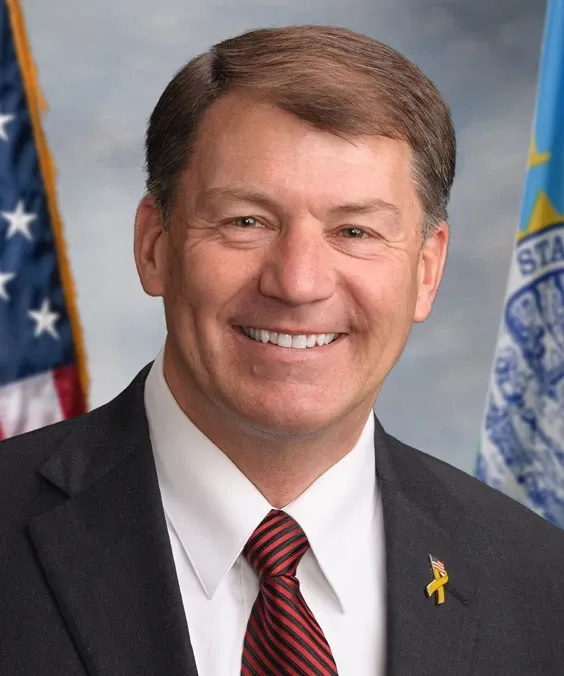
John Randolph Thune is an American politician serving as the senior United States senator from South Dakota since 2005. A member of the Republican Party, Thune has been a prominent figure in national politics, focusing on issues such as immigration enforcement, border security, and federal worker compensation. He has played a significant role in shaping Republican policy in Congress and has been involved in various legislative initiatives throughout his tenure.
The issue of unmanned aviation is an important one that touches on the many areas within the Committee's broad jurisdiction.
Senator Feinstein I think pretty well did that by facing a drone five inches from her face
The FAA needs to get on this to license these vehicles for broad use in our national airspace
I have been on the Intelligence Committee, and every day I wake up to seven newspapers with nothing but NSA headlines.
So for purposes of Obamacare implementation, they are using you to authenticate people who are applying but not, at this moment, to market, the Federal Government.
The individualized access to consumers would likely outweigh the benefits for marketing purposes.
I will be asking our witnesses how data broker practices for marketing purposes may impact consumers, both positively and negatively.
I am putting these companies on notice that I am not satisfied and I have further steps that I can take to get this information.
I am also interested in hearing from our witnesses how the industry can work to balance the privacy concerns of individuals with the information needs of businesses and our economy.
Data-driven marketing can provide benefits and greater convenience to consumers.
Companies should provide reasonable access to the consumer data they maintain; the extent of access should be proportionate to the sensitivity of the data and the nature of its use.
American consumers are hungry for more mobile connectivity. The innovation economy is being driven by mobility, and spectrum is what fuels those wireless services.
At a minimum, such a proposal should be explored, as it seems to make sense and could result in an open and competitive auction.
It is important for the auction to be completed as soon as possible, but one lesson from the disastrous rollout of Healthcare.gov is that a short delay of this complicated effort may be justified.
Instead of exploring auction rules to arbitrarily limit or benefit certain carriers, the FCC has the ability to consider setting a limit on the amount of spectrum any single bidder can win in the incentive auction.
Congress was clear about this in the Spectrum Act of 2012, and the technical details to make this work deserve an appropriate amount of time and deliberation.
I agree with our colleague Senator Schumer, who recently urged the Commission to avoid imposing auction rules that could discourage broadcasters from participating.
American consumers should pick who wins in the marketplace, not the government.
The FCC should not be distracted by proposals that could lead to less spectrum being made available and less auction proceeds being realized for national priorities like deficit reduction and FirstNet.
I think the politicization of the IRS is a stigma that has attached to the agency.
You are willing to serve. So many people are so down on government, but you are not.
It is overly burdensome on the agency, that it doesn't give a true reflection of the--an accurate picture of the railroads' financial strength.
Politicians like John Thune