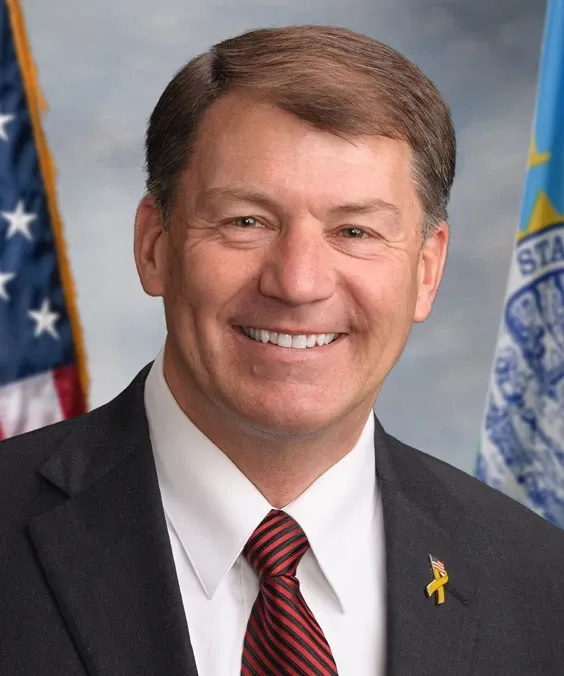
John Thune
The Public Record
John Randolph Thune is an American politician serving as the senior United States senator from South Dakota since 2005. A member of the Republican Party, Thune has been a prominent figure in national politics, focusing on issues such as immigration enforcement, border security, and federal worker compensation. He has played a significant role in shaping Republican policy in Congress and has been involved in various legislative initiatives throughout his tenure.
Jun 17, 2014
Given the health concerns and the lack of data substantiating health benefits, it's imperative to restrict youth exposure to e-cigarettes.
Jun 17, 2014
These products are relatively new and their long-term health effects are unknown.
Jun 17, 2014
I renew my request to you to provide a plan to the Committee within 60 days from June 18, 2014.
Jun 17, 2014
I simply asked that you provide a plan 'within 60 days' of my formal QFR request, dated June 18, 2014.
Jun 10, 2014
My experience around here is that in order for big things to happen, you have got to have not only the legislative branch...
Jun 10, 2014
I hope you will stay in close contact with us as that process moves forward, and I think there have even been some attempts on the House side to prevent that from moving forward.
Jun 10, 2014
It is important for we as a country to make sure that the misimpression that is out there that the U.S. controls the Internet is not the case.
Jun 10, 2014
I think we all agree on the importance of protecting a secure--keeping the Internet open and secure as an engine for growth and innovation.
Jun 10, 2014
It is important that its senior leadership be in place to work with Congress and the array of stakeholders as we seek to improve safety and maintain and expand the Nation's transportation networks.
Jun 2, 2014
Well, I think the legislation also has the provisional certification that you talked about, as well. It has some flexibility, but it also has the deadline attached to it.
Jun 2, 2014
It strikes me, at least, that it would make a lot more sense if you want to treat the railroads in sort of a fair way, you have to push that out there, knowing that they're not going to be able to meet the 2015 deadline.
Jun 2, 2014
Many of us, my colleagues on the Committee here and others, have introduced legislation that would provide this blanket extension that I referred to, which does have a hard, firm deadline.
Jun 2, 2014
I've said many times that maintaining and improving our Nation's infrastructure is absolutely vital to our country's economic prosperity.
May 20, 2014
It seems to me that an insurer may actually have a perverse incentive to get an MLR rate that is acceptable, but may drive costs later.
May 20, 2014
I just cannot figure out how we justify these higher rates by suggesting that we have more people insured.
May 20, 2014
It seems, to me at least, it is better to stop fraud when it occurs rather than to attempt to recoup money that has already been appropriately paid.
May 20, 2014
In fact, our colleague, Senator Nelson, just introduced a bipartisan bill to improve Medicare's fraud prevention.
May 20, 2014
I think, as I said, outside of Washington you hear these concerns where people are experiencing higher premiums, higher deductibles, canceled coverages, and that sort of thing.
May 20, 2014
With nearly a trillion dollars in new taxes, ultimately they do get passed along to the consumer.
May 20, 2014
I want to thank you for holding this hearing. I look forward to hearing from our witnesses on this particular subject.
May 20, 2014
But when one steps back to look at the larger picture, it is increasingly evident that the many problematic costs in regulations associated with the healthcare law will almost certainly frustrate that purpose.
May 20, 2014
Ultimately, the Congressional Budget Office estimates that due to the decline in hours worked, Obamacare will result in losses equal to two and a half million fewer full-time workers.
Politicians like John Thune