Apr 17, 2012
I wanted to ask ICE what priority they give to breaking up fraudulent identity document rings.
The Public Record
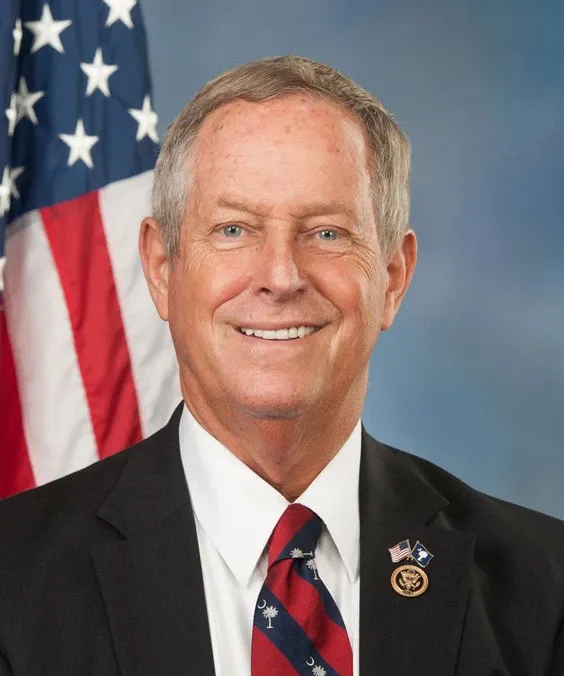
Trey Gowdy is a former U.S. Representative for South Carolina's 4th congressional district, serving from 2011 to 2019. A member of the Republican Party, Gowdy gained national prominence as the chairman of the House Select Committee on Benghazi, where he led investigations into the 2012 attack on the U.S. consulate in Libya. His tenure in Congress was marked by a focus on issues such as government oversight and national security. Prior to his congressional career, Gowdy served as a federal prosecutor and was known for his legal expertise and assertive questioning style during hearings.
I wanted to ask ICE what priority they give to breaking up fraudulent identity document rings.
The need for a hearing like this epitomizes our fellow citizens' frustration with government.
The notion that you have to spend $800,000 to exchange ideas is laughable and perhaps criminal.
You are so quick to make everyone else follow the rules, and you can't follow your own rules.
I hate that you robbed yourself of the satisfaction of knowing what it feels like to do it yourself instead of spending someone else's money to do it.
I thank the gentleman from New York, and I thank my colleague and friend from South Carolina, Mr. Duncan, my colleague and friend from Georgia, Mr. Scott, my colleague and friend from the great State of Florida, Colonel West, all of whom…
You have to convince me that it is important and helpful enough to send a person to jail who wants to exercise their right not to answer it.
In these difficult economic times, when the federal government must drastically reduce its spending, we simply cannot continue to spend money without verifying that funds are being used as effectively and efficiently as possible, and only…
It strikes me that there are three overarching questions: Number one, can government force citizens to accept certain religious beliefs; number two, can government prevent citizens from holding certain religious beliefs; and thirdly, Mr…
I started by talking about respect for the rule of law. And it really shouldn't matter, with the vagaries or vicissitudes of political cycles, what definitions mean.
It is provable beyond a reasonable doubt in my judgment that main Justice had actual or constructive knowledge of gun walking, both in Fast and Furious and beforehand, and I am going to prove it to you.
How can you deny that people in main Justice knew gun walking was going on before that February 4th letter was sent to a Member of Congress?
What is the practical impact of having a year and a half worth of litigation that has been undone?
I thank the gentlelady from the District of Columbia and the gentleman from Missouri.
If you do not like the law, change it, but to ask Mr. Jarvis, Chief Lanier, the Capital Hill Police who all have very difficult jobs to also have to decide which laws to enforce and which ones not to.
there are not protestors that are Republican or Democrat in their judgment; there are not laws that are Republican or Democrat; there are not crime victims that are Republican or Democrat. It is just the law.
My advice is either enforce the rule or regulation as written or change it but selecting it in some States and not others will undermine respect for rule of the law.
You don't decide to go to the matinee instead of the 9 p.m. movie and order a cheaper appetizer when you're $142,000 in debt. You make real, dramatic, systemic transformative change. Each one of us received an inheritance, Mr. Speaker…
Thank you, Mr. Speaker. And I want to thank my friend and colleague from the great State of South Carolina, Mr. Tim Scott, for his outstanding work on the Rules Committee. So here we are again, Mr. Speaker, less than 6 months removed from…
Well, Mr. Attorney General, it contained material demonstrably false statements. Agreed?
I would once again thank our colleague Ms. Holmes Norton and Ranking Member Cummings. Mr. Davis, the ranking member of the subcommittee, as my colleague so aptly pointed out, also deserves credit. With that, I would urge all of our fellow…
Earlier this year, this body debated and ultimately approved legislation authorizing scholarships to give needy District of Columbia students the opportunity to leave their public school and enroll in a private school of their choice…
Politicians like Trey Gowdy