Nov 15, 2011
I was saddened that President Obama was persuaded in his decision not by the economic benefits of the project but by far left environmental interest groups.
The Public Record
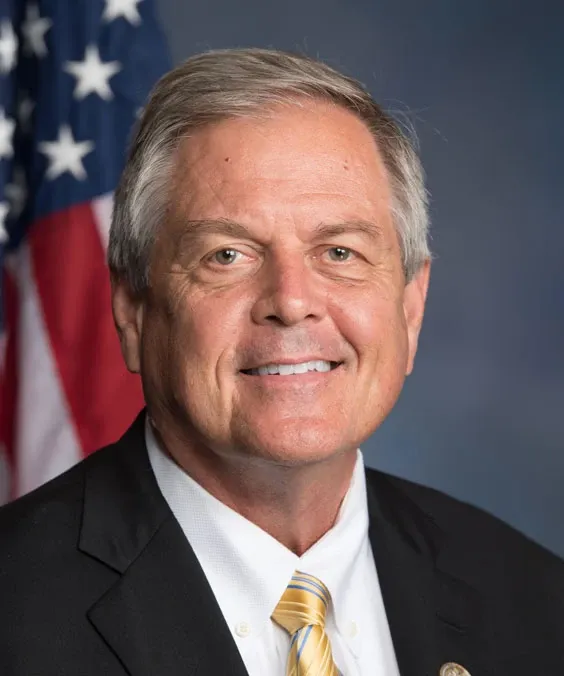
Jeff Duncan is an American politician serving as the U.S. Representative for South Carolina's 3rd congressional district since January 5, 2011. A member of the Republican Party, Duncan has focused on issues such as energy independence, fiscal responsibility, and Second Amendment rights during his tenure in Congress. He has been an advocate for conservative policies and has worked on various legislative initiatives that align with his party's platform.
I was saddened that President Obama was persuaded in his decision not by the economic benefits of the project but by far left environmental interest groups.
This is ill-advised, and this is really a purely political decision by the President that will do more than just economic harm, but it will have a grave national security implication as well.
I don't know if you are aware or not or have read the Office of the National Counterintelligence Executive Report on Foreign Economic Collection and Industrial Espionage, but China is one of the most aggressive collectors of U.S. economic…
We are all in this together to protect the sovereignty of this great Nation, to enforce the laws...
This is the right level of sanctions at this point in time against the Central Bank of Iran.
Yet here we are having a conversation today with these panelists about Cuba harvesting resources off their coast and allowing foreign companies to come in and help them, assist them with that.
I have prepared remarks today, but I want to talk about Yucca Mountain. We've heard a lot of talk this week about the Presidential candidates and Yucca Mountain. America needs to realize that South Carolina, on the Savannah riverside, is…
I am concerned and I hope my colleagues are concerned that we could be facing another Iran.
I want to encourage the Members of the committee that have not signed on to Resolution 429...
Hanford was taken from the American people, taken from the folks in the Hanford community and never given back.
I appreciate the B Reactor being set aside as a national monument. I appreciate the historical significance of it.
When we put Americans in harm's way like this, I think we need to be very clear what we do.
Did we in this action and in Uganda, did we garner tangible financial or military support from other countries such as the U.K. and France, like we did in Libya or are we there alone?
So what we're doing is training, mainly. No predator drones, no--could you define kinetic military action? I'm struggling with that term.
But again, the nature of our commitment is that we are not getting into an open-ended war, a land invasion in Libya.
This body and good Americans watching the hearing right now know that the Lord's Resistance Army has terrorized central Africa with impunity for more than 25 years.
I believe that it's important for the public to know that we never take lightly the use of military force and personnel around the world.
Politicians like Jeff Duncan