May 17, 2010
I mean, if these technologies are new and unusual now, think how new and unusual they were years ago when this application was being considered.
The Public Record
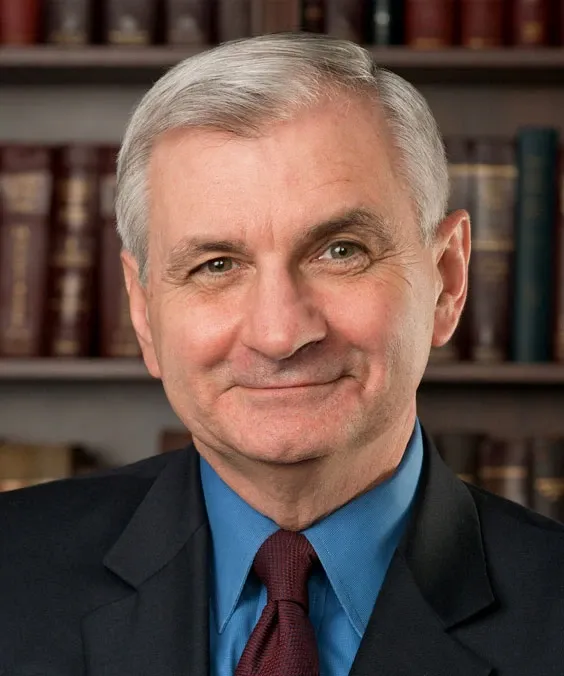
Sheldon Whitehouse is a United States Senator from Rhode Island, serving since January 4, 2007. A member of the Democratic Party, Whitehouse has focused on a range of issues including environmental protection, healthcare reform, and campaign finance reform. He has been a vocal advocate for addressing climate change and has worked to promote policies aimed at reducing carbon emissions and protecting natural resources. Whitehouse has also been involved in efforts to reform the political campaign finance system, emphasizing the need for transparency and accountability in political donations.
I mean, if these technologies are new and unusual now, think how new and unusual they were years ago when this application was being considered.
Why is it that for something that is so complicated and so dangerous as this offshore drilling that the similar level of mandatoriness that you and I have to face with the electrical inspector in our homes doesn't apply to these giant…
Please assure me that you are not buying into this theory that under certain circumstances there may be a financial disincentive to a company from having a disaster means that the Government doesn't need to do any regulation to prevent…
That is the Greenspan rule. That is exactly the theory that Alan Greenspan used to justify deregulation of the financial regulatory structure that we had.
As a new Senator in this body, who had not had legislative experience--I came out of an executive and law enforcement background--I have enjoyed the privilege of serving on that committee under the Senator's leadership. And now to have had…
We are at grave risk of the chemical contamination to our oceans and the seafood and species contained therein.
I think it is particularly important for EPA to be alert to the damage that both carbon pollution and chemical pollution are likely causing or are causing in our oceans.
I think it is an incredibly important issue, and as I say, you could make a fairly tight suggestion that it was the biggest public health issue humanity has ever faced.
And you agree with Dr. Payne that some of these contaminants will not only bioaccumulate in the individual creature, but for mammals through lactation they will poison the next generation in an increasing cycle of chemical loading?
The toxic soup notion of either chemical interactions working against the environment or its effects on a particular creature accumulating from one chemical harming them here to one chemical harming them there, it is a very real problem.
We are starting to get there today on global climate change, and that is good.
We need to have a stronger international leadership to deal with the complexities of what is happening in our oceans.
The worst effect for humankind of the carbon pollution of our planet may very well prove to be ocean acidification.
We are a terrestrial species. We focus a great deal of our attention on the land, the earth around us.
So it bioaccumulates not only in the body of an individual whale as it continues to swim and eat and age, it will also bioaccumulate in the species because lactation passes it on to the next generation in an upward ratchet of poisoning.
I think your evidence shows that no matter where you go, whales that feed at the top of the food chain carry enormous loads of toxins in their bodies, even in the farthest corners of the globe.
But you are comfortable that the EPA's current statutory authority allows it to consider these kinds of harms in its analysis of what parts of the environment need to be protected.
I applaud the Obama administration's rapid and comprehensive emergency response to what could become the largest ecological disaster this country has ever seen.
We also put forth a bill co-sponsored by Chairman Leahy of the Judiciary Committee to reverse the limitation on punitive damages.
The legislation that you put forth today for an independent commission will help us along the way in that regard.
Politicians like Sheldon Whitehouse