Feb 26, 2020
I would also strongly encourage the Committee to expand the Army Corps' existing Section 214 authority.
The Public Record
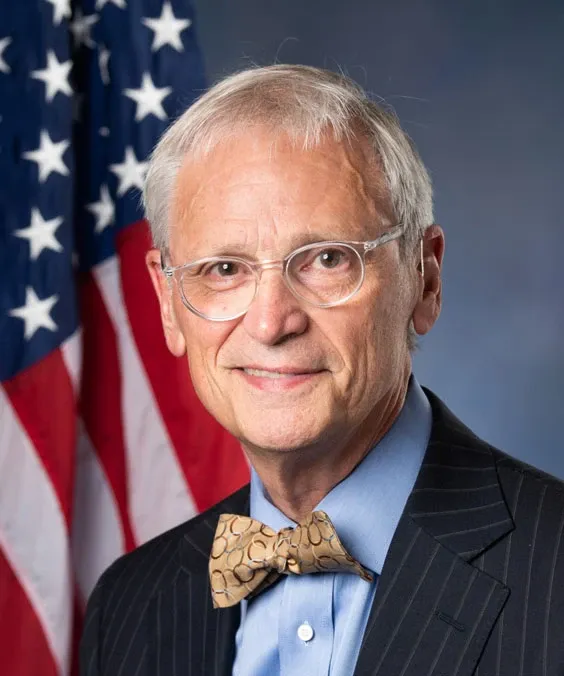
Peter DeFazio is a former U.S. Representative from Oregon, serving in the House from 1987 until 2022. A member of the Democratic Party, he was known for his progressive stance on various issues, including transportation, infrastructure, and environmental policy. DeFazio played a significant role in shaping legislation related to transportation funding and was a strong advocate for public transit and sustainable practices.
I would also strongly encourage the Committee to expand the Army Corps' existing Section 214 authority.
I strongly urge you to include new funding and authorities that will allow the Army Corps to assist communities.
Thank you to Ranking Member Graves, Subcommittee Ranking Member Westerman, as well as Chairwoman Napolitano for your support of H.R. 2440.
I have been working with Members on both sides of the aisle and I am proud to have received bipartisan support of my legislation H.R. 2440, the Full Utilization of the Harbor Maintenance Trust Fund Act.
Hopefully, when we bring up the WRDA bill, Republican Leader McCarthy will not oppose it.
One of my highest priorities is to unlock the Harbor Maintenance Trust Fund.
Service animals generally have broad protections for sheltering and transportation in emergency situations.
Failure to properly account for farm animals during an emergency can have severe consequences.
Thank you, Chair Larsen, for calling today's hearing on the outlook for the workforce of women and men who build airplanes and those who maintain them.
We have Tribal self-governance on transportation projects, you now feel that there is a necessity to have an office in DOT
The backlog of deferred transportation infrastructure maintenance at Federal Land Management Agencies is staggering.
We are still trying to pry money out of a number of Federal agencies to deal with that.
We have massive deficits on our Federal lands. The Forest Service has reported a $3.6 billion backlog; the Park Service, $6 billion.
The death rate on Indian lands in terms of pedestrians and driving accidents is horrible, and the state of the infrastructure is abysmal.
One of my top priorities in the FAST Act was to have Tribal transportation self-governance, so they wouldn't be ripped off by the States.
We can't figure out when it was the last time this committee convened on these very important issues.
A Tribal Transportation Self-Governance Program will streamline delivery of Federal funds to tribes while easing administrative burdens.
Funding for the Territorial Highway Program has fallen steadily as a proportion of overall funding for the last decade.
While increasing train lengths to over 3 miles long might provide a cost-savings to the railroads, it has major impacts on the communities these trains traverse.
With only $245 million available nationwide this year for projects through the Section 130 Railway-Highway Grade Crossing Program, many states struggle to cover the costs of multi-million dollar projects.
I am very concerned by this trend and suspect that train length will continue to grow with the Class I railroads' implementation of Precision Scheduled Railroading.
States and localities have tried to address some of the grade crossing issues they face but have a hard time keeping up--often with little financial support from the Federal Government or railroads.
Politicians like Peter DeFazio