Jan 21, 2009
I think that it's widely understood that the best dollar we have in health care is a dollar spent on prevention, on disease management, and therefore we need to do a whole lot more in that area.
The Public Record
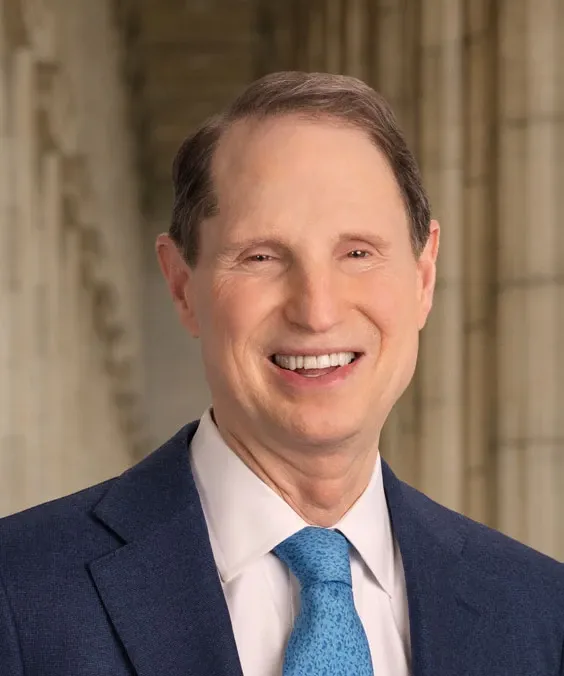
Jeff Alan Merkley is an American politician serving as the junior United States senator from Oregon since January 6, 2009. A member of the Democratic Party, Merkley has focused on issues such as healthcare, climate change, and economic inequality throughout his tenure. He has been an advocate for progressive policies and has worked to address the challenges facing working families in Oregon and across the nation. Merkley is known for his commitment to transparency and accountability in government, often speaking out against perceived injustices and advocating for reforms.
I think that it's widely understood that the best dollar we have in health care is a dollar spent on prevention, on disease management, and therefore we need to do a whole lot more in that area.
It is our belief in our State that it is so important to protect the treasures of this planet as a legacy for our children.
There is a need to act, there is a need to act, I believe, for our Country with science in front of us.
The peril of inaction is different for different areas of the Country and quite different for different areas of the world.
If we continue on the current course of carbon buildup and other global warming gases, the temperature of the planet could well go up more than five degrees.
it is pretty clear to me that the stimulus package did a lot for a lot of different things. It did zero, virtually, for the Defense Department, and I am worried about that direction.
I just want to draw your attention to an EPA report from 2007, which identified 63 sites in 26 States where water was contaminated by heavy metals from dumps, including 3 Tennessee Valley Authority dumps.
We are asking a number of countries around the world to forego reprocessing for that very reason.
I must say it is a daunting challenge to lay out a road map to address the Bush legacy of economic disaster.
my fear is the long-term ecological health of the region and what ends up bioaccumulating into the wildlife over time.
I certainly applaud the administration on putting forward a budget that seeks to address the incredible mess created over the last 8 years.
It is clear from the pictures and the statistics the scope of the current disaster. I am struck by the numbers of 45,000 pounds of arsenic, more than a million pounds of barium, 91,000 pounds of chromium, and that the immediate cleanup is…
It was probably the most cost-effective investment this Government ever made.
I think the thing one should be careful about is that the HOLC seems not to have lost the Government money on a cash basis.
So in the absence of political issues, you are saying that it would be much better policy to have a direct appropriation to fund such an entity.
One of the things that is very frustrating to me is I think many of the circumstances we are in right now could be avoided had we had reasonable rules of the road at both the retail mortgage market and in terms of Wall Street supervision.
I imagine there are a range of options under consideration, whether or not to go to dry storage, whether to increase the strength of the dikes, et cetera.
I think it is imperative for the Fed to think about what that limit might look like.
I look forward to working with CBO, that I think that there are many challenges to figuring out a pathway to move quickly, that is fair to our taxpayers, and yet addresses the significant impact on failing mortgages on this downward cycle.
Mr. Chair, it is a delight to be here, and particularly to be here for a hearing on housing, which is so important to citizens in this country.
There are a number of folks in the scientific community who have said we need to be more aggressive.
Politicians like Jeff Merkley