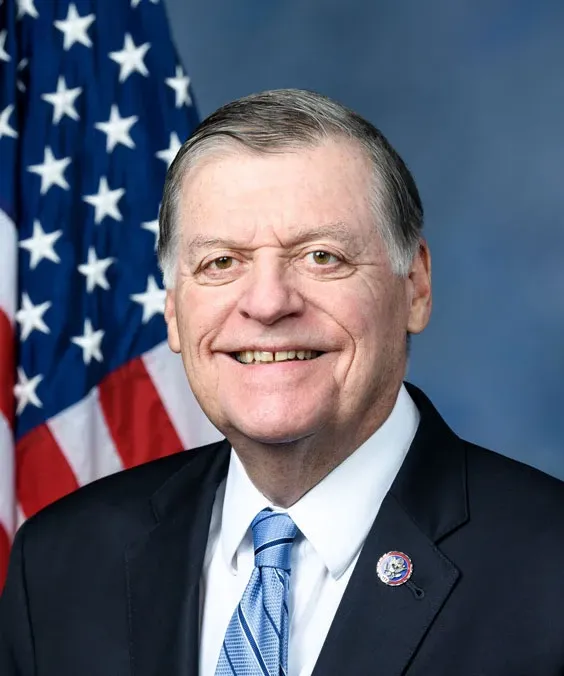
Tom Coburn
The Public Record
Tom Coburn is a former U.S. Senator from Oklahoma, serving from 2005 to 2015. A member of the Republican Party, Coburn was known for his fiscal conservatism and advocacy for government transparency. He was a practicing physician before entering politics, which influenced his views on healthcare and government spending. Throughout his tenure, he was a vocal critic of wasteful government expenditures and often called for reforms to improve accountability in Congress.
Sep 14, 2009
Where Senator Durbin and I differ is that, number one, I look for a constitutional role within the enumerated powers.
Sep 14, 2009
The sheer volume of people that we imprison in this country is a crime in itself.
Sep 14, 2009
We must keep faith with our Founders by working to keep America's promises not only abroad but at home.
Sep 14, 2009
We think we can do it more economically. We know we can do it more successfully.
Aug 5, 2009
I ask that the record clearly reflect my full and firm opposition to S. 1011.
Aug 5, 2009
Recognizing Native Hawaiians as an Indian tribe and sovereign entity without participating in the standard federal recognition process sets a dangerous precedent, threatens the framework of our nation, and, above all, is unconstitutional.
Aug 5, 2009
I want to thank you for this opportunity to express my opposition to S. 1011, the Native Hawaiian Reorganization Act of 2009.
Aug 2, 2009
NASA paid Boeing a bonus of $425 million for work on the Space Station that ran 8 years late.
Aug 2, 2009
The President said he would like to competitively bid everything, even the things that we are trying to do that have not been done yet.
Aug 2, 2009
Medicare and Medicaid paid out more than $312 million last year for quality care bonuses to nursing homes that provided below-average care.
Aug 2, 2009
The Department of Defense paid $8 billion in unwarranted bonuses to contractors for weapons programs that had severe cost overruns.
Jul 20, 2009
What do you attribute the tremendous increase in activity in index funds, especially as related to commodities?
Jul 20, 2009
Senator Coburn talked about West Texas intermediate. That contract has converged, and it has a different contract design than this contract.
Jul 20, 2009
Does everybody at the table agree that there needs to be changes in the contract on wheat?
Jul 20, 2009
OK. Does the higher volume generated by the commercial index traders actually increase liquidity or decrease liquidity, in your opinion?
Jul 20, 2009
What are the potential unintended consequences if you were to do that? Have you thought through that?
Jul 20, 2009
Our report, which was issued by myself and Senator Coburn last month, concludes that the huge number of wheat futures contracts being purchased by derivative dealers selling commodity index instruments have, in the aggregate, constituted…
Politicians like Tom Coburn