Dec 7, 2011
This hearing of the Committee on Agriculture to examine the MF Global bankruptcy will come to order.
The Public Record
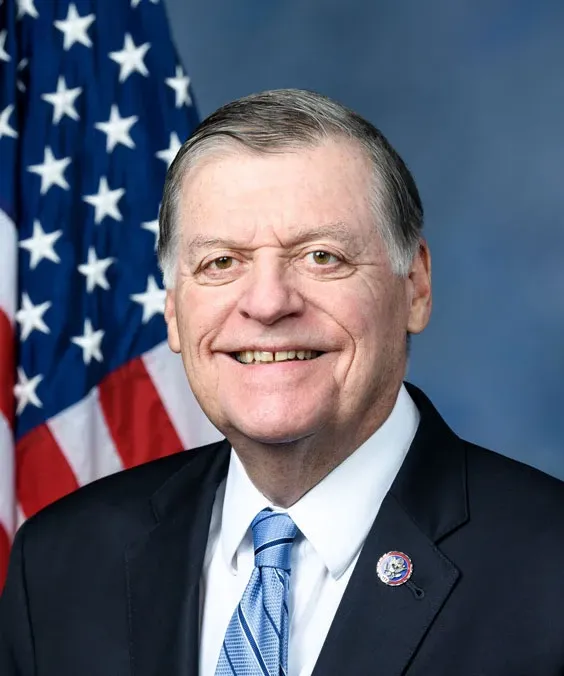
Frank Dean Lucas is an American politician serving as the U.S. Representative for Oklahoma's 3rd congressional district since 2003. A member of the Republican Party, Lucas has focused on agricultural issues, energy policy, and rural development during his tenure in Congress. He has played a significant role in shaping legislation related to farming and energy production, reflecting the interests of his constituents in a predominantly rural district. Lucas has been involved in various committees, including the House Committee on Agriculture, where he has worked on policies affecting the agricultural sector.
This hearing of the Committee on Agriculture to examine the MF Global bankruptcy will come to order.
It is critical that this Committee shed light on the circumstances surrounding the bankruptcy, to insert additional facts and information into the public domain.
If you care about the food on your plate, then it is important that we continue to raise the safest, most affordable, abundant supply of food in the world.
I plan to continue that spirit of cooperation as we proceed with the work of the committee next year.
I want to do this farm bill, and I want to do a good farm bill, and I want to put this puppy to bed for 5 years.
The committee will continue to support the leadership in implementing an additional 6.4 percent cut.
the conservation programs help enhance the diversity and the quality of the wildlife of the environment out there.
if we can't--Collin and I working together--build a consensus and bring our committee together and up to speed, then we won't be able to present a comprehensive package to the entire House.
They are aimed at ensuring that the regulators don't implement rules that conflict with, or are contrary, to what Congress intended.
Ensuring that Congressional intent is followed by the CFTC is critically important to the entire end-user community.
We have heard that some regulations may impose significant costs that aren't being accounted for by the CFTC.
If legislation is not passed to clarify the statute's intent, end-users risk being caught up in the unintended consequences of the Dodd-Frank implementation.
We have heard from businesses that are concerned that some Dodd-Frank regulations will actually inhibit their ability to manage risk.
So today we will consider seven legislative proposals aimed at fixing some important areas in implementation where the regulators, my friends at CFTC in particular, simply haven't gotten it right.
But with unemployment stuck at nine percent, I am not willing to just stand by and keep my fingers crossed, so to speak, that the flaws in the proposed rules will be fixed.
All of these proposals aim to keep capital in the hands of businesses that we need to lead our economic recovery.
ABA appreciates the efforts of this Committee to ensure that implementation of the derivatives title of the Dodd-Frank Act agrees with the intent of the Congress.
This is the seventh hearing we have had regarding Title VII of the Dodd-Frank Wall Street Reform and Consumer Protection Act.
We have heard confusion about the order of regulations being proposed and concern about the scope of the regulatory definitions.
We did not contribute to the financial crisis and we don't pose a threat to the financial system.
End-users rely on derivatives to reduce risk, bring certainty and stability to our business, and ultimately to benefit our customers.
I hope that this hearing guides Mr. Gensler and his colleagues towards a balanced approach to the regulation.
I hope you will listen today to the issues that will be raised, and I urge you to respond honestly and directly.
We can achieve a robust regulatory regime without imposing undue or ill-fitting regulations on businesses across the country.
But with that authority comes the responsibility and expectation that you will keep at the forefront the prevailing issue facing the country--economic growth and job creation.
Politicians like Frank Lucas