Mar 5, 2012
The administration made a series of promises to the Congress in its 2010 Nuclear Posture Review and the 1251 plan.
The Public Record
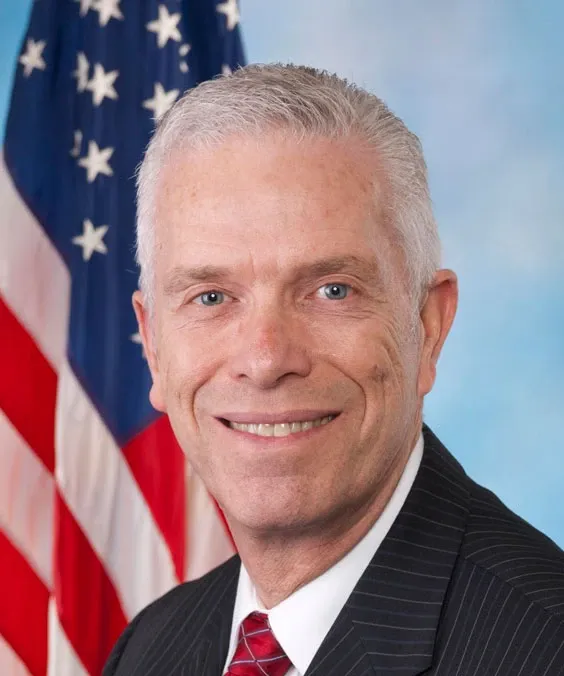
Mike Turner is a Republican member of the United States House of Representatives, representing Ohio's 10th congressional district since 2003. He has been involved in various committees, focusing primarily on national security and defense issues. Throughout his tenure, Turner has advocated for policies aimed at strengthening the military and enhancing the safety of American citizens. His work has included addressing concerns related to defense spending and military readiness.
The administration made a series of promises to the Congress in its 2010 Nuclear Posture Review and the 1251 plan.
Dr. Roberts, you know and we all know that there is concern about cooperation with the systems that North Korea and Iran are developing, both between them, with others, and concerns as to how information is being shared, how these systems…
So there is going to be a point at our inventory of that ICBM inventory that might be pointed at us versus inventory that we currently have where we are bypassed, right?
Well, one thing that we can have in a unclassified discussion, because General O'Reilly has specifically said it in this hearing, that it would double our numbers.
Do you agree with Secretary Gates' statement that with the continued development of long-range missiles and potentially a road-mobile intercontinental ballistic missile and their continued development of nuclear weapons, North Korea is in…
I don't think we should have to choose between regional missile defense and national missile defense.
We need these costs because if we look ahead to the budget, we have to understand how we are helping the administration deliver on what it says is the number one priority, which is the defense of the homeland.
As we know, the administration is contributing the EPAA to NATO free of charge. Such a contribution could cost the U.S. as much as $8.5 billion over the course of the FYDP fiscal year 2013 to 2017, possibly even more.
Since entering office, the Obama administration has demonstrated a lack of interest, quite frankly, and support for missile defense.
Yet we cut GMD. And General O'Reilly, this budget continues to underfund national missile defense.
The United States foots the overwhelming majority, perhaps as much as 75%, of the defense spending in NATO.
The NAS study committee identifies a loss of trust between the NNSA and its labs as a key problem...
As I noted in my opening statement, in 2009 a Stimson Center report said: 'the implementation of the NNSA Act failed to achieve the intended autonomy for NNSA within the Department of Energy.'
The original intent of the legislation creating the NNSA has not been realized.
The implementation of the NNSA Act failed to achieve the intended autonomy for NNSA within the Department of Energy.
Why aren't we making any progress in improving the governance and management structure for the labs?
Management problems continue, in part, because NNSA and DOE have not fully agreed on how NNSA should function within the department as a separately organized agency.
Would GAO be comfortable with an oversight model whereby NNSA sets auditable performance standards for the labs, audits to those standards once a year, and then holds the contractor accountable for not meeting the standards?
The Congress' role in this matter is to state clearly that it wishes this rebalancing to occur.
The relationship between the labs and NNSA has strayed from the original intent of the labs as federally funded research and development corporations
The NAS report notes that the 'evolution' of the labs from nuclear weapons labs to 'national security labs' with a broader mission set is well under way.
The original intent of the legislation creating the NNSA has not been realized. The desired autonomy has not come into being.
Going back to the early 1990s--to the Galvin Commission and before--there have been dozens of national commissions, studies, and reports recommending significant reform to the way DOE and NNSA govern and manage the labs.
Politicians like Mike Turner