Apr 15, 2012
The stimulus I voted and many people in this room voted against, is because the American people actually believe that when taxpayers' dollars are being spent that debt is being created.
The Public Record
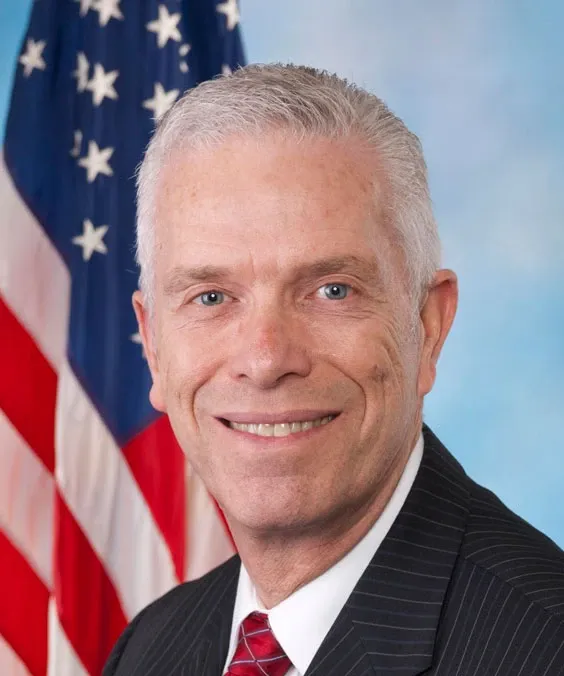
Mike Turner is a Republican member of the United States House of Representatives, representing Ohio's 10th congressional district since 2003. He has been involved in various committees, focusing primarily on national security and defense issues. Throughout his tenure, Turner has advocated for policies aimed at strengthening the military and enhancing the safety of American citizens. His work has included addressing concerns related to defense spending and military readiness.
The stimulus I voted and many people in this room voted against, is because the American people actually believe that when taxpayers' dollars are being spent that debt is being created.
This is an administration that believes that when government spending is occurring, when taxpayers' dollars are being spent, that jobs are being created.
I think that Dr. Yamashita's letter to us, one, exhibits some of the frustration that is ongoing in this process by all people involved.
Will the U.S. take steps to intercept it, as Japan has indicated it may do? Or will the Administration lead from behind and merely watch it fly by?
Discuss the progress of the Space Protection Program. What have been its accomplishments since its establishment in 2008?
We have heard a lot about the need for resiliency of our space systems. How do we measure resiliency of an architecture?
What are your perspectives on the need to invest in domestic liquid rocket engines for use on our critical National Security Space launch missions?
Please explain why the Department is requesting to cancel this critical program that provides the seed corn for future capabilities.
It is clear that space capabilities are essential elements of our military and intelligence construct.
I want to thank you again for both your patience, your participation, and your leadership.
I believe this Congress is going to believe, ought to constitutionally include the Senate.
I would like to spend some time exploring the idea of reversibility and the strange notion that we can just turn fundamental national security programs off and then turn them back on without assuming an unacceptable level of risk and…
And my question guess to, obviously, some of the policy decisionmaking with respect to being able to sustain that specialized capability that you just mentioned.
Well, I want to follow on the issues of--I appreciate your statement of the importance of the Lima tank plant.
If there was I&W of a threat to CONUS, how long and how much would it cost to fully load all 39 GBI silos with current GBI inventory?
Please provide a detailed description of the costs to conduct an ICBM test in late FY13.
How much would an EIS on an East Coast missile defense site cost? Would it make sense to do an EIS on more than one location, e.g., Ft. Drum and Loring AFB?
Why is MDA procuring 6 fewer TPY-2 radars under the FY13 budget and FYDP? What assumptions changed since last year?
What requirements changed to support reducing THAAD battery purchases by 3 and THAAD interceptor purchases by 66?
Has the Administration seen evidence/intelligence of foreign support--including materiel--for the North Korean, road mobile ICBM?
If the DPRK deploys 20 ICBMs by 2020, and the IIB is delivered and deployed on time, please explain where they will be deployed to protect CONUS from a North Korean ballistic missile?
What is the plan to retain Cobra Dane capability? Which agencies will pick up the costs?
What is the current planning for other than Europe PAAs? What will costs and architectures look like? Force requirements? Burden sharing?
What analysis has been done to understand how a IIB missile that cannot fit into the current 8-pack VLS system will affect Navy force requirements and deployment systems and schedules?
Politicians like Mike Turner