Mar 18, 2013
I voted against this mess, but I think we are in a situation where the implementation now is in your hands.
The Public Record
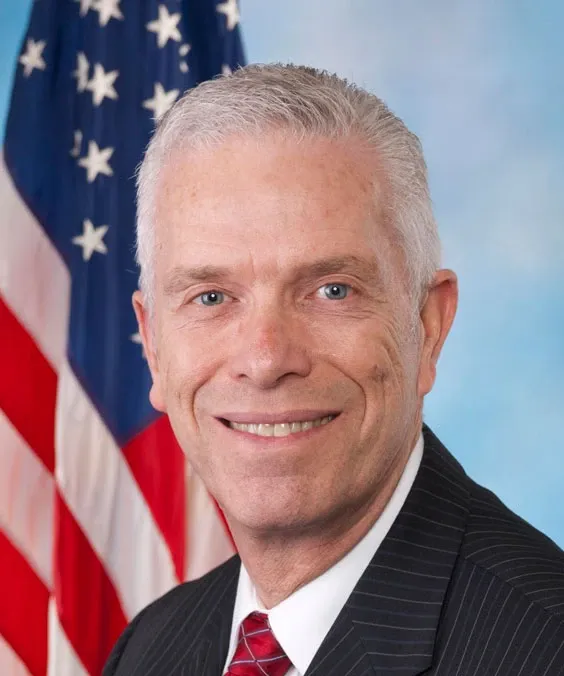
Mike Turner is a Republican member of the United States House of Representatives, representing Ohio's 10th congressional district since 2003. He has been involved in various committees, focusing primarily on national security and defense issues. Throughout his tenure, Turner has advocated for policies aimed at strengthening the military and enhancing the safety of American citizens. His work has included addressing concerns related to defense spending and military readiness.
I voted against this mess, but I think we are in a situation where the implementation now is in your hands.
Russia has a major role as a supplier of natural gas and is a non-reliable exporter to the European countries.
I have a bill, H.R. 580, the Expedited LNG for American Allies Act, that would expand the ability to export LNG to our NATO partners and to Japan.
I was very concerned with the way the Obama administration ended the Bush plan to put ground-based missiles in Poland.
NATO not only serves to protect our collective nations but our Homeland as well.
According to the Commandant's planning guidance, the Marine Corps seeks to develop an expeditionary force capable of forcible entry to support the National Military Strategy during emerging conflicts and instabilities.
If the continuing resolution is in place for a full year, what impact does this have on the execution of the Marine Personnel Carrier and Joint Light Tactical Vehicle program?
How would sequestration and a yearlong CR scenario impact the procurement of F-35Cs and F-35Bs?
I voted against this mess, because I believed that we would be right here, right where we are, with this clock ticking down, 13 and a half hours away from the cuts that were never supposed to happen.
Operating in an environment of uncertainty it makes it incredibly difficult for planning.
We have small businesses that basically are responsible for doing things like building the fuses for most of our weapons.
Our small businesses, the ones I have had experience with over time, and the ones that we continually have pop up that surprise us when they have a problem--because it does not take long for a small business to get in trouble real quickly.
So anything related to any of our O&M accounts, which are certainly going to be the ones to suffer first, will feel the biggest extent of that.
I hope this hearing will really paint a picture for us of what the CR process also will do with respect to our readiness.
I happen to be one of those people that believe that the majority of our Federal workers go to work every day wanting to do a good job for Americans.
I have a lot of my colleagues saying, you know, that they are willing to see the Government shut down.
If you don't have clarity on this, then I think that this committee needs to put something in our next piece of legislation that absolutely makes it clear that if, due to the performance of individuals, that the security system fails, that…
If we have an agency that is governmental that has the responsibility for protecting these facilities and we have a system where those in charge think that you don't even have to do your job to keep your job, then we don't have something…
Would sequestration and a yearlong CR affect life extension programs for F-15s, F-16s, and A-10s?
What measures will you take to mitigate the impact of sequestration on counter-IED efforts that could potentially diminish the Department's flexibility and increase risks to rapidly respond to unanticipated requirements?
Would sequestration and a yearlong CR scenario impact the procurement of F-35Cs and F-35Bs?
How will you make cuts to major defense acquisition programs without forcing them into a Nunn-McCurdy breach?
We built a strategy last year that we said we can execute and absorb $487 billion. I can't sit here today and guarantee you that if you take another $175 [billion] that that strategy remains solvent.
Politicians like Mike Turner