May 23, 2021
We continually hear from General Raymond the issue of the provocative actions that China and Russia are taking in space.
The Public Record
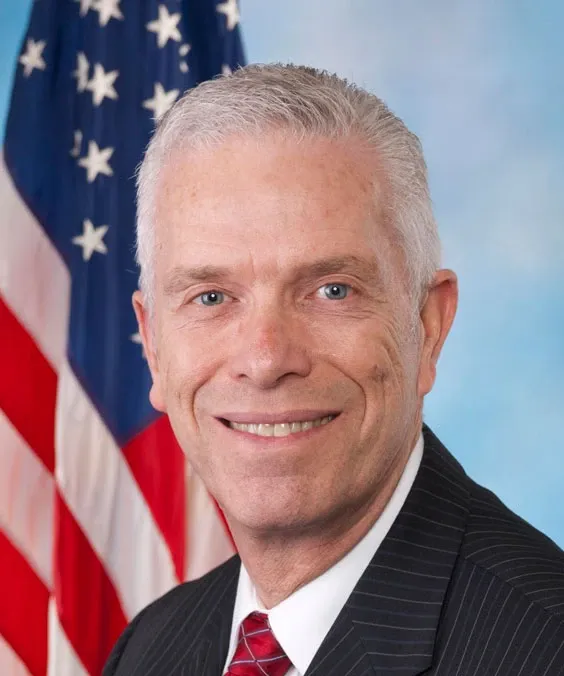
Mike Turner is a Republican member of the United States House of Representatives, representing Ohio's 10th congressional district since 2003. He has been involved in various committees, focusing primarily on national security and defense issues. Throughout his tenure, Turner has advocated for policies aimed at strengthening the military and enhancing the safety of American citizens. His work has included addressing concerns related to defense spending and military readiness.
We continually hear from General Raymond the issue of the provocative actions that China and Russia are taking in space.
I agree with you, this is one of the most important topics, perhaps besides nuclear modernization, that we are dealing with.
What is your commitment to ensuring that the flow of Commercial Imagery to the Services and Combatant Commands is not interrupted?
Demand for commercial imagery, data and services is greatly increasing and I understand that we will soon see that reflected in requirements from the COCOMs and Services.
The Office of the Secretary of Defense recently released a hypersonics roadmap that covered a range of activities...
I feel sorry for you because you're being asked very specific questions about how you're going to do things...
As we say with our NATO partners, we went in together, we'll adjust together, and we'll depart together.
What I am going to ask you is, since you are planning and since just about everybody on this committee believes you're going to have to go back in...
Our policy is very clear--the U.S. would only consider the employment of nuclear weapons in extreme circumstances to defend the vital interests of the U.S., its Allies, and partners.
As we talk about Russia and China, it's important not to lose sight of the Iran and DPRK ICBM threats.
It's been nearly a decade since the Congressional Commission on the Strategic Posture of the United States was completed.
Earlier this year, several news outlets reported that 16 new ICBM silos had been discovered in a training area in Northern China through the use of open source satellite imagery.
In your opinion does the W76-2 make nuclear weapons use more or less likely?
Some critics have called the U.S. low-yield W76-2 submarine launched ballistic missile warhead 'destabilizing.'
I am asking you solely about the Minuteman III, because this has been exhaustively studied and conclusively determined to be unable to be life-extensioned.
The premise of, if the United States was restrained, that the world would be restrained, is dangerously not true.
While we have delayed our modernization, Russia has modernized with what it is called exotics, people are referring as exotics, new nuclear weapons capabilities, and China is definitely increasing its capabilities, perhaps doubling its…
You see today that the United States is increasingly putting itself in a disadvantage with its adversaries that have nuclear capabilities and are increasing those capabilities.
Thank you, Mr. Chairman, for your statement concerning the triad. I know that our witnesses before us today will be echoing the same sentiment.
On April 20, 2021, in a response to Senator Cotton, you stated that reducing the number of ICBMs or removing that leg of the triad would 'solve a critical problem for China.'
I think, you know, certainly, that is a great illustration of rebutting the philosophy of 'if we denuclearize, others won't pursue nuclear weapons.'
This makes it even more critical that we execute the modernization of all legs of the nuclear triad.
The U.S. has determined that Russia's actions have strained key pillars of arms control architecture.
Russia's stockpile of non-strategic nuclear weapons, already large and diverse, is being modernized with an eye towards greater accuracy, longer ranges, and lower yields, to suit their potential warfighting role.
Politicians like Mike Turner