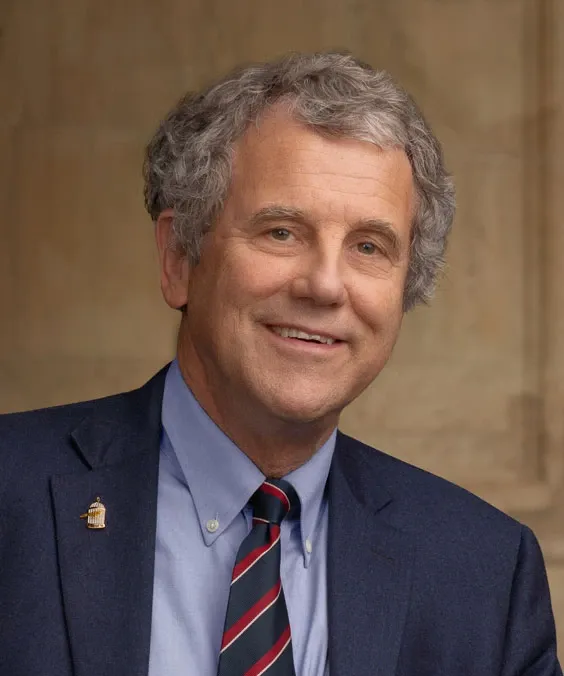
I had faith in the good sense and conservative tendencies of the people, and believed they would not be deluded by such fantasies and fallacies as were contained in the platform of the People's party.
John Sherman
The Public Record
John Sherman was an American politician from Ohio who served in federal office throughout the Civil War and into the late nineteenth century. A member of the Republican Party, he served in both houses of the U.S. Congress. He also served as Secretary of the Treasury and Secretary of State. Sherman sought the Republican presidential nomination three times, coming closest in 1888, but was never chosen by the party. Between 1861 and 1897, John Sherman served in the U.S. Senate for nearly 32 years and holds the record for longest serving senator from the state of Ohio.
gutenberg.org
This is a plain lie, contradicted and disproved over and over again.
There is no standard for paper money, except coin.
Silver and gold should be used and maintained as current money, but only on a par with each other, and this can only be done by treating the cheaper metal as subsidiary and coining it only as demanded for the use of the people.
So far from it being in the interest of the bondholders, it was to their detriment and only in the interest of the people of the United States.
I advocated the shorter period, but the House of Representatives, believing that the new bonds would not sell at par unless running for a longer period, insisted that the four per cent. bonds should run for thirty years.
It was not possible to pay it in coin and it was not honorable to pay it in greenbacks, especially as that could only have been done by issuing new greenbacks far beyond the volume existing during the war, and which would at once…
By the wise providence of Congress, we had reserved the right of redeeming a portion of this debt within five years, and a portion of it within ten years, so that the debt was, in the main, then redeemable at our pleasure.
This operation of refunding is regarded by all intelligent statesmen as of the highest value, and was conducted with remarkable success.
I was not in favor of the contraction of the greenbacks, and the very speech that she quotes, in which I described the effects of contraction and the difficulty of resuming, was made against the bill providing for the reduction of the…
Our money has increased nearly fourfold, while our population has only doubled.
It has been demonstrated by official documents that from the beginning of the war to this time the volume of our currency has been increasing, year by year, more rapidly than our population.
It was absolutely necessary to get rid of these state bank notes and to substitute for them bank notes secured beyond doubt by the deposit of United States bonds, a system so perfect that from the beginning until now no one has lost a…
As for the national banking system--the second of her 'conspiracies' --it is now conceded to have produced the best form of paper money issued by banks that has ever been devised.
This exception clause saved our public credit by making a market for our bonds, and the coin was paid by foreigners for the privilege of entering our markets.
This clause had not only the cordial support of Secretary Chase, but of President Lincoln, and proved to be the most important financial aid of the government devised during the war.
The 'seven financial conspiracies' are the seven great pillars of our financial credit, the seven great financial measures by which the government was saved from the perils of war and by which the United States has become the most…
Some time since, this wild and visionary book was sent to me, and I read it with amusement and astonishment that anyone could approve of it or be deceived by its falsehoods.
This I regarded, if the statement were true, as a corrupt and dangerous power to be conferred upon any man, which ought not to be submitted to.
With this warning behind us let us not be backward or laggard in the civic contest in November; but, with a ticket worthy of our choice, let us appeal to our fellow-citizens to place again our honored state at the head of the Republican…
Strong now at home our country may extend its moral influence to neighboring republics, encourage trade and intercourse with them, and invite a broader union founded upon common interests, sympathies, and free institutions.
The Republican party has shown its capacity to deal wisely with many more difficult questions of the past, and may be relied upon to solve wisely the questions of a peaceful and prosperous future.
If any public measure bears unjustly upon any class of our population we are all interested in providing a remedy.
We must not meet as farmers, mechanics, or partisans, but as fellow-citizens and patriots, alike interested in all measures of national or state legislation.
There is another obligation which we, as Republicans, cannot ignore without being false to our party pledges, and that is to use every legal means to secure all citizens their constitutional rights and privileges as such, without respect…
Politicians like John Sherman