I have endeavored to show what slavery is, what it has done, and what it intends to do.
Cydnor Tompkins
The Public Record
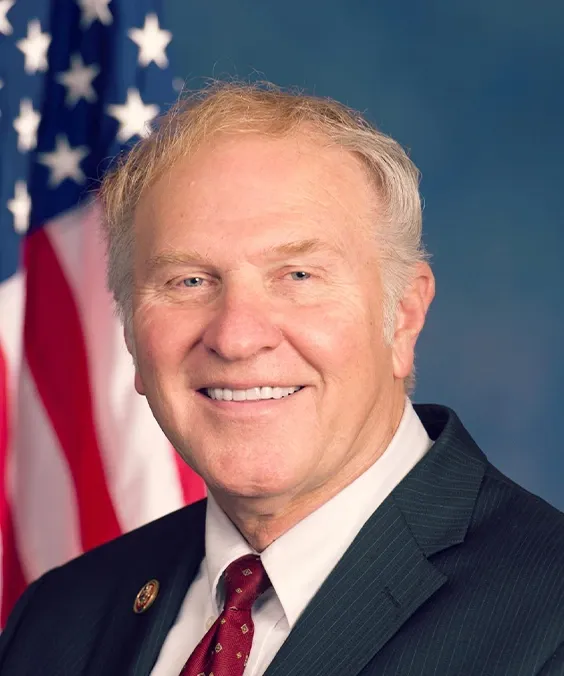
Cydnor Bailey Tompkins was an American lawyer and politician who served two terms as a U.S. representative from Ohio from 1857 to 1861. He was the father of Emmett Tompkins.
gutenberg.org
Punish the thousands of others who have committed acts of violence against free-State men, and are yet unwhipped of justice.
Take from place and power the men whose hands and faces are reeking and smoking with the blood of our people in Kansas, and put them to death.
Before you complain of the free States, arrest and punish the scoundrels who so cruelly treated the Irishman at Columbia, South Carolina, for no offence but saying that slavery was detrimental to free labor.
Men who commit acts declared by the whole civilized world to be piracy, you permit to escape, while you say you will hang the man who circulates Helper's book.
Before you complain of us, go home and seize and hang the pirates who are hovering around your shores, engaged in the slave trade.
We will not follow your example; we will not pass laws in plain and palpable violation of your rights, and in palpable violation of the Constitution, and then drive out, by threats or violence, any man who may come into the State to test…
But if you think that Constitution violated, you have your remedy.
The great pursuits by which twenty-five million people live, are not considered worthy the attention of this Democratic party; while one hundred thousand aristocrats require its entire services.
The agricultural, the manufacturing, the great commercial interests of this country, are entirely ignored, neglected, and forgotten, that the interests of one hundred thousand slaveholders may be advanced.
Yet the whole power of this Government is devoted to that one object; its entire strength concentrated in one spasmodic effort to extend slavery.
Its conservatism consists in its avowed determination to dissolve the Union, should a majority of our people, in the exercise of their legal and constitutional rights, elect a President not acceptable to that party.
The nationality of the Democratic party consists in devoting all the energies and power of the Federal Government to advancing the interests, aims, and ends, of about one hundred thousand men.
Notwithstanding these threats of disunion from the Democratic party, we hear much holy horror expressed in regard to a sectional party, and much laudation of a national, conservative party.
But these threats do not move or alarm me, and for the best of all possible reasons; I do not believe that the gentlemen who make these threats intend to leave their places on this floor--nor, if they should, would the country suffer any…
If the slaveholder is permitted to go into the Territories, and take his slave laws, habits, and customs, the people of the free States are to a great extent excluded therefrom, and deprived of all rights therein.
They claim to take with them the right to condemn as a felon the man who may utter and maintain the Declaration of Independence, or the opinions of the conscript fathers of the Republic.
They claim the right to seal every man's lips, and stop every man's mouth, on questions of great national interest.
They not only claim the right to take their negroes into the Territories, but they claim to take laws there that will deny to every man the freedom of speech and the liberty of the press.
They claim to take laws by which four million negroes are reduced to the condition of brutes.
I understand those Southern men, who talk so much about Southern rights, claim not only the right to take slaves into the Territories, but they claim the right to take slave laws and the habits and customs which are practiced in the slave…
The right of suffrage, which is the highest right that ever can be exercised by a citizen, is controlled by the laws and Constitution of each particular State.
If a citizen of any slave State leaves it, and goes into a free State or Territory to reside, he takes with him none of the rights or powers with which his State clothed him while he remained therein.
To contend that there is any power given in the Constitution which enables the slaveholder to take his slaves with him into a Territory, and not only his slaves, but his slave laws, and the slave laws of all the slave States, is an…
Politicians like Cydnor Tompkins