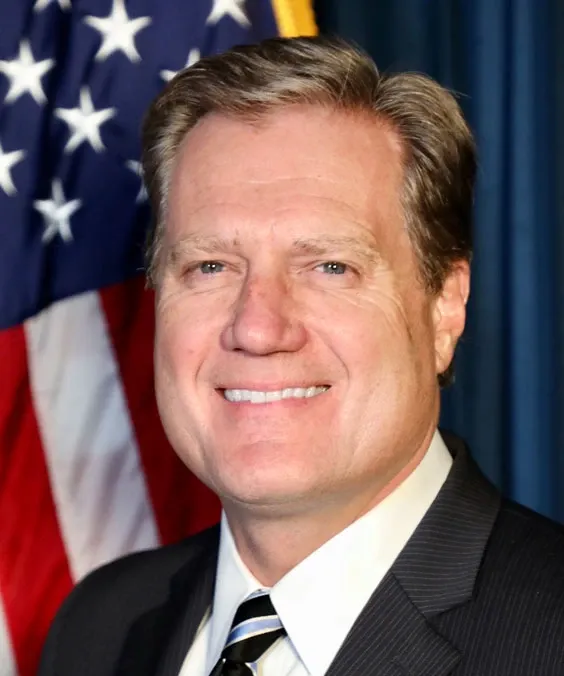
Jul 9, 2012
Since I was elected to Congress in 2010, I have been looking closely at the reason why one class of workers, the union retirees, were given preferential treatment over the non-union salaried retirees.
The Public Record
Bill Leslie Johnson is an American politician and member of the Republican Party who has served as the U.S. Representative for Ohio's 6th congressional district since January 5, 2011. He has been involved in various legislative efforts during his tenure, focusing on issues such as energy policy, healthcare, and economic development. Johnson has been an advocate for conservative principles and has worked to promote job creation and support for local businesses in his district. He has also served on several committees, contributing to discussions on national security and veterans' affairs.
Since I was elected to Congress in 2010, I have been looking closely at the reason why one class of workers, the union retirees, were given preferential treatment over the non-union salaried retirees.
H.R. 5948, Veteran's Fiduciary Reform Act of 2012, introduced by Representative Bill Johnson [R-OH], provides additional enhanced background checks for fiduciaries managing veterans' funds.
I am proud to co-sponsor this bill. I urge my colleagues to consider adding their support.
Did VA ever conduct a detailed investigation into this issue and, if so, why has Congress never been informed?
However, it is also clear that actions by the VA's purchasing agents have greatly reduced the chances for getting the best value in prosthetics acquisition.
I think we have a better understanding of where you are coming from, but I think you also have a better understanding of our concerns as well.
I request your response to the enclosed questions for the record I am submitting in reference to the Oversight and Investigations Subcommittee hearing entitled 'Purchasing Perspective: VA's Prosthetics Paradox.'
We call on this Subcommittee to seriously consider passage of H.R. 805, the Injured and Amputee Veterans Bill of Rights.
The Committee looks forward to receiving the VA's detailed plan on changes to its acquisition structure for prosthetics.
Actions by the VA's purchasing agents have greatly reduced the chances for getting the best value in prosthetics acquisition.
Such an inclusive definition means that small policy changes can have impacts on areas that would not otherwise be impacted.
When can this Committee expect to see the full detailed plan on reorganizing your prosthetics purchasing process?
You know, not doing things for 30 years, working off of expired directives, 11 years between reviewing documents. That is part of what has gotten us into this mess now, wouldn't you agree?
Numerous contracts reviewed by this Subcommittee show VA purchasers splitting contracts in order to remain under a specific price threshold for purchase.
Many physicians at the VA are part-time employees and in this capacity can promote companies with which they are associated as consultants.
Are there any instances where DoD doesn't document procurements, whether they are on- or off-contract?
Does the Department of Defense use any mechanism similar to section 8123 of title 38 for its acquisition of prosthetic appliances?
Politicians like Bill Johnson