Nov 19, 2019
They hate that word, 'entitlements,' because they invested in those programs.
The Public Record
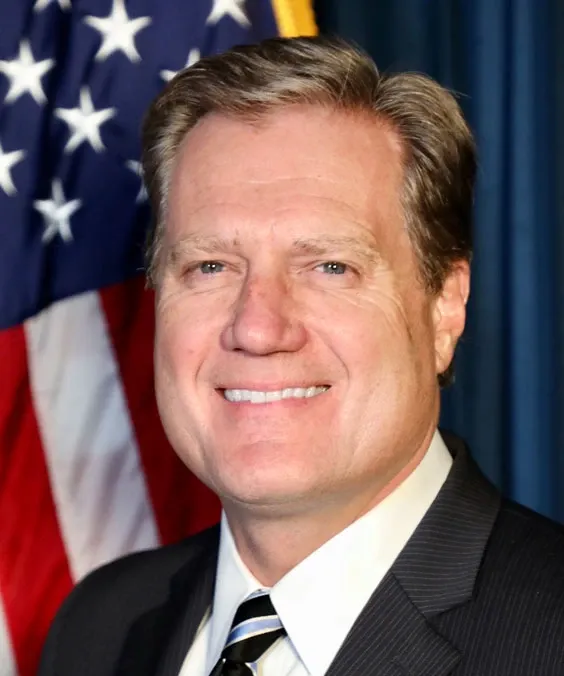
Bill Leslie Johnson is an American politician and member of the Republican Party who has served as the U.S. Representative for Ohio's 6th congressional district since January 5, 2011. He has been involved in various legislative efforts during his tenure, focusing on issues such as energy policy, healthcare, and economic development. Johnson has been an advocate for conservative principles and has worked to promote job creation and support for local businesses in his district. He has also served on several committees, contributing to discussions on national security and veterans' affairs.
They hate that word, 'entitlements,' because they invested in those programs.
I am going to submit to you that we got to get back on track on this Committee and produce a budget.
I am very concerned about the consequences of our growing national debt and what that will have on the economic security and quality of life for our children and grandchildren.
We need to ensure our laws and regulations foster competitive markets that allow our innovators to innovate and to compete.
Many of my colleagues on this committee have repeatedly and rightfully expressed concerns about top-down Federal proposals such as the likes of the Green New Deal.
The goal here today of the hearing is to get 5G done and get it done right, and get it done as soon as possible.
It is time for some action, and I am committed to fighting to solve this basic infrastructure need in rural communities, to keep them alive, and to bridge the digital divide.
The lack of broadband is hollowing out communities throughout rural America.
It should not come as a surprise that my focus is on how to leverage a valuable asset to deliver broadband to unserved rural communities.
In my view, this would enable a transparent and competitive process and ensure the taxpayers are the primary beneficiary from any auction or sale of this national resource.
The question is not whether this important mid-band spectrum should be repurposed but what process the FCC should use to transition C-band spectrum from satellite to terrestrial wireless broadband use.
We simply don't believe that you can ground our economy to a standstill in order to get there.
I think this idea, this notion of 100 percent clean energy for our transportation network, is a very noble, a noble goal.
But who are the ones that are the most disproportionately affected by a use tax when we do that? It is those that live in rural America.
Rather than kick the can down the road again, Congress should work together across the aisle collectively, in a bipartisan way, to find a permanent, sustainable solution for the Highway Trust Fund.
Congress has a responsibility to provide the states certainty so that they can build and maintain infrastructure that our communities need.
One of the provisions of the Tax Cuts and Jobs Act that encourages families to have children and to grow their families if they want to is the child tax credit.
You know, we talk a lot about workforce development. In the aggregate, America does not have a birth rate that is replacing the aging, retiring workforce.
So if we want to get serious about inequality, I give you one way that we can start, Mr. Chairman. Let us try to all work together.
But do you know what? Under the Tax Cuts and Jobs Act, those people in Southeast Missouri ... do not have to pay one cent in federal taxes if they make $55,000 or less.
When you are talking about the child, the Tax Cuts and Jobs Act, it was my provision that helped double the child tax credit, and, sir, it is refundable.
If we want to get serious about ending inequality, we need to make sure that we do not keep and push people down to stay reliant on federal government programs.
It lowered taxes on middle and lower income families. It lowered taxes for virtually all Americans.
Politicians like Bill Johnson