Jan 30, 2023
I am deeply disappointed with the majority's failure to explicitly include any reference to environmental justice, racial or economic disparities, or inequality in their document organizing the jurisdiction of this committee.
The Public Record
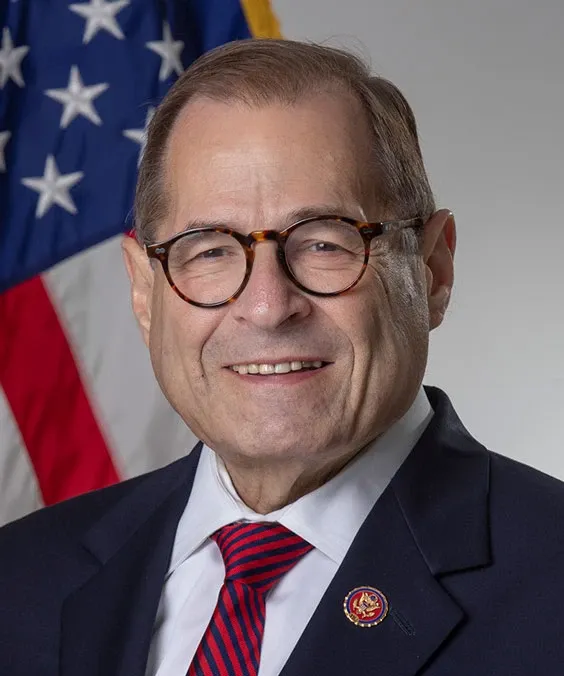
Yvette Diane Clarke is a member of the United States House of Representatives, representing New York's 9th congressional district since 2007. A member of the Democratic Party, she has focused on issues such as healthcare, education, and civil rights throughout her tenure. Clarke has been an advocate for affordable housing and has worked on initiatives to improve the quality of life for her constituents in Brooklyn. She is known for her commitment to social justice and community development.
I am deeply disappointed with the majority's failure to explicitly include any reference to environmental justice, racial or economic disparities, or inequality in their document organizing the jurisdiction of this committee.
We can't amplify enough the need for there to be a National movement around cyber hygiene.
My hope is that swift implementation will yield important security benefits, eliminate duplicative reporting frameworks, and encourage harmonization across the interagency.
We have recently this year passed legislation that I authored requiring the reporting of major cyber incidents to CISA.
His commitment to bipartisanship and his commitment to the work of this committee has been uplifting.
The United States desperately needs to revamp its playbook for critical infrastructure cybersecurity.
The U.S. has the technology and the knowledge to secure these systems but has not prioritized the resources to do so.
The consequences can be deadly. An OT disruption could hurt our communities, our economy, and even our National security.
I would like to thank the witnesses for participating in today's hearing on securing the industrial control systems at the heart of our Nation's critical infrastructure.
I thank you once again. I thank our witnesses for your valuable testimony and the Members for their questions.
For years, I have been extremely concerned by the potential harms posed by deepfakes where AI-enabled synthetic images or recordings appear to be authentic, making it difficult for viewers to distinguish between reality and disinformation.
There is broad agreement that [AI] has security applications that could enable network defenders to automate threat detection and prioritize response.
As the global competition for quantum supremacy continues, the United States must not only work to innovate in this space but proactively mitigate against threats posed by adversaries.
With each passing day, we see the pace of innovation accelerate exponentially.
In March, President Biden signed my legislation, the Cyber Incident Reporting for Critical Infrastructure Act, as part of the omnibus appropriations bill.
Fully implanting Executive Order 14028, will take time and resources. But with other adversaries constantly working to breach Federal networks, it is necessary, it is essential that we make progress to shore up our defenses now.
Continuing to build out CISA's role as the operational lead for Federal network security is a priority for me.
For too long, hate-driven domestic terrorism has made the core of our communities... unsafe. We cannot tolerate that any longer.
I am pleased that both the Biden-Harris administration and this committee are confronting the threat posed by domestic extremists with such urgency.
Thank you, Mr. Chairman, and I thank you, Secretary Mayorkas, for diligence and your commitment to our Nation.
The United States response to the Ukrainian asylum seekers and refugees has illustrated that we are capable of processing migrants when we want to.
These policies have had a disproportionate impact on people of African descent because they face anti-Black discrimination and violence throughout Mexico.
Title 42, in my humble opinion, is an inhumane policy that has allowed CBP to expel about 1.7 million migrants without granting them access to the asylum system.
The United States desperately needs to revamp the playbook it uses for critical infrastructure cybersecurity.
Politicians like Yvette Clarke