Political Quotes

Teddy Roosevelt

The Public Record

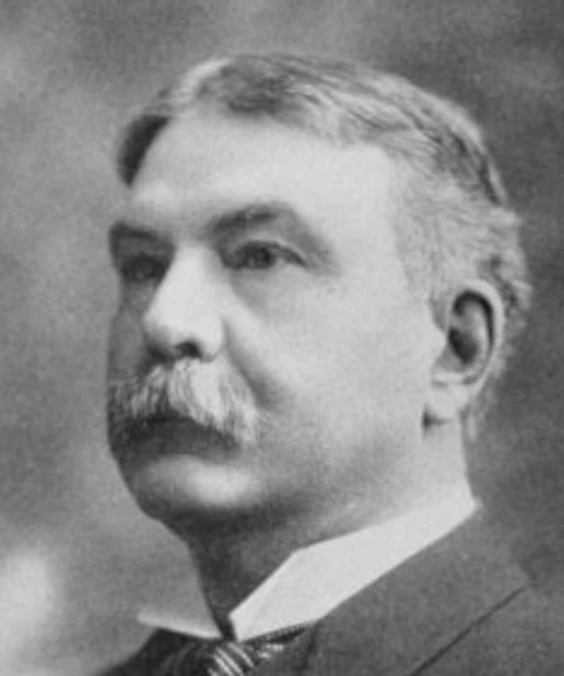
Theodore Roosevelt was the 26th President of the United States, serving from 1901 to 1909. A member of the Republican Party, he was born on October 27, 1858, in New York. Roosevelt was a prominent leader of the Progressive Movement, advocating for domestic policies that included trust-busting, regulation of corporations, and conservation of natural resources. His administration is noted for significant reforms and the establishment of national parks and forests.

Quotes by year · 190219122,141 total · peak 1905 (747)
1902: 355 quotes1903: 523 quotes1904: 180 quotes1905: 747 quotes1906: 136 quotes1907: 46 quotes1908: 56 quotes1909: 60 quotes1910: 20 quotes1912: 18 quotes
Apr 28, 1902

As a mark of respect to the memory of J. Sterling Morton, formerly Secretary of Agriculture, the President directs that the National flag be displayed at half-mast upon the White House and other federal buildings in the city of Washington…

presidency.ucsb.edu
Apr 18, 1902

To you much has been given, and woe and shame to you if we cannot rightfully expect much from you in return.

presidency.ucsb.edu
Apr 18, 1902

When it comes to rendering service, that which counts chiefly with a college graduate, as with any other American citizen, is not intellect so much as what stands above mere power of body, or mere power of mind, but must in a sense include…
presidency.ucsb.edu
Apr 18, 1902

One piece of first-rate work is worth a thousand pieces of second-rate work.

presidency.ucsb.edu
Apr 18, 1902

Not one in a hundred of us is fit to be in the highest sense a productive scholar, but all of us are entirely fit to do decent service if we care to take the pains.

presidency.ucsb.edu
Apr 18, 1902

The timid good man counts but little in the rough business of trying to do well the world's work.

presidency.ucsb.edu
Apr 18, 1902

The only first-rate work is the work done by the man who does it for the sake of doing it well, who counts the deed itself as his reward.

presidency.ucsb.edu
Apr 18, 1902

The man who counts is the man who is decent and who makes himself felt as a force for decency, for cleanliness, for civic righteousness.

presidency.ucsb.edu
Apr 18, 1902

If we think we can render it without taking the pains, if we think we can render it by feeling how nice it would be to render it—why, the value of that service will be but little.

presidency.ucsb.edu
Apr 18, 1902

In the unending strife for civic betterment, small is the use of these people who mean well, but who mean well feebly.

presidency.ucsb.edu
Apr 18, 1902

If he does not have it, no matter what other qualities he may have, he will find himself at the mercy of those who, without possessing his desire to do right, know only too well how to make the wrong effective.

presidency.ucsb.edu
Apr 18, 1902

If a man is strong in mind and body and misuses his strength then he becomes simply a foe to the body politic, to be hunted down by all decent men.

presidency.ucsb.edu
Apr 18, 1902

The only first-rate work is the work done by the man who does it for the sake of doing it well.

presidency.ucsb.edu
Apr 15, 1902

The public good would be promoted by setting apart and reserving said lands as a public reservation.

presidency.ucsb.edu
Apr 15, 1902

It appears that the public good would be promoted by setting apart and reserving said lands as a public reservation.

presidency.ucsb.edu
Apr 15, 1902

The reservation hereby established shall be known as The Dismal River Forest Reserve.

presidency.ucsb.edu
Jan 1, 1900

Every man who by vote and voice from time to time took part in adding to our fleet, in buying the armor, in preparing the gun-factories, in increasing the personnel and enabling it to practice, deserves well of the whole nation, and a…

gutenberg.org
Jan 1, 1900

If disaster comes through lack of preparedness, the fault necessarily lies far less with the men under whom the disaster actually occurs than with those to whose wrong-headedness or short-sighted indifference in time past the lack of…

gutenberg.org
Jan 1, 1900

The majority of the men can never be known by name, but the fact that they did well their part in the deed is of vastly more importance than the obtaining of any reward for it, whether by way of recognition or otherwise; and this fact will…

gutenberg.org
Jan 1, 1900

Without his brilliancy their labor might be wasted, but without their labor his brilliancy would be of no avail.

gutenberg.org
Jan 1, 1900

The public speakers and newspaper writers who may be loudest in clamoring for war are often precisely the men who clamor against preparations for war.

gutenberg.org
Jan 1, 1900

Fifteen years after the close of the contest in which Farragut took rank as one of the great admirals of all time, the splendid navy of which he was the chief ornament had become an object of derision, to every third-rate power in Europe…

gutenberg.org
Jan 1, 1900

Our men were as brave as ever, but in war their courage would have been of no more avail than the splendid valor of the men who sank with their guns firing and flags flying when the great Confederate ironclad came out to Hampton Roads.

gutenberg.org
Jan 1, 1900

Probably the best way (although no way is infallible) to tell the worth of a naval commander as yet untried in war is to get at the estimate in which he is held by the best fighting men who would have to serve under him.

gutenberg.org
Jan 1, 1900

On the bridge, in the gun-turrets, in the engine-room, and behind the quick-firers, every one alike, from the highest to the lowest, was eager for the war, and was in heart, mind, and body, of the very type which makes the best kind of…

gutenberg.org

Politicians like Teddy Roosevelt