At the very beginning the Government should make clear, beyond shadow of doubt, its intention to pursue this policy on lines of the broadest public interest.
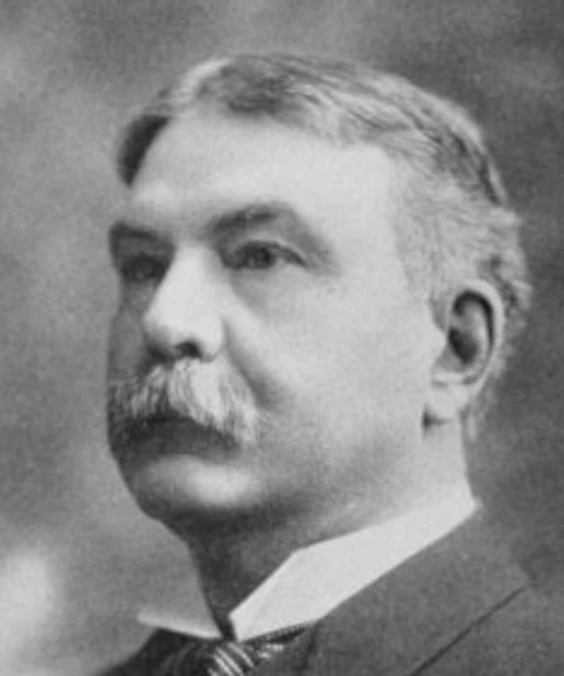
Teddy Roosevelt
The Public Record
Theodore Roosevelt was the 26th President of the United States, serving from 1901 to 1909. A member of the Republican Party, he was born on October 27, 1858, in New York. Roosevelt was a prominent leader of the Progressive Movement, advocating for domestic policies that included trust-busting, regulation of corporations, and conservation of natural resources. His administration is noted for significant reforms and the establishment of national parks and forests.
gutenberg.org
Our people as a whole will profit, for successful home-making is but another name for the upbuilding of the nation.
Indeed, the products of irrigation will be consumed chiefly in upbuilding local centers of mining and other industries, which would otherwise not come into existence at all.
The reclamation and settlement of the arid lands will enrich every portion of our country, just as the settlement of the Ohio and Mississippi valleys brought prosperity to the Atlantic States.
The object of the Government is to dispose of the land to settlers who will build homes upon it.
It is as right for the National Government to make the streams and rivers of the arid region useful by engineering works for water storage as to make useful the rivers and harbors of the humid region by engineering works of another kind.
It is properly a national function, at least in some of its features.
Far-reaching interstate problems are involved; and the resources of single States would often be inadequate.
Nor can it be best accomplished by the individual States acting alone.
Their construction has been conclusively shown to be an undertaking too vast for private effort.
Great storage works are necessary to equalize the flow of streams and to save the flood waters.
Forest conservation is therefore an essential condition of water conservation.
They prevent the soil from washing, and so protect the storage reservoirs from filling up with silt.
By restraining the streams in flood and replenishing them in drought they make possible the use of waters otherwise wasted.
The forest reserves should be set apart forever for the use and benefit of our people as a whole and not sacrificed to the shortsighted greed of a few.
The increase in deer, elk, and other animals in the Yellowstone Park shows what may be expected when other mountain forests are properly protected by law and properly guarded.
Certain of the forest reserves should also be made preserves for the wild forest creatures.
The forest and water problems are perhaps the most vital internal questions of the United States.
The western half of the United States would sustain a population greater than that of our whole country to-day if the waters that now run to waste were saved and used for irrigation.
In the arid region it is water, not land, which measures production.
The water supply itself depends upon the forest.
The wise administration of the forest reserves will be not less helpful to the interests which depend on water than to those which depend on wood and grass.
We have come to see clearly that whatever destroys the forest, except to make way for agriculture, threatens our well being.
Forest protection is not an end of itself; it is a means to increase and sustain the resources of our country and the industries which depend upon them.
The fundamental idea of forestry is the perpetuation of forests by use.
Politicians like Teddy Roosevelt