We should fail in our duty if we did not try to remedy the evils, but we shall succeed only if we proceed patiently, with practical common sense as well as resolution, separating the good from the bad and holding on to the former while…
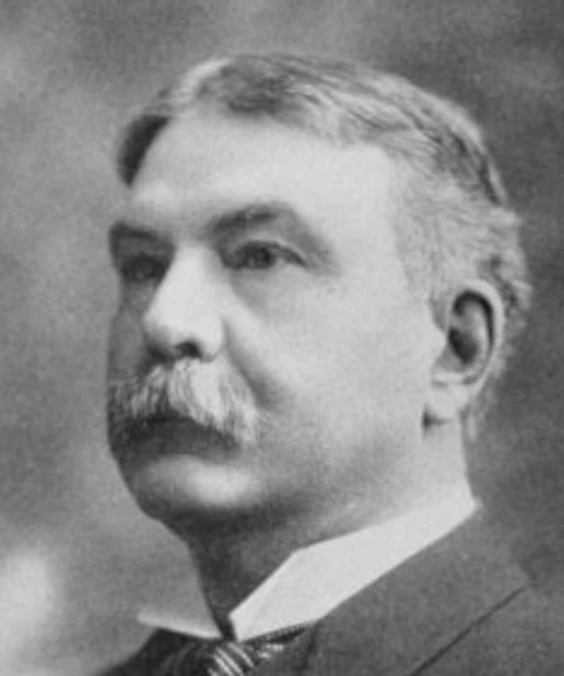
Teddy Roosevelt
The Public Record
Theodore Roosevelt was the 26th President of the United States, serving from 1901 to 1909. A member of the Republican Party, he was born on October 27, 1858, in New York. Roosevelt was a prominent leader of the Progressive Movement, advocating for domestic policies that included trust-busting, regulation of corporations, and conservation of natural resources. His administration is noted for significant reforms and the establishment of national parks and forests.
gutenberg.org
This industrial development must not be checked, but side by side with it should go such progressive regulation as will diminish the evils.
The evils are real and some of them are menacing, but they are the outgrowth, not of misery or decadence, but of prosperity--of the progress of our gigantic industrial development.
It is eminently necessary that we should endeavor to cut out this evil, but let us keep a due sense of proportion; let us not in fixing our gaze upon the lesser evil forget the greater good.
There are more deposits in the savings banks, more owners of farms, more well-paid wage-workers in this country now than ever before in our history.
The plain people are better off than they have ever been before.
Never before has material well-being been so widely diffused among our people.
Great fortunes have been won by those who have taken the lead in this phenomenal industrial development, and most of these fortunes have been won not by doing evil, but as an incident to action which has benefited the community as a whole.
This well-being is due to no sudden or accidental causes, but to the play of the economic forces in this country for over a century; to our laws, our sustained and continuous policies; above all, to the high individual average of our…
No country has ever occupied a higher plane of material well-being than ours at the present moment.
We do not shrink from the struggle before us.
If we should try, all that would follow would be that we should play a large part ignobly and shamefully.
Even if we would, we can not play a small part.
We may either fall greatly or succeed greatly; but we can not avoid the endeavor from which either great failure or great success must come.
In particular, the events of the last four years have definitely decided that, for woe or for weal, our place must be great among the nations.
As a people we have played a large part in the world, and we are bent upon making our future even larger than the past.
Such a Nation, so placed, will surely wrest success from fortune.
It is composed of men the descendants of pioneers, or, in a sense, pioneers themselves; of men winnowed out from among the nations of the Old World by the energy, boldness, and love of adventure found in their own eager hearts.
The wave will recede; but the tide will advance.
This prosperity is not the creature of law, but undoubtedly the laws under which we work have been instrumental in creating the conditions which made it possible, and by unwise legislation it would be easy enough to destroy it.
In the midst of our affliction we reverently thank the Almighty that we are at peace with the nations of mankind; and we firmly intend that our policy shall be such as to continue unbroken these international relations of mutual respect…
In the attainment of this purpose we necessarily claim parity of treatment, under the conventions, throughout the Empire for our trade and our citizens with those of all other powers.
Only by bringing the people of China into peaceful and friendly community of trade with all the peoples of the earth can the work now auspiciously begun be carried to fruition.
It behooves us to continue in these paths, doing what lies in our power to foster feelings of good will, and leaving no effort untried to work out the great policy of full and fair intercourse between China and the nations, on a footing of…
Owing to the rapid growth of our power and our interests on the Pacific, whatever happens in China must be of the keenest national concern to us.
Politicians like Teddy Roosevelt