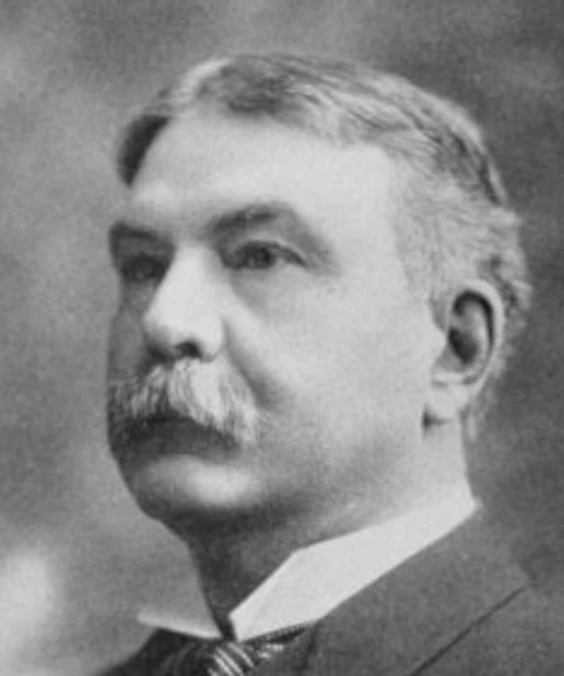
There is but one safe rule in dealing with black men as with white men; it is the same rule that must be applied in dealing with rich men and poor men; that is, to treat each man, whatever his color, his creed, or his social position, with…
Teddy Roosevelt
The Public Record
Theodore Roosevelt was the 26th President of the United States, serving from 1901 to 1909. A member of the Republican Party, he was born on October 27, 1858, in New York. Roosevelt was a prominent leader of the Progressive Movement, advocating for domestic policies that included trust-busting, regulation of corporations, and conservation of natural resources. His administration is noted for significant reforms and the establishment of national parks and forests.
gutenberg.org
Moreover, where any crime committed by a member of one race against a member of another race is avenged in such fashion that it seems as if not the individual criminal, but the whole race, is attacked, the result is to exasperate to the…
The two races can never get on until there is an understanding on the part of both to make common cause with the law-abiding against criminals of any color.
The respectable colored people must learn not to harbor their criminals, but to assist the officers in bringing them to justice.
The white people of the South indict the whole colored race on the ground that even the better elements lend no assistance whatever in ferreting out criminals of their own color.
The innocent frequently suffer, and, it is my observation, more usually suffer than the guilty.
The lesson is this: No good citizen can afford to countenance a defiance of the statutes, no matter what the provocation.
The mob which lynches a negro charged with rape will in a little while lynch a white man suspected of crime.
Lawlessness grows by what it feeds upon; and when mobs begin to lynch for rape they speedily extend the sphere of their operations and lynch for many other kinds of crimes, so that two-thirds of the lynchings are not for rape at all; while…
Mobs frequently avenge the commission of this crime by themselves torturing to death the man committing it; thus avenging in bestial fashion a bestial deed, and reducing themselves to a level with the criminal.
The greatest existing cause of lynching is the perpetration, especially by black men, of the hideous crime of rape--the most abominable in all the category of crimes, even worse than murder.
A great many white men are lynched, but the crime is peculiarly frequent in respect to black men.
To deal with the crime of corruption It is necessary to have an awakened public conscience, and to supplement this by whatever legislation will add speed and certainty in the execution of the law.
Each section, North, South, East, or West, has its own faults; no section can with wisdom spend its time jeering at the faults of another section; it should be busy trying to amend its own shortcomings.
They will not subscribe to the doctrine that any public servant is to be above all criticism.
Courts must ultimately rest their defense upon the inherent strength of the opinions they deliver as the ground for their conclusions and must trust to the calm and deliberate judgment of all the people as their best vindication.
The two important elements of moral character in a judge are an earnest desire to reach a just conclusion and courage to enforce it.
Such criticism is beneficial in proportion as it is fair, dispassionate, discriminating, and based on a knowledge of sound legal principles.
Nothing tends more to render judges careful in their decisions and anxiously solicitous to do exact justice than the consciousness that every act of theirs is to be subjected to the intelligent scrutiny and candid criticism of their…
The opportunity freely and publicly to criticize judicial action is of vastly more importance to the body politic than the immunity of courts and judges from unjust aspersions and attack.
It must be remembered that a preliminary injunction in a labor case, if granted without adequate proof (even when authority can be found to support the conclusions of law on which it is founded), may often settle the dispute between the…
But there must likewise be no such abuse of the injunctive power as is implied in forbidding laboring men to strive for their own betterment in peaceful and lawful ways; nor must the injunction be used merely to aid some big corporation in…
Of course a judge strong enough to be fit for his office will enjoin any resort to violence or intimidation, especially by conspiracy, no matter what his opinion may be of the rights of the original quarrel.
It is a power that should be exercised with extreme care and should be subject to the jealous scrutiny of all men, and condemnation should be meted out as much to the judge who fails to use it boldly when necessary as to the judge who uses…
In this matter of injunctions there is lodged in the hands of the judiciary a necessary power which is nevertheless subject to the possibility of grave abuse.
Politicians like Teddy Roosevelt