But there came a time when the forest had shrunk sufficiently to make each year's cutting a serious matter, and from that time on the destruction proceeded with appalling rapidity; for of course each year of destruction rendered the forest…
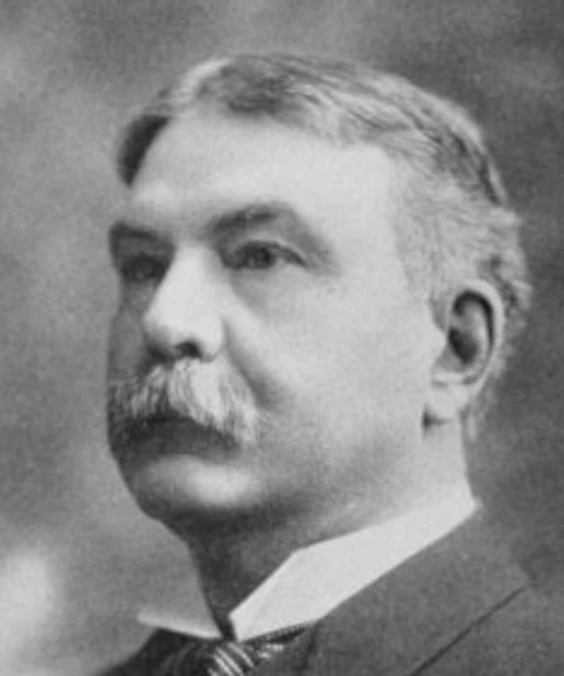
Teddy Roosevelt
The Public Record
Theodore Roosevelt was the 26th President of the United States, serving from 1901 to 1909. A member of the Republican Party, he was born on October 27, 1858, in New York. Roosevelt was a prominent leader of the Progressive Movement, advocating for domestic policies that included trust-busting, regulation of corporations, and conservation of natural resources. His administration is noted for significant reforms and the establishment of national parks and forests.
gutenberg.org
The dry wells, and the wells with water far below the former watermark, bear testimony to the good days of the past and the evil days of the present.
But we can prevent further mischief being done; and it would be in the highest degree reprehensible to let any consideration of temporary convenience or temporary cost interfere with such action, especially as regards the National Forests…
Thanks to our own recklessness in the use of our splendid forests, we have already crossed the verge of a timber famine in this country, and no measures that we now take can, at least for many years, undo the mischief that has already been…
Shortsighted persons, or persons blinded to the future by desire to make money in every way out of the present, sometimes speak as if no great damage would be done by the reckless destruction of our forests.
There are small sections of our own country, in the East and the West, in the Adriondacks, the White Mountains, and the Appalachians, and in the Rocky Mountains, where we can already see for ourselves the damage in the shape of permanent…
Just as a farmer, after all his life making his living from his farm, will, if he is an expert farmer, leave it as an asset of increased value to his son, so we should leave our national domain to our children, increased in value and not…
Any really civilized nation will so use all of these three great national assets that the nation will have their benefit in the future.
If there is any one duty which more than another we owe it to our children and our children's children to perform at once, it is to save the forests of this country, for they constitute the first and most important element in the…
Let them exercise this great power not only honestly and bravely, but with wise insight into the needs and fixed purposes of the people, so that they may do justice and work equity, so that they may protect all persons in their rights, and…
In no other nation in the world do the courts wield such vast and far-reaching power as in the United States.
It is far better, from every standpoint, that the remedy should come from within.
But we must face the fact that there are wise and unwise judges, just as there are wise and unwise executives and legislators.
On an average they stand above any other servants of the community, and the greatest judges have reached the high level held by those few greatest patriots whom the whole country delights to honor.
Our judges should be held in peculiar honor; and the duty of respectful and truthful comment and criticism, which should be binding when we speak of anybody, should be especially binding when we speak of them.
It is an offense against the Republic to say anything which can weaken this respect, save for the gravest reason and in the most carefully guarded manner.
Respect for the law is essential to the permanence of our institutions; and respect for the law is largely conditioned upon respect for the courts.
The courts hold a place of peculiar and deserved sanctity under our form of government.
Real damage has been done by the manifold and conflicting interpretations of the interstate commerce law.
Every executive head who advises violent, instead of gradual, action, or who advocates ill-considered and sweeping measures of reform (especially if they are tainted with vindictiveness and disregard for the rights of the minority) is…
They have been permitted to become a menace largely because the governmental representatives of the people have worked slowly in providing for adequate control over them.
The huge wealth that has been accumulated by a few individuals of recent years, in what has amounted to a social and industrial revolution, has been as regards some of these individuals made possible only by the improper use of the modern…
Every new social relation begets a new type of wrongdoing--of sin, to use an old-fashioned word--and many years always elapse before society is able to turn this sin into crime which can be effectively punished at law.
But there is an important part of the failure which has specially to do with inability to hold to proper account men of wealth who behave badly.
We who make up the mass of the people can not shift the responsibility from our own shoulders.
Politicians like Teddy Roosevelt