You work yourselves, and you bring up your sons to work.
Teddy Roosevelt
The Public Record
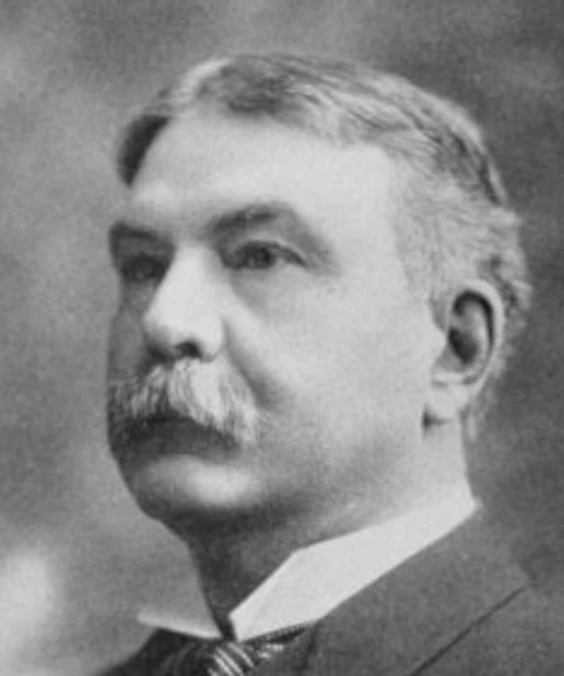
Theodore Roosevelt was the 26th President of the United States, serving from 1901 to 1909. A member of the Republican Party, he was born on October 27, 1858, in New York. Roosevelt was a prominent leader of the Progressive Movement, advocating for domestic policies that included trust-busting, regulation of corporations, and conservation of natural resources. His administration is noted for significant reforms and the establishment of national parks and forests.
gutenberg.org
You men of Chicago have made this city great, you men of Illinois have done your share, and more than your share, in making America great, because you neither preach nor practice such a doctrine.
How dull it is to pause, to make an end, To rust unburnish’d, not to shine in use!
In the academy itself, every first classman should be required in turn to serve as petty officer and officer; his ability to discharge his duties as such should be a prerequisite to his going into the line, and his success in commanding…
It is absurd not to graduate the midshipmen as ensigns; to keep them for two years in such an anomalous position as at present the law requires is detrimental to them and to the service.
I do not believe that there is any other service in the world in which the average of character and efficiency in the enlisted men is as high as is now the case in our own.
The American people have cause for profound gratification, both in view of the excellent condition of the fleet as shown by this cruise, and in view of the improvement the cruise has worked in this already high condition.
The improvement of the ships in every way has been extraordinary, and they have gained far more experience in battle tactics than they would have gained if they had stayed in the Atlantic waters.
Nothing better for the Navy from every standpoint has ever occurred than the cruise of the battle fleet around the world.
It is out of the question, if the present principle of promotion by mere seniority is kept, to expect to get the best results from the higher officers.
A system of promotion by merit, either by selection or by exclusion, or by both processes, should be introduced.
Such military efficiency can only be guaranteed in time of war if there is the most thorough previous preparation in time of peace--a preparation, I may add, which will in all probability prevent any need of war.
The Navy should be treated as a purely military organization, and everything should be subordinated to the one object of securing military efficiency.
The first step--in the direction of preparation to avert war if possible, and to be fit for war if it should come--is to teach our men to shoot.
Unprepared, and therefore unfit, we must sit dumb and helpless to defend ourselves, protect others, or preserve peace.
Fit to hold our own against the strong nations of the earth, our voice for peace will carry to the ends of the earth.
To meet this we should encourage rifle practice among schoolboys, and indeed among all classes, as well as in the military services, by every means in our power.
While teams representing the United States won the rifle and revolver championships of the world against all comers in England this year, it is unfortunately true that the great body of our citizens shoot less and less as time goes on.
Congressional assistance should be given those who are endeavoring to promote rifle practice so that our men, in the services or out of them, may know how to use the rifle.
There should be legislation to provide a complete plan for organizing the great body of volunteers behind the Regular Army and National Guard when war has come.
In case of war it will be of the utmost importance to have a large number of trained officers to use for turning raw levies into good troops.
The scope of retiring boards should be extended so that they could consider general unfitness to command for any cause, in order to secure a far more rigid enforcement than at present in the elimination of officers for mental, physical or…
As a matter of fact, all of the best officers in the highest ranks of the Army are those who have attained their present position wholly or in part by a process of selection.
The higher places should be given to the most deserving men without regard to seniority; at least seniority should be treated as only one consideration.
No man should regard it as his vested right to rise to the highest rank in the Army any more than in any other profession.
Politicians like Teddy Roosevelt