Only thus will it be possible to train the commanders, the quartermasters, the commissaries, the doctors, so that they may by actual experience learn to do their duties, as naval officers by actual experience have learned to do theirs.
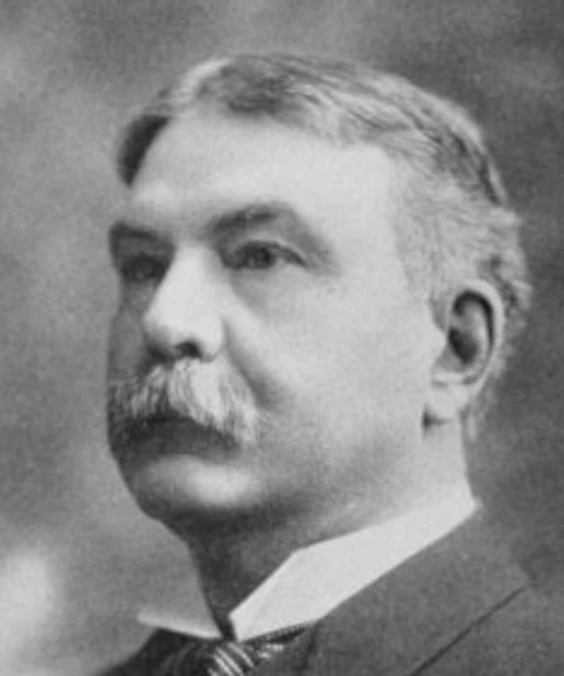
Teddy Roosevelt
The Public Record
Theodore Roosevelt was the 26th President of the United States, serving from 1901 to 1909. A member of the Republican Party, he was born on October 27, 1858, in New York. Roosevelt was a prominent leader of the Progressive Movement, advocating for domestic policies that included trust-busting, regulation of corporations, and conservation of natural resources. His administration is noted for significant reforms and the establishment of national parks and forests.
gutenberg.org
In no service, ashore or afloat, in the world could better men of their grade be found than the lieutenants, and indeed the captains, of the infantry and dismounted cavalry at Santiago.
The admirals who first exercised the new ships in squadrons were giving the training without which Dewey and Sampson would have found their tasks incomparably more difficult.
The young officers who first took hold and developed the possibilities of our torpedo-boats, for instance, really deserve as much credit as their successors have rightly received for handling them with dash and skill during the war.
On the other hand, the national consciousness of capacity to vindicate national honor must be due mainly to the action of those Congressmen who have in fact built up our fleet.
On them will rest the blame of any check to the national arms, and the honor that will undoubtedly be won for the flag by our army will have been won in spite of their sinister opposition.
To get the very best work out of them, they should all be composed of trained and seasoned men; and in any event they should not be sent against a formidable adversary unless each crew has for a nucleus a large body of such men filling all…
It follows that the navy is comparatively free in time of war from the presence in the higher ranks of men utterly unfit to perform their duties.
We read now and then of foreign services where men hate their officers, have no community of interest with them, and no desire to fight for the flag.
Many of the officers of our ships have mentioned to me that during the war punishments almost ceased, because the men who got into scrapes in times of peace were so aroused and excited by the chance of battle that their behavior was…
The “bombs enveloped in petroleum” had no existence save in the brains of the Spaniards and their more credulous sympathizers.
I do not mean that he must love only the negative virtues; I mean he must love the positive virtues also.
This boy is afterward thrown on his own resources, amid wholesome surroundings, and is forced to work hard among boys and men who are real boys and real men doing real work.
If he can once get to a proper understanding of things, he will have a far more hearty contempt for the boy who has begun a course of feeble dissipation, or who is untruthful, or mean, or dishonest, or cruel, than this boy and his fellows…
It is wise to obey the homely old adage, “Work while you work; play while you play.
To take these exceptions as examples would be as unsafe as it would be to advocate blindness because some blind men have won undying honor by triumphing over their physical infirmity and accomplishing great results in the world.
They tend to make it almost as much of a fetich as, in the last century, the French and German nobles made the chase of the stag, when they carried hunting and game-preserving to a point which was ruinous to the national life.
The Greeks were famous athletes, and as long as their athletic training had a normal place in their lives, it was a good thing.
So much for the men who by their demands for the impossible encourage the promise of the impossible, whether in the domain of economic legislation or of legislation which has for its object the promotion of morality.
In either case the people who listen to and believe him are not to be excused, though they may be pitied.
The man who makes such a promise may be a well-meaning but unbalanced enthusiast, or he may be merely a designing demagogue.
No decent politician need compromise in any way save as Washington and Lincoln did.
Again, an honest politician is entirely justified in promising on the stump that he will make no compromise on any question of right and wrong.
Compromise” is so often used in a bad sense that it is difficult to remember that properly it merely describes the process of reaching an agreement.
A public man who directly or indirectly breaks the eighth commandment is just as guilty as an editor or a speaker who breaks the ninth, and it matters little whether the fault be due to venality in the one case or to morbid vanity and mean…
Politicians like Teddy Roosevelt