This is doubly the case now; for, in addition to each man’s individual action, you have learned the great lesson of acting in combination.
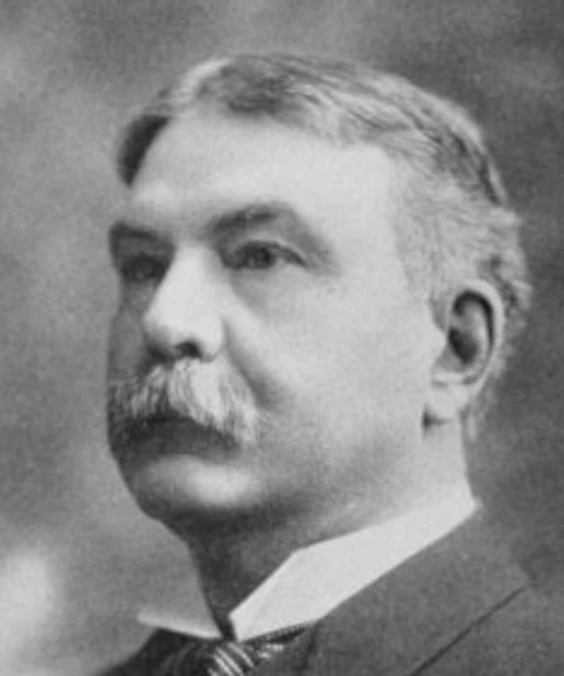
Teddy Roosevelt
The Public Record
Theodore Roosevelt was the 26th President of the United States, serving from 1901 to 1909. A member of the Republican Party, he was born on October 27, 1858, in New York. Roosevelt was a prominent leader of the Progressive Movement, advocating for domestic policies that included trust-busting, regulation of corporations, and conservation of natural resources. His administration is noted for significant reforms and the establishment of national parks and forests.
gutenberg.org
By far the greatest problem, the most far-reaching in its stupendous importance, is that problem, or rather that group of problems, which we have grown to speak of as the labor question.
In short, in the work we have done we are but carrying out the true principles of our democracy.
We committed plenty of blunders, and now and then worse than blunders, in our dealings with the Indians.
Let me insist again, for fear of possible misconstruction, upon the fact that our duty is twofold, and that we must raise others while we are benefiting ourselves.
All honor to the missionary, all honor to the soldier, all honor to the merchant who now in our own day have done so much to bring light into the world’s dark places.
Let us instantly condemn and rectify such wrong when it occurs, and if possible punish the wrongdoer.
In the Philippines we have brought peace, and we are at this moment giving them such freedom and self-government as they could never under any conceivable conditions have obtained had we turned them loose to sink into a welter of blood and…
We speak in no spirit of arrogance when we state as a simple historic fact that never in recent times has any great nation acted with such disinterestedness as we have shown in Cuba.
Our dealings with Cuba illustrate this, and should be forever a subject of just national pride.
But that there will come a strain, a jar, here and there, from commercial and agricultural—that is, from industrial—competition, is almost inevitable.
But, most emphatically, we must make it evident that we intend on this point ever to maintain the old American position.
A good many of you are probably acquainted with the old proverb: “Speak softly and carry a big stick—you will go far.” If a man continually blusters, if he lacks civility, a big stick will not save him from trouble; and neither will…
All that we can do is to settle whether we shall perform these duties well or ill.
Other good people seek to deter us from treading the path of hard but lofty duty by bidding us remember that all nations that have achieved greatness, that have expanded and played their part as world powers, have in the end passed away.
In your own vigorous lives you show by every act how scant is your patience with those who do not see in the life of effort the life supremely worth living.
Surely in speaking to the sons of the men who actually did the rough and hard and infinitely glorious work of making the great Northwest what it now is, I need hardly insist upon the righteousness of this doctrine.
In making homes and carving out careers for yourselves and your children, you have built up this State.
You are typical Americans, for you have done the great, the characteristic, the typical work of our American life.
When the usual hopes and the common aids of man are all gone, nothing remains under God but those passions which have often proved the best ministers of His purpose and the surest protectors of the world.
God calls all the passions out in their keenness and vigor for the present safety of mankind, anger and revenge and the heroic mind, and a readiness to suffer—all the secret strength, all the invisible array of the feelings—all that nature…
These are the feelings which led the ten thousand over the Carduchian mountains; these are the feelings by which a handful of Greeks broke in pieces the power of Persia; and in the fens of the Dutch and in the mountains of the Swiss these…
There are seasons in human affairs when qualities, fit enough to conduct the common business of life, are feeble and useless, when men must trust to emotion for that safety which reason at such times can never give.
All great and extraordinary actions come from the heart.
It was of vital importance to you that the men of your left and your right should do their duty; that they should come forward when the order was to advance; that they should keep the lines with ceaseless vigilance and fortitude if on the…
Politicians like Teddy Roosevelt