Meanwhile there must be a good deal of work and struggle, a good deal of injustice; we shall often see the tower of Siloam fall on the just as well as the unjust.
Teddy Roosevelt
The Public Record
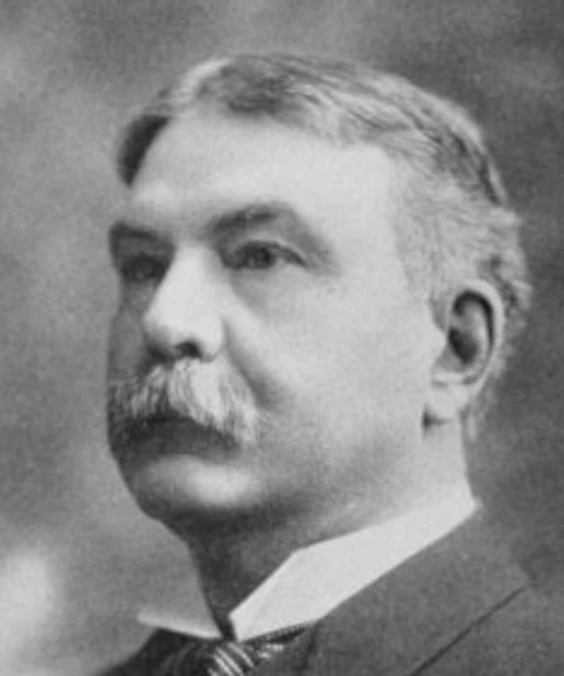
Theodore Roosevelt was the 26th President of the United States, serving from 1901 to 1909. A member of the Republican Party, he was born on October 27, 1858, in New York. Roosevelt was a prominent leader of the Progressive Movement, advocating for domestic policies that included trust-busting, regulation of corporations, and conservation of natural resources. His administration is noted for significant reforms and the establishment of national parks and forests.
gutenberg.org
My friends, it is sometimes easier to preach a doctrine under which the millennium will be promised off-hand if you have a particular kind of law, or follow a particular kind of conduct—it is easier, but it is not better.
We need to keep ever in mind that he is the worst enemy of this country who would strive to separate its people along the lines of section against section, of creed against creed, or of class against class.
The soldiers who fought in the great Civil War fought for liberty under, by, and through the law; and they fought to put a stop once for all to any effort to sunder this country on the lines of sectional hatred; therefore their memory…
The law is to be administered neither for the rich man as such, nor for the poor man as such.
He is entitled to the protection of the law, and in return he is to be required himself to obey the law.
It is sometimes very attractive and very pleasant to make any kind of a promise without thinking whether or not you can fulfil it; but in the after event it is always unpleasant when the time for fulfilling comes; for in the long run the…
I do not think so far as I know that I have ever promised beforehand anything I did not make a strong effort to make good afterward.
There are many different kinds of work to do; but so long as the work is honorable, is necessary, and is well done the man who does it well is entitled to the respect of his fellows.
I do not say merely workingmen, because I hold that every good American who does his duty must be a workingman.
Washington will owe no small part of its future greatness, and that greatness will be great indeed, to the fact that it is thus doing its share in acquiring for the United States the dominance of the Pacific.
Alaska contains a territory which will within this century support as large a population as the combined Scandinavian countries of Europe; those countries from which has sprung as wonderful a race as ever imprinted its characteristics upon…
I thank fortune that the National Legislature has begun to wake up to the fact that Alaska has interests of vital importance not merely to her but to the entire Union.
The men of my own age whom I am addressing will not be old men before we see Alaska one of the rich and strong States of the Union.
There is no other State in the Union, and I include all of them, which has greater natural advantages and a more assured future of greatness than this State of Washington.
You are fortunate in having such climatic conditions, such conditions of soil, that here more than anywhere else the forest renews itself quickly, so as in a comparatively short number of years to be again a great mercantile and industrial…
Our aim should be to get the fullest use from the forest to-day, and yet to get that benefit in ways which will keep the forests for our children in the generations to come; so that, for instance, the country adjoining Puget Sound shall…
The whole question is a business, an economic question; an economic question for the Nation, a business question for the individual.
Exactly as with the building of the Isthmian Canal we shall make our Atlantic and our Pacific coasts in effect continuous, so the possession and peopling of the Alaskan seacoast puts us in a position of dominance as regards the Pacific…
Nor must we forget in speaking of Alaska the immense importance that the Territory has from the standpoint of the needs of the Nation as a whole, as a dominant power in the Pacific.
Just in the same way I want to have you see that the lumber industry is exploited in a way which, while giving a great return to those engaged in it at the moment, shall also secure the preservation of the forests for the settlers and the…
Not only her mines, her fisheries, her forests, but her agriculture and her stock-raising will combine to make Alaska one of the great wealth-producing portions of our Republic.
The immediate cause of the great development of Alaska of course is to be found in its mines; but most of the people of this country are wholly in error when they think of the mines as being the sole or even the chief permanent cause of…
We took Alaska thirty-five years ago, and at last we have begun to wake up to the heritage that thereby we have handed over to our children.
There are critics so feeble and so timid that they shrink back when this Nation asserts that it comes in the category of the nations who dare to be great, and they want to know, forsooth, the cost of greatness and what it means.
Politicians like Teddy Roosevelt