On the other hand, if there is in the long run a lack of prosperity among the two classes named, then all other prosperity is sure to be more seeming than real.
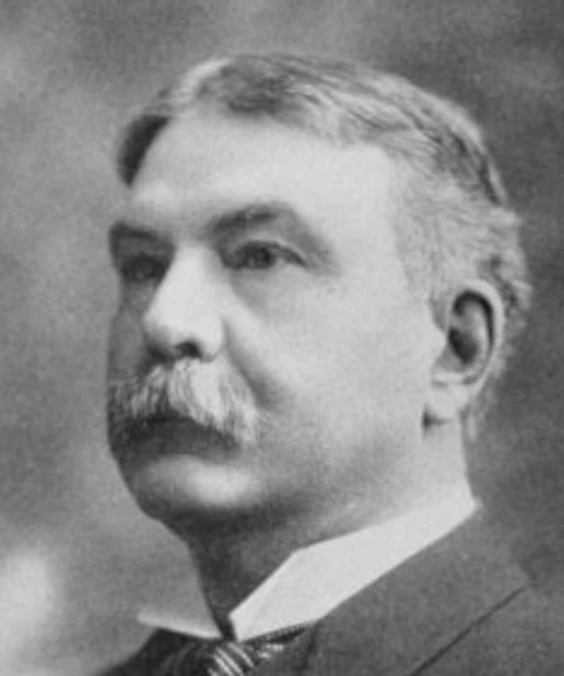
Teddy Roosevelt
The Public Record
Theodore Roosevelt was the 26th President of the United States, serving from 1901 to 1909. A member of the Republican Party, he was born on October 27, 1858, in New York. Roosevelt was a prominent leader of the Progressive Movement, advocating for domestic policies that included trust-busting, regulation of corporations, and conservation of natural resources. His administration is noted for significant reforms and the establishment of national parks and forests.
gutenberg.org
And I ask you all, as Americans proud of your country, from the admiral down to the last enlisted landsman, or the youngest apprentice, to appreciate alike the high honor and heavy responsibility of your positions.
I do not believe that our navy has ever been at a higher point of efficiency.
Every man aboard the Olympia must feel that on him rests a double duty, to see to it that the ship’s name shall be for evermore a symbol of victory and of glory to all the people of our country.
You must know how to fight as well as know how to die; only thus can you become the most efficient fighting force in the world.
But in addition you must know how to use to the utmost advantage the gear and the weapons.
I do not praise you for being brave; that is expected.
There is no good in your preaching to your boys to be brave, if you run away.
Remember that the preaching does not count if it is not backed up by practice.
I want to see each man able to hold his own in the rough work of actual life outside, and also, when he is at home, a good man, unselfish in dealing with wife, or mother, or children.
I want to see him too strong of spirit to submit to wrong, and, on the other hand, ashamed to do wrong to others.
I want to see each young fellow able to do a man’s work in the world, and of a type which will not permit imposition to be practiced upon him.
I want to see every man able to hold his own with the strong, and also ashamed to oppress the weak.
I want to see you, the men of the Holy Name Society, you who embody the qualities which the younger people admire, by your example give those young people the tendency, the trend, in the right direction; and remember that this example…
If you are to be effective as good Christians you must possess strength and courage, or your example will count for little with the young, who admire strength and courage.
They admire those who have the quality of being brave, the quality of facing life as life should be faced, the quality that must stand at the root of good citizenship in peace or in war.
I have told you that I wanted you not only to be decent, but to be strong.
You must feel that the most effective way in which you can preach is by your practice.
It is no use to preach to them if you do not act decently yourself.
If any one of you in the presence of younger boys, and especially the younger people of your own family, misbehave yourself, if you use coarse and blasphemous language before them, you can be sure that these younger people will follow your…
I ask that every man here constitute himself his brother’s keeper by setting an example to that younger brother which will prevent him from getting such a false estimate of life.
Oh, how often you see some young fellow who boasts that he is going to “see life,” meaning by that that he is going to see that part of life which it is a thousandfold better should remain unseen!
I do not expect you to lose one particle of your strength or courage by being decent.
I do not want to see Christianity professed only by weaklings; I want to see it a moving spirit among men of strength.
Our whole effort should be toward securing a combination of the strong qualities with those qualities which we term virtues.
Politicians like Teddy Roosevelt