The living can best show their respect for the memory of the great dead by the way in which they take to heart and act upon the lessons taught by the lives which made these dead men great.
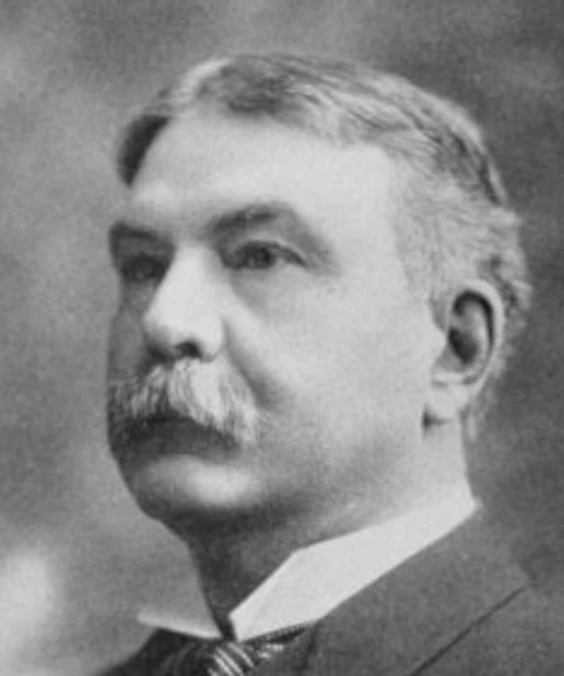
Teddy Roosevelt
The Public Record
Theodore Roosevelt was the 26th President of the United States, serving from 1901 to 1909. A member of the Republican Party, he was born on October 27, 1858, in New York. Roosevelt was a prominent leader of the Progressive Movement, advocating for domestic policies that included trust-busting, regulation of corporations, and conservation of natural resources. His administration is noted for significant reforms and the establishment of national parks and forests.
gutenberg.org
I trust we shall soon have a proper statue of Abraham Lincoln, to whom more than to any other one man this Nation owes its salvation.
There are many qualities which we need alike in private citizen and in public man, but three above all—three for the lack of which no brilliancy and no genius can atone—and those three are courage, honesty, and common-sense.
As you did not win in a month or a year, but only after long years of hard and dangerous work, so the fight for governmental honesty and efficiency can be won only by the display of similar patience and similar resolution and power of…
So in achieving good government the fundamental factor must be the character of the average citizen; that average citizen’s power of hatred for what is mean and base and unlovely; his fearless scorn of cowardice and his determination to…
In the long run in the Civil War the thing that counted for more than aught else was the fact that the average American had the fighting edge; had within him the spirit which spurred him on through toil and danger, fatigue and hardship, to…
Good laws in the State, like a good organization in an army, are the expressions of national character.
In each case the all-important factor was and is the character of the individual man.
There was no patent device for securing victory by force of arms forty years ago; and there is no patent device for securing victory for the forces of righteousness in civil life now.
You left us the right of brotherhood with your gallant foes who wore the gray; the right to feel pride in their courage and their high fealty to an ideal, even though they warred against the stars in their courses.
You left us a reunited country; reunited in fact as well as in name.
The patriotism, the courage, the unflinching resolution and steadfast endurance of the soldiers whose triumph was crowned at Appomattox must be supplemented on our part by civic courage, civic honesty, cool sanity, and steadfast adherence…
It now rests with us in civil life to make good by our deeds the deeds which you who wore the blue did in the great years from ’61 to ’65.
In such case we should merely have added another to the lamentably long list of cases in which peoples have shown that after winning their liberty they are wholly unable to make good use of it.
We take just pride in the great deeds of the men of 1776, but we must keep in mind that the Revolutionary War would have been shorn of wellnigh all its results had the side of union and liberty been defeated in the Civil War.
But there has never been another war in which the issues at stake were so large, looked at from either standpoint.
I confidently predict that when the final judgment of history is recorded it will be said that in no other war of which we have written record was it more vitally essential for the welfare of mankind that victory should rest where it…
Moreover, every friend of liberty, every believer in self-government, every idealist who wished to see his ideals take practical shape, wherever he might be in the world, knew that the success of all in which he most believed was bound up…
The great American Republic would have become a memory of derision; and the failure of the experiment of self-government by a great people on a great scale would have delighted the heart of every foe of republican institutions.
You men of the Grand Army by your victory not only rendered all Americans your debtors for evermore, but you rendered all humanity your debtors.
Finally, I believe in always combining strength with the sweetness.
I believe that you have a thousandfold more enjoyment if work comes first; but get time to play also.
I believe in play; I believe in happiness, and in the joy of living; and I do not believe in the life that is nothing but play.
I want to see men decent; I want to see them act squarely; I want to see them work.
Finally we must keep ever in mind that a republic such as ours can exist only by virtue of the orderly liberty which comes through the equal domination of the law over all men alike, and through its administration in such resolute and…
Politicians like Teddy Roosevelt