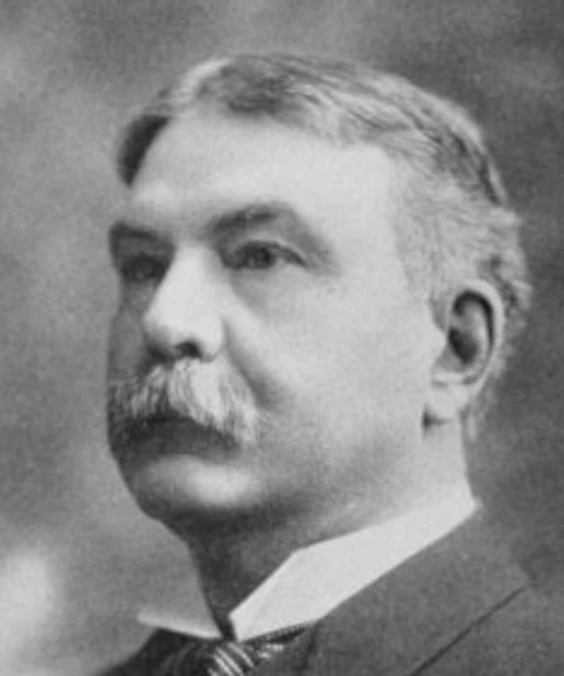
I earnestly urge that the increase asked for by the Secretary of the Navy in the appropriation for improving the marksmanship be granted.
Teddy Roosevelt
The Public Record
Theodore Roosevelt was the 26th President of the United States, serving from 1901 to 1909. A member of the Republican Party, he was born on October 27, 1858, in New York. Roosevelt was a prominent leader of the Progressive Movement, advocating for domestic policies that included trust-busting, regulation of corporations, and conservation of natural resources. His administration is noted for significant reforms and the establishment of national parks and forests.
gutenberg.org
Taking the work of the army and the civil authorities together, it may be questioned whether anywhere else in modern times the world has seen a better example of real constructive statesmanship than our people have given in the Philippine…
So much have our people felt this that in the Platt Amendment we definitely took the ground that Cuba must hereafter have closer political relations with us than with any other power.
Every employer, ever wage-worker, must be guaranteed his liberty and his right to do as he likes with his property or his labor so long as he does not infringe upon the rights of others.
Of course, when the conditions have favored the growth of so much that was good, they have also favored somewhat the growth of what was evil.
We may either fail greatly or succeed greatly; but we can not avoid the endeavor from which either great failure or great success must come.
We advocate the “open door” with all that it implies; not merely the procurement of enlarged commercial opportunities on the coasts, but access to the interior by the waterways with which China has been so extraordinarily favored.
China has agreed to pay adequate indemnities to the states, societies, and individuals for the losses sustained by them and for the expenses of the military expeditions sent by the various powers to protect life and restore order.
The remarkable growth of the postal service is shown in the fact that its revenues have doubled and its expenditures have nearly doubled within twelve years.
The advancement of the highest interests of national science and learning and the custody of objects of art and of the valuable results of scientific expeditions conducted by the United States have been committed to the Smithsonian…
The ration system, which is merely the corral and the reservation system, is highly detrimental to the Indians.
There is no use in attempting to induce agriculture in a country suited only for cattle raising, where the Indian should be made a stock grower.
On the reservations care should be taken to try to suit the teaching to the needs of the particular Indian.
The administration of these islands should be as wholly free from the suspicion of partisan politics as the administration of the army and navy.
It is important to have this system obtain at home, but it is even more important to have it applied rigidly in our insular possessions.
The navy yards and postal service illustrate, probably better than any other branches of the government, the great gain in economy, efficiency, and honesty due to the enforcement of this principle.
What is needed is proved power of command and capacity to work well in the field.
In our army we can not afford to have rewards or duties distributed save on the simple ground that those who by their own merits are entitled to the rewards get them, and that those who are peculiarly fit to do the duties are chosen to…
It is our duty to see that their training is of a kind to insure the highest possible expression of power to these units when acting in combination.
The men must be trained and drilled under a thorough and well-planned system of progressive instruction, while the recruiting must be carried on with still greater vigor.
The resulting wear upon engines and hulls must be endured; a battleship worn out in long training of officers and men is well paid for by the results, while, on the other hand, no matter in how excellent condition, it is useless if the…
Our ships must be assembled in squadrons actively cruising away from harbors and never long at anchor.
This is possible only with highly drilled crews and officers, and this in turn imperatively demands continuous and progressive instruction in target practice, ship handling, squadron tactics, and general discipline.
Even in time of peace a warship should be used until it wears out, for only so can it be kept fit to respond to any emergency.
To send any warship against a competent enemy unless those aboard it have been trained by years of actual sea service, including incessant gunnery practice, would be to invite not merely disaster, but the bitterest shame and humiliation.
Politicians like Teddy Roosevelt