We face the future with our past and our present as guarantors of our promises; and we are content to stand or to fall by the record which we have made and are making.
Teddy Roosevelt
The Public Record
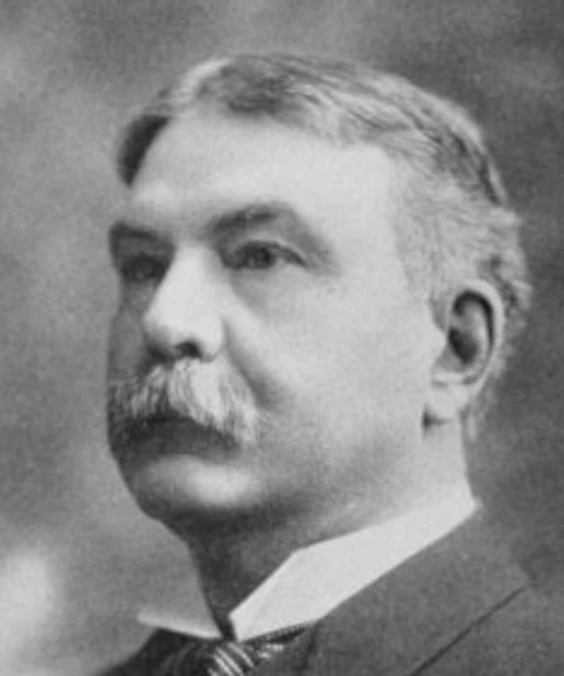
Theodore Roosevelt was the 26th President of the United States, serving from 1901 to 1909. A member of the Republican Party, he was born on October 27, 1858, in New York. Roosevelt was a prominent leader of the Progressive Movement, advocating for domestic policies that included trust-busting, regulation of corporations, and conservation of natural resources. His administration is noted for significant reforms and the establishment of national parks and forests.
gutenberg.org
We have never sought refuge in criticism and complaint instead of action.
During the seven years that have just passed there is no duty, domestic or foreign, which we have shirked; no necessary task which we have feared to undertake, or which we have not performed with reasonable efficiency.
Above all they should give us strength with the men and women who are the spiritual heirs of those who upheld the hands of Abraham Lincoln; for we are striving to do our work in the spirit with which Lincoln approached his.
We are steadily striving to transform this into self-government by the Filipinos assisted by Americans.
To withdraw our Government from the islands at this time would mean to the average native the loss of his barely won civil freedom.
To have gone faster than we have already gone in giving the islanders a constantly increasing measure of self-government would have been disastrous.
Our foothold in the Philippines greatly strengthens our position in the competition for the trade of the East; but we are governing the Philippines in the interest of the Philippine people themselves.
We have proved in effective fashion that we wish the Chinese Empire well and desire its integrity and independence.
We seek international amity for the same reasons that make us believe in peace within our own borders; and we seek this peace not because we are afraid or unready, but because we think that peace is right as well as advantageous.
We hold that the prosperity of each nation is an aid and not a hindrance to the prosperity of other nations.
We earnestly desire friendship with all the nations of the New and Old Worlds; and we endeavor to place our relations with them upon a basis of reciprocal advantage instead of hostility.
Our foreign policy has been so conducted that, while not one of our just claims has been sacrificed, our relations with all foreign nations are now of the most peaceful kind; there is not a cloud on the horizon.
The humblest individual is to have his rights safeguarded as scrupulously as those of the strongest organization, for each is to receive justice, no more and no less.
Each is to be granted the full protection of the law, and each in turn is to be held to a strict obedience to the law; for no man is above it and no man below it.
Each kind of organization is to be favored so long as it acts in a spirit of justice and of regard for the rights of others.
We recognize the organization of capital and the organization of labor as natural outcomes of our industrial system.
Judging by the history of the last twelve years, down to this very month, is there justification for believing that under similar circumstances and with similar initial differences of opinion, our opponents would have achieved any…
This is an illustration of the governing capacity which entitles us to the confidence of the people not only in our purposes but in our practical ability to achieve those purposes.
We believe in reciprocity with foreign nations on the terms outlined in President McKinley’s last speech, which urged the extension of our foreign markets by reciprocal agreements whenever they could be made without injury to American…
The standard of living of our wage-workers is higher than that of any other country, and it can not so remain unless we have a protective tariff which shall always keep as a minimum a rate of duty sufficient to cover the difference between…
That whenever the need arises there should be a readjustment of the tariff schedules is undoubted; but such changes can with safety be made only by those whose devotion to the principle of a protective tariff is beyond question; for…
We have enacted a tariff law under which during the past few years the country has attained a height of material well-being never before reached.
All of the war taxes imposed during the Spanish War have been removed with a view to relieve the people and to prevent the accumulation of an unnecessary surplus.
So long as the Republican party is in power the gold standard is settled, not as a matter of temporary political expediency, not because of shifting conditions in the production of gold in certain mining centres, but in accordance with…
Politicians like Teddy Roosevelt