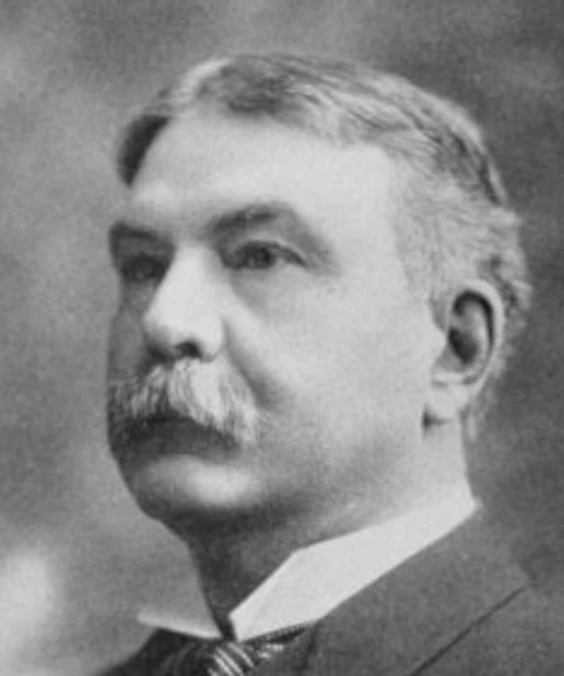
There are a good many baseless alarms which some worthy people feel from time to time in this country, and which other less worthy people affect to feel, but of all foolish crimes, of all baseless figments of a disturbed imagination, the…
Teddy Roosevelt
The Public Record
Theodore Roosevelt was the 26th President of the United States, serving from 1901 to 1909. A member of the Republican Party, he was born on October 27, 1858, in New York. Roosevelt was a prominent leader of the Progressive Movement, advocating for domestic policies that included trust-busting, regulation of corporations, and conservation of natural resources. His administration is noted for significant reforms and the establishment of national parks and forests.
gutenberg.org
For material well-being, material prosperity, success in arts, in letters, great industrial triumphs, all of them and all of the structures raised thereon will be as evanescent as a dream if they do not rest on “the righteousness that…
It is an important thing for the people of this Nation to remember their rights, but it is an even more important thing for them to remember their duties.
It is a serious and dangerous thing for any man to tear loose from the soil, from the religion in which he and his forbears have taken root, and to be transplanted into a new land.
From that day to this the history of the growth in population of this Nation has consisted largely, in some respects mainly, of the arrival of successive waves of newcomers to our shores; and the prime duty of those already in the land is…
Many great buildings and beautiful buildings will be created by private effort; but many of the greatest buildings must necessarily be erected by the Government, national, State, or municipal.
A very large percentage of the durable work, the work which is lasting, and therefore the beauty of which, if it exists, is also lasting, must be done by the Government.
And in this Nation of ours, while there is very much in which we have succeeded marvelously, I do not think that if we look dispassionately at what we have done we will say that beauty has been exactly the strong point of the Nation.
There are things in a nation’s life more important than beauty; but beauty is very important.
We do not know the names of the architects and builders of the great cathedrals whose magnificent beauty is an heirloom to civilization.
It is a comparatively easy thing to do work when the reward is to come in the present; but every great nation that has ever existed on this globe has been great because its sons had in them the capacity to work for the well-being of…
Now the real American, the American whom it is worth while to call such, is the man whose belief in and work for America are not merely for the America of to-day, but for the America of the future.
Our policy is consistent to give to every portion of the public domain its highest possible amount of use, and of course that can be given only through the hearty co-operation of the Western people.
I am going to work with, and only with, the man who develops the country.
I ask, with all the intensity that I am capable, that the men of the West will remember the sharp distinction I have just drawn between the man who skins the land and the man who develops the country.
If they do we can help materially; we can direct their efforts, but we can not save the forests unless they wish them to be saved.
It is only as the producing and commercial interests of the country come to realize that they need to have trees growing up in the forest not less than they need the product of the trees cut down that we may hope to see the permanent…
Whatever it may be possible for the Government to accomplish, its work must ultimately fail unless your interest and support give it permanence and power.
The policy is one of helpfulness throughout, and never of hostility or coercion toward any legitimate interest whatsoever.
I believe most emphatically in sentiment, but I want the sentiment to be put into co-operation with the business interests, and that is what is being done.
You have got to act in time or else the Nation would have to submit to prolonged suffering after it had become too late for forethought to avail.
Remember that you can prevent such a timber famine occurring by wise action taken in time, but once the famine occurs there is no possible way of hurrying the growth of the trees necessary to relieve it.
Fire, wasteful and destructive forms of lumbering, and the legitimate use, taken together, are destroying our forest resources far more rapidly than they are being replaced.
In a word, both the production of the great staples upon which our prosperity depends and their movement in commerce throughout the United States are inseparably dependent upon the existence of permanent and suitable supplies from the…
The farmer, East and West, must have timber for numberless uses on his farm, and he must be protected, by forest cover upon the headwaters of the streams he uses, against floods in the East, and the lack of water for irrigation in the West.
Politicians like Teddy Roosevelt