Apr 17, 2018
You have heard from Secretary Mattis regarding if we do away with food, then we need more bullets.
The Public Record
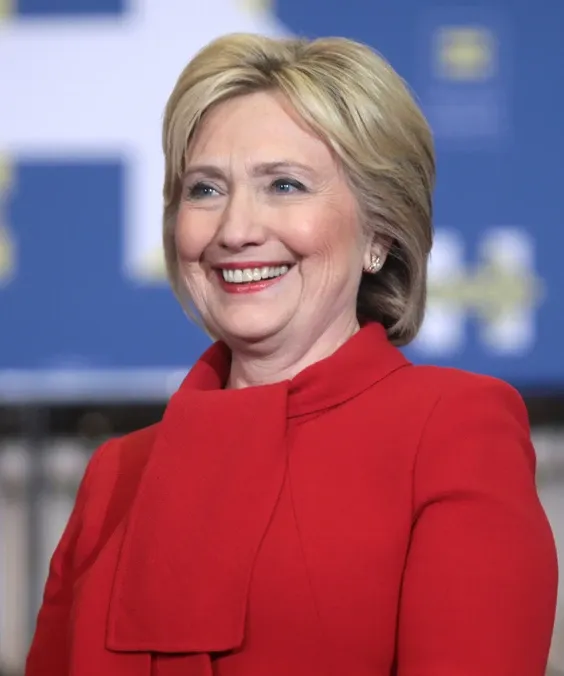
Nita M. Lowey was a prominent Democratic politician who served as a U.S. Representative for New York's 17th congressional district from 1999 until 2021. She was the first woman to chair the House Appropriations Committee, a position she held from 2019 to 2021, where she played a crucial role in shaping federal budgetary decisions and funding allocations. Throughout her tenure, Lowey was known for her advocacy on issues such as healthcare, education, and women's rights, and she worked to secure funding for various programs benefiting her constituents and communities across the nation.
You have heard from Secretary Mattis regarding if we do away with food, then we need more bullets.
I do hope that we can modify the request from the Administration because it sounds to me, from your response, that we could agree a lot more than disagree.
Given these facts, why on earth would this Administration propose eliminating the Commodity Supplemental Food Program, which distributes meals to the elderly?
I would not want to have to depend upon a box of nonperishable for feeding my family.
I find it hard to believe that you will tout this budget to the men and women you used to represent in Georgia.
It is the constitutional duty of Congress to make spending decisions on behalf of the many people we represent at home.
We simply, in my judgment, cannot have a system wherein concealed guns from Kansas or Arizona can be freely carried in Times Square.
I think the public is entitled to understand how this very important investigation is proceeding and your involvement in the investigation.
the less we spend on diplomacy, the more we are going to have to spend on bullets.
the Administration has ignored congressional support for robust international engagement and has once again proposed a crippling 30 percent cut to our diplomatic and development efforts.
If enacted, it would not only hamstring our diplomacy, it would: substantially harm the development capabilities of USAID; recklessly undermine U.S. leadership; put our embassies and staff at risk; stymie our efforts to counter violent…
how can we possible rationalize sending 59,000 people back to those kinds of conditions?
According to the Southern Poverty Law Center, the number of hate groups increased by four percent from 2016 to 2017.
We cannot make America stronger by eliminating the programs that make our nation more secure.
By inserting the policy into every area of global health, we undermine, in my judgment, our effectiveness and make it harder to reach the most vulnerable.
I did not support the JCPOA because I felt it could be more extensive and more inclusive.
This lack of accountability feeds a global perception that the United States condones corruption and human rights violations.
If enacted, this budget would substantially harm critical U.S. interests, put our embassies and diplomats at risk, and stymie our efforts to counter violent extremism and fight terrorism.
I worry about the schools, I worry about feeding programs, and this is not a healthy response.
How can the president and his OMB director be so confident that those who fill the void will support our values or care about the national security of the United States?
I appreciate that, but I am sure you realize that in February, State released a report on the first 6 months of the expanded policy's implementation.
I want to thank you for having this hearing. Thank you for appearing before us.
Politicians like Nita Lowey