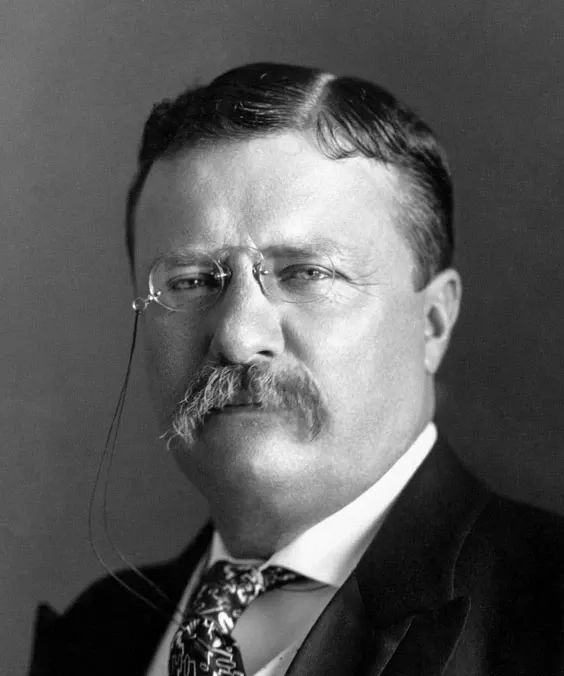
His very pride made it impossible for him to condescend to any violation of a promise.
De Alexander
The Public Record
De Alva Stanwood Alexander was an American journalist, lawyer, historian, and member of the United States House of Representatives, serving seven terms from 1897 to 1911 as a representative of New York state.
gutenberg.org
Even his enemies admitted his capacity as a great executive.
An extraordinary power of application had equipped him with the varied information that would make him an authority in the national life.
Perhaps not many loved him, or longed for his companionship, or had any feeling of tenderness for him; yet, in spite of his manners or want of manners, there was a fascination about the man that often disarmed censure and turned the critic…
Of Clinton, it may be justly said, that he seems most attractive, not as a politician, not as a mayor solicitous for the good government of a growing city, not as a successful promoter of the canal, but as a rugged, inflexible, determined…
His administration, too, saw the earliest attempts made in a systematic way toward the spread of education among the multitudes, his message to the Legislature of 1795 urging a generous appropriation to common schools.
As he grew older he grew more tolerant and humane, substituting imprisonment for the death penalty, and recommending a complete revision of the criminal laws.
Jay and Hamilton looked into the future, Clinton saw only the present.
He lacked the genius of Hamilton, the scholarly, refined integrity of Jay, and the statesmanship of both; but he was by odds the strongest, ablest, and most astute man of his party in the State.
In the two great events of his life--the revolt of the Colonies and the adoption of a Federal Constitution--he undoubtedly swayed the minds of his countrymen to a degree unequalled among those contemporaries who favoured independence and…
Perhaps he was better fitted for an instrument of revolution than a governor of peace, but the influence which he exercised upon his time was prodigious.
He had waked up, at last, to the scandalous barter in bank charters.
It was because of this craftiness, this unscrupulous use of every weapon of political warfare, that the bank hired him.
In addition to this extravagant bonus, its managers agreed to loan the State one million dollars at five per cent. for the construction of canals, and one million to farmers at six per cent. for the improvement of their real estate.
The applicants proposed to pay the school fund four hundred thousand dollars, the literature fund one hundred thousand, and the State one hundred thousand, provided no other bank be chartered for twenty years.
As a statesman, Purdy seems to have been without any guiding principle, or any principle at all.
On principle, Republican members of the Legislature opposed banks, and that principle was overcome by profits; in other words, members must be bought, or the charter would fail.
He was a sincere lover of his country; a statesman of high purpose, and of the most commanding talents.
Even Erastus Root, then just entering his first term in Congress, saw nothing in the transaction to shock society's sense of propriety or to break the loftiest code of morality.
At the present time a legislator could not carry a district in New York if it were known that his vote had been secured by such ill-gotten gains.
It seems incredible in our day that such corruption could go on in broad daylight without a challenge.
During the early years of the last century, efforts to incorporate banks in New York were characterised by such an utter disregard of moral methods, that the period was long remembered as a black spot in the history of the State.
Lewis and the Livingstons opposed him, Tammany detested him, Tompkins was jealous of him, Spencer deserted him; but he had shown he knew how to wait; and when waiting was over, he showed he knew how to act.
To receive this brother with laws that might send him back to death, was to despise the national sentiment of Irishmen; and the men, Clinton declared, who had been indisposed or unable to take account of the force of a national sentiment…
There's a barrel of porter at Tammany Hall, And the Bucktails are swigging it all the night long; In the time of my boyhood 'twas pleasant to call For a seat and cigar 'mid the jovial throng.
Politicians like De Alexander