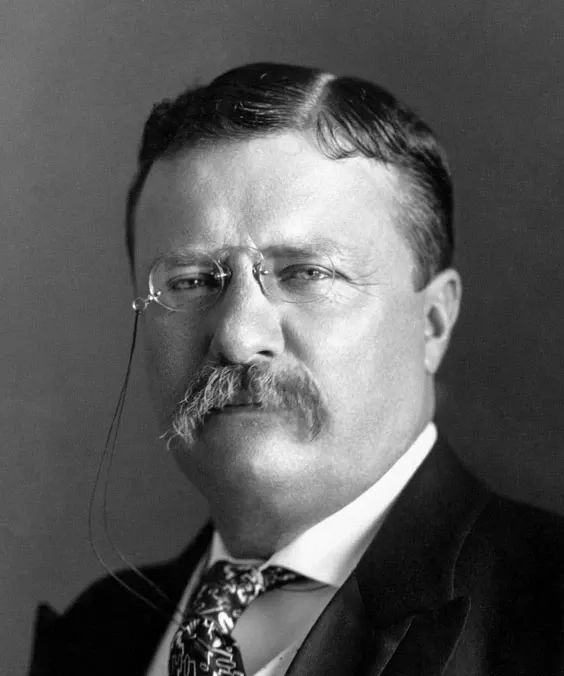
He struggled against him, intrigued against him, and finally hated and lampooned him, but the superiority of Van Buren's talents as a managing politician was destined to make him pre-eminent in the State and in the nation.
De Alexander
The Public Record
De Alva Stanwood Alexander was an American journalist, lawyer, historian, and member of the United States House of Representatives, serving seven terms from 1897 to 1911 as a representative of New York state.
gutenberg.org
At all events, it is not surprising that a man of his energy and capacity for onward movement should refuse to regulate his policy to the satisfaction of the men that had recently crushed him to earth, and who, he knew, would crush him…
On the contrary, Clinton seems to have acted on the honest conviction that he knew better than any other man how New York ought to be governed, and the result of his effort inclines one to the opinion that he was right in the belief.
He had made his enemies his footstool; and he now assumed to be the recognised head of the party whose destinies were in his keeping and whose fortunes were swayed by his will.
He delighted in the consciousness that he was looked up to by men; that his success was fixed as a star in the firmament; and that the greatest work of his life lay before him.
He was not merely all-powerful in the administration, he was the administration.
He apparently took keen pleasure in holding up to ridicule and in satirising, what he was pleased to call his ponderous pedantries, his solemn affectation of profundity and wisdom, his narrow-mindedness, and his intolerable and transparent…
His speeches, enlivened with gleams of humour, rays of fancy, and flashes of eloquence, expressed the thoughts of an honourable, upright statesman who was justly esteemed of the first order of intellect.
He had served his State and his country with a fidelity that must forever class his name with the bravest officers of the War of 1812.
Van Buren had shown, from his first entrance into public life, a remarkable faculty for winning men to his own way of thinking.
He went to Albany a political outcast, he returned to New York gilded with the first rays of a new and rising career, destined to be as remarkable as the most romantic story belonging to the early days of the last century.
It remains for a free state to create a new era in history, and to erect a work more stupendous, more magnificent, and more beneficial than has hitherto been achieved by the human race.
It may be confidently asserted that this canal, as to the extent of its route, as to the countries which it connects, and as to the consequences which it will produce, is without a parallel in the history of mankind.
In the end, he compelled the acceptance of his project by a stroke of happy audacity.
It is doubtful if any statesman endowed with less genius than Clinton could have kept the project alive during this period of indifference and discouragement.
But if Clinton lacked patience, and temporarily, perhaps, the virtue of temperance, he did not lack force of will and strength of intellect.
It was easy to see what might be done, but the man did not appear who could do it.
He wanted to be President, and he was willing to sacrifice anything or anybody to secure the prize.
The desire to be first in every path of political success had become such a passion in Tompkins' nature that the question presented by the President's invitation found an answer in the immediate impulses of his ambition.
On the other hand, Tompkins had gentleness, and that refined courtesy, amounting almost to tenderness, which seemed so necessary in successfully dealing with Madison.
Compared to Monroe he was an intellectual giant, whose name was as familiar in New York as that of the President, and whose character was vastly more admired.
In the United States Senate, with the courage and independence of Clay and the intelligence of Gallatin, he had been an earnest advocate of war and a formidable critic of its conduct.
He lacked the address of Tompkins, and, likewise, the vein of levity in the Governor's temperament that made him buoyant and hopeful even when most eager and earnest; but he was bold, enterprising, and of commanding intellect, with a…
His life had been pure and noble; he was a sincere lover of his country; a brave and often a daring executive; a statesman of high purpose if not of the most commanding talents.
It must have cost this master-spirit of his age a deep sigh to give up a position in which his work had been so wise and helpful.
Politicians like De Alexander