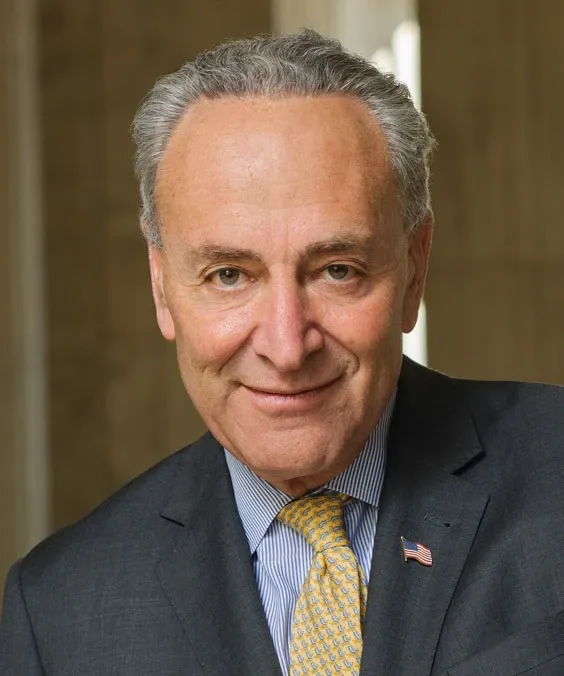
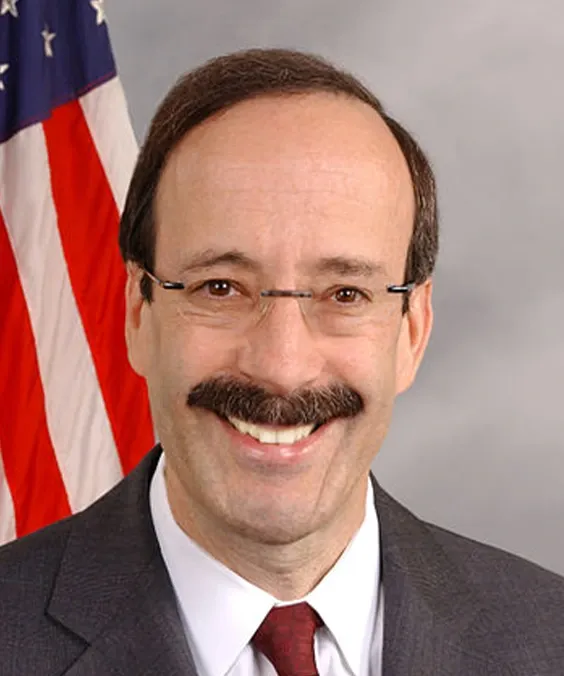
Charles E. Schumer
The Public Record
Charles E. Schumer is the current Senate Majority Leader and a prominent member of the Democratic Party, representing New York. He has served in the U.S. Senate since 1999 and previously held the position of a U.S. Representative from 1981 to 1999. Schumer has been a key figure in various legislative efforts, particularly in areas such as healthcare, immigration reform, and technology regulation. He has recently voiced concerns about the impact of artificial intelligence on political campaigns and the need for bipartisan solutions to address these challenges.
Jan 29, 2003
Could I ask you to review the Congress's findings in VAWA and tell us whether you agree?
Jan 29, 2003
I want to know his views, not what his client's views are and not how persuasive an advocate he is.
Jan 29, 2003
Well, Mr. Chairman, in all due respect, of course, I want to know what he is going to do as a judge.
Jan 29, 2003
We should be discussing this issue honestly, not hiding behind representation.
Jan 29, 2003
If philosophy did not matter, the White House would send us a far broader panoply of judges, in terms of their views, than they do.
Jan 29, 2003
I feel very strongly that it is my obligation and your responsibility to let people know your views because they will influence how you are as a judge.
Jan 29, 2003
So, wait, can I just, again, because there is a lot of sophistry here, do you believe that unexamined deference to VAWA would give any Congressional staffer with a laptop the ultimate Marbury power?
Jan 29, 2003
Sir, in all due respect, aside from advocating for the client, which you are seeming, you know, you sort of--you are saying all of this work I did, and everyone, you know, it is almost like we are in 1984 here because your views on…
Jan 29, 2003
Those, at one point, I do not know if they still are, are your views. Are they still?
Jan 29, 2003
Please, that is not fair, because everyone knows how you feel on this, and you know how you feel on this.
Jan 29, 2003
Can I just--I want to let you finish. But did you disagree that the evidence we found was dispositive--you may disagree with it--but was directed at interstate commerce?
Jan 29, 2003
But do you think we tried to address interstate commerce when we made the findings in terms of VAWA or not?
Jan 29, 2003
Thank you, Mr. Chairman. I want to thank everybody. I know it has been a long day, but I think it is an important day as well.
Jan 29, 2003
As Senator Schumer said earlier, you can represent a lot of individual defendants before you make up for the loss of rights to a class of individuals, disabled individuals, because of that decision.
Jan 29, 2003
I just would ask unanimous consent. There are a whole bunch of letters of opposition to the nomination.
Jan 29, 2003
Did they tell you to make this argument or did you come up with it? Answer that yes or no if you could.
Jan 29, 2003
Excuse me. Who came up with the idea to file the brief, the amicus brief, and however far--we can dispute how far it goes--
Jan 29, 2003
You argued that Congress has no power, under Section of the Fourteenth Amendment, to enact any law to enforce religious freedom.
Jan 29, 2003
Let me say this, sir, just with the Sandoval case, you could do 10,000 pro bono cases for individuals and the Sandoval case takes away rights of individuals to pursue the rights you were pursuing in those pro bono cases in one fell swoop…
Jan 29, 2003
I mean, the Sandoval took away rights of lots of individuals to be able to sue for just the things you were representing the pro bono individuals to be able to do, right?
Jan 29, 2003
But your view of what the rule of law is, based on these quotes, is far different than what most American judges, lawyers, students of juris prudence believe it is.
Jan 29, 2003
Now, you do not express the sentiments of the people you represented in some of those cases in your private articles, only the ones on the other side.
Politicians like Charles E. Schumer