Feb 29, 2016
I really appreciate that, and I am hoping for the same kind of environment on looking at ways to use our agro-ecosystems to capture atmospheric carbon.
The Public Record
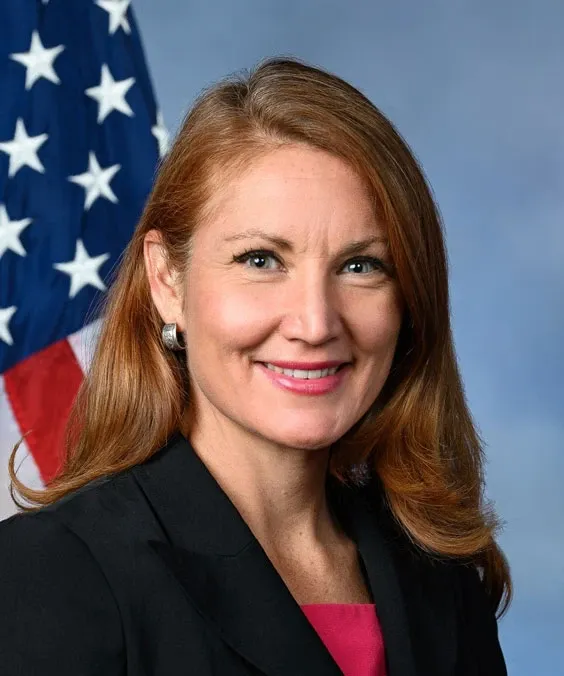
Michelle Lujan Grisham is the 32nd governor of New Mexico, having taken office on January 1, 2019. A member of the Democratic Party, she previously served as a U.S. Representative for New Mexico's 1st congressional district from 2013 to 2019. As governor, Lujan Grisham has focused on issues such as healthcare, education, and economic development, advocating for policies aimed at improving the quality of life for New Mexicans. She has also addressed public safety concerns, including drug-related issues and human trafficking in the state.
I really appreciate that, and I am hoping for the same kind of environment on looking at ways to use our agro-ecosystems to capture atmospheric carbon.
Ms. Lujan Grisham, as you mentioned with the acequias, I am very happy to point out one of the examples of a project we already have rolling out here is the Acequias De Las Joyas.
Frankly, as I am preaching to the choir, I am sure farmers and ranchers are the backbone of conservation in America.
I hope, reach a favorable decision to help New Mexico's dairy producers, given our dairy loss related to the huge snowstorm.
I want to work with every stakeholder and every policymaker to make sure that New Mexico gets what it needs to end this persistent poverty in our rural and frontier areas.
I haven't gotten any Federal support to deal with that, and the state support is gone.
Stormwater regulation needs to have the flexibility to make sure that local managers can suggest alternatives that make sense for an arid region.
I hope we don't have it too soon, but a spring runoff, which means that all that sediment gets moved again.
Well, isn't it true that in all of the States' departments of health you have got a team of epidemiologists whose job it is when anyone identifies any issues of this nature, that it is more like a SWAT team.
They are making political decisions before they make appropriate decisions for the public health of the community.
Everybody in government's core job is the public health and safety of the citizens that you represent and are, frankly, sworn to protect.
This is a pattern in Michigan, and as Ms. Plaskett said, it's a pattern all over this country, how communities of color as well as low- and moderate-income communities are victims of environmental injustice.
So how do you rebut that this was purposeful then in nature, given that those protocols that you are familiar with as someone new and I'm familiar with.
If Governor Snyder was here, I'd sure like to ask him if the water was toxic in Grosse Pointe instead of Flint, would you have denied it for a year?
In fact, the Double Up Program is very successful in New Mexico. We are seeing more low-income families being able to purchase fruits and vegetables.
I think these kinds of incentives are especially important for poor states like New Mexico, and any other areas in the country that have high rates of food insecurity, poverty, obesity, and other diet related illnesses.
Given that my state is still one of the hungriest states in the country, New Mexico, it is great to hear about the kinds of ideas and incentives that allow you to do more with what you have, and making it as healthy as possible.
Striking these balances are very important, and making sure that we don't end up in an environment where we just create more hunger.
We want to make sure beneficiaries and families, individuals in the community aren't doing things--and providers and contractors, that here I have a state that is falsifying records to deny access to some of the hungriest families in the…
Finding the balances so that we are innovative and thinking about ways, particularly, to garner better access, not just to food in general but healthy food that has the educational components and choice in areas where we have significant…
New Mexico finds itself in a really difficult situation where we have some of the highest poverty rates, highest food insecurity rates, highest unemployment rates now in the country.
Politicians like Michelle Lujan Grisham