May 16, 2016
We are having conversations about what-ifs but we are not talking to the folks--with no disrespect to the panel members--about really who is enforcing, who is accountable
The Public Record
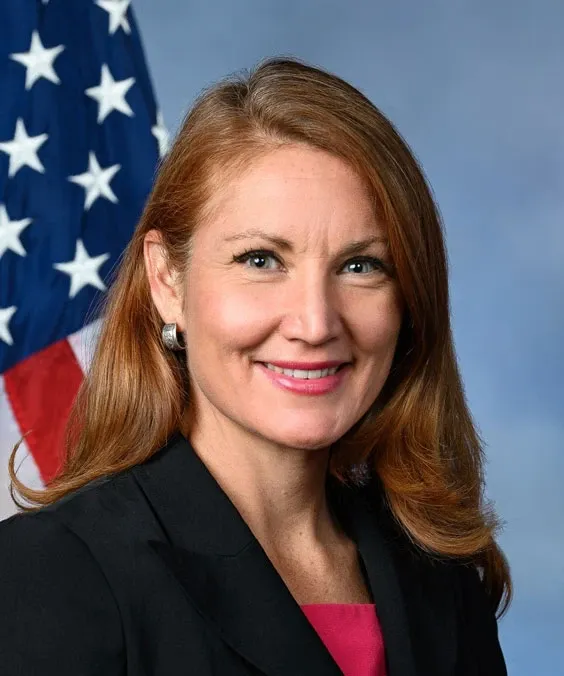
Michelle Lujan Grisham is the 32nd governor of New Mexico, having taken office on January 1, 2019. A member of the Democratic Party, she previously served as a U.S. Representative for New Mexico's 1st congressional district from 2013 to 2019. As governor, Lujan Grisham has focused on issues such as healthcare, education, and economic development, advocating for policies aimed at improving the quality of life for New Mexicans. She has also addressed public safety concerns, including drug-related issues and human trafficking in the state.
We are having conversations about what-ifs but we are not talking to the folks--with no disrespect to the panel members--about really who is enforcing, who is accountable
I want to thank you for your work, particularly in Albuquerque, but I am concerned that with lack of personnel we have a backlog in those investigations.
If you want to see the efficiencies of the post office, go visit and do a ride-along with a letter carrier.
You shouldn't have to have a healthcare legal background in order to read your explanation of benefits...
I certainly appreciated and can empathize with your remarks about the level of expertise it takes in your family to navigate and respond and work to comply with the regulatory burden.
It is clear to me that government can and should be doing a better job, especially when it comes to engaging the agricultural communities.
Having a hearing on the impacts of environmental regulations and voluntary conservation solutions is an important opportunity for the entire Committee to better understand the challenges that our farmers and ranchers and foresters face…
It is important that Federal regulations be clear, concise, uncomplicated, and to make the necessary regulatory compliance as easy and affordable as possible.
These are both important industries to the economic benefit of citizens in New Mexico, but I can see that left alone, it could take too long to create an environment where competing for water resources means choosing.
Do you see advances or areas that Congress could be looking to, much like my colleague talked about, in investment strategies and incentive strategies?
Agriculture and the oil and gas sector are really important industries, certainly, in my state as well as for most of the Members on this Committee.
Given that 3 years has gone by--and I apologize for interrupting you, but this--as a physician, I was a cabinet secretary for health, this is untenable.
It has taken us 3 years to get this administration to require the Human Services Department to repay these providers the millions of dollars that they are--but they are defunct.
But given the situation in our State, our governor determined that all, 100 percent, of our behavioral health providers were engaged in billing practices that rose to the level of a credible allegation of fraud and so suspended payments to…
Thank you very much, Mr. Chairman. And I am going to kind of go off topic, and I apologize kind of.
Where do you see the balance? And nobody I think on this committee is making any sort of statement that we should reduce privacy protections.
For the audience, it does not prevent that. It explicitly provides for that.
I actually think in addition to the blocking and misunderstanding that we have seen two principles in HIPAA be determined.
HIPAA, I spent a lot of time dealing with HIPAA, so it wasn't--I won, because the CEO of the health care company refused to provide the patient information.
How are we enforcing that? Because I will tell you that access is still a giant issue in my state and so many others.
The Affordable Care Act is the reason this Administration has said that it was okay to cancel 100 percent of all the behavioral health providers in my state.
I have no doubt that we will continue in Congress, and localities and cities and states will continue the debate about gateway drugs.
How many staff have been held accountable? How many retrainings have you had? How many water tests are you doing?
Politicians like Michelle Lujan Grisham