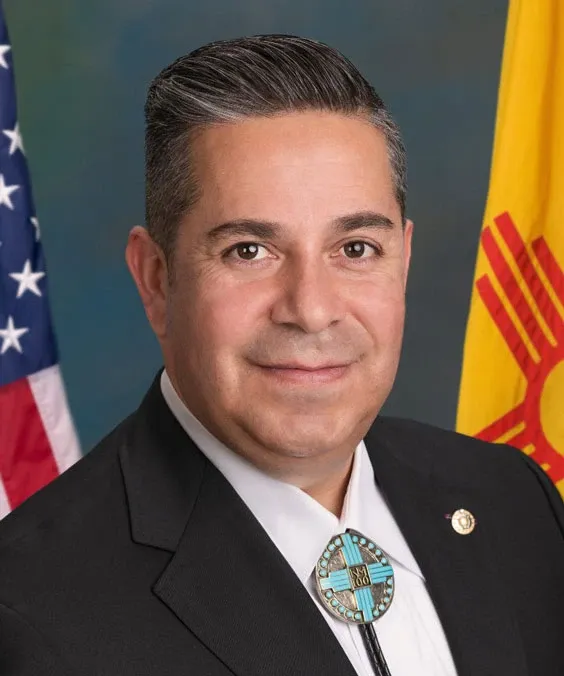
Martin Heinrich
The Public Record
Martin Heinrich is a United States Senator from New Mexico, serving since January 3, 2013. A member of the Democratic Party, Heinrich previously represented New Mexico's 1st congressional district in the U.S. House of Representatives from January 6, 2009, to January 3, 2013. Throughout his political career, he has focused on issues such as renewable energy, healthcare, and economic development, advocating for policies that benefit New Mexico's diverse communities.
Mar 8, 2017
That is to dissuade Russia from thinking that this is a time when they want to test NATO or the Americans.
Mar 8, 2017
Proactive conflict prevention strategies are far less expensive in terms of resources and lives expended than reactive use of our Armed Forces.
Mar 8, 2017
Unfortunately this spans across exposure at Pacific island nuclear test sites in the 1950s, in Desert Shield and Desert Storm, around the Fukushima nuclear disaster, and via depleted Uranium use in current operations.
Mar 8, 2017
The recent rise in nuclear threats from countries like North Korea and Iran and non-state actors such as ISIS... puts our service men and woman at increased risk
Mar 8, 2017
These capabilities are proving to be just as politically disruptive both in our elections and day-to-day business.
Mar 8, 2017
It has become really evident to me as a member of both the Intel Committee and this committee--it has become crystal clear that Russia has really mastered this domain of digital disinformation.
Mar 8, 2017
The bridging solution provides significant capabilities to SOF, however it does not meet all of our requirements and it is expensive.
Mar 8, 2017
The current DCGS-SOF strategy is Government As Integrator (GAI) to integrate best of breed commercial and existing government technologies through an open architecture.
Mar 8, 2017
The initial goal of fielding All Source Information Fusion (ASIF) capabilities during the first quarter of Fiscal Year 2017 was delayed for further refinement and integration into the Enterprise.
Mar 8, 2017
When will all elements of the DCGS-SOF program reach fully operating capability (FOC)?
Mar 8, 2017
It is my understanding that this program is still not fully fielded and is said to have performed poorly during its most recent user testing event.
Mar 8, 2017
Since fiscal year 2010, SOCOM has spent $367 million to develop, procure, operate, and maintain its DCGS-SOF program.
Mar 8, 2017
I have to say I think that is a very insightful comment, and I would encourage all of my colleagues to make the effort to see our deterrent up close and personal.
Mar 8, 2017
I think when they look at them, they get an assessment of the readiness of our force and the ability to provide a deterrent.
Mar 8, 2017
The priority has to be the service life extension before we get to new weapons.
Mar 8, 2017
I think it is essential that our allies in NATO understand that we are absolutely committed to the alliance.
Mar 8, 2017
This obviously comes at a time when the administration has criticized the value of NATO.
Jan 9, 2017
Attribution, obviously, of responsibility in cyber attacks is the first key step towards imposing a cost
Jan 4, 2017
It is simply too important for both parties and for the future of our country.
Politicians like Martin Heinrich