Jun 26, 2012
We are also grateful for the leadership of Senators Alexander, Cantwell, Udall, and Murray in championing this legislation.
The Public Record
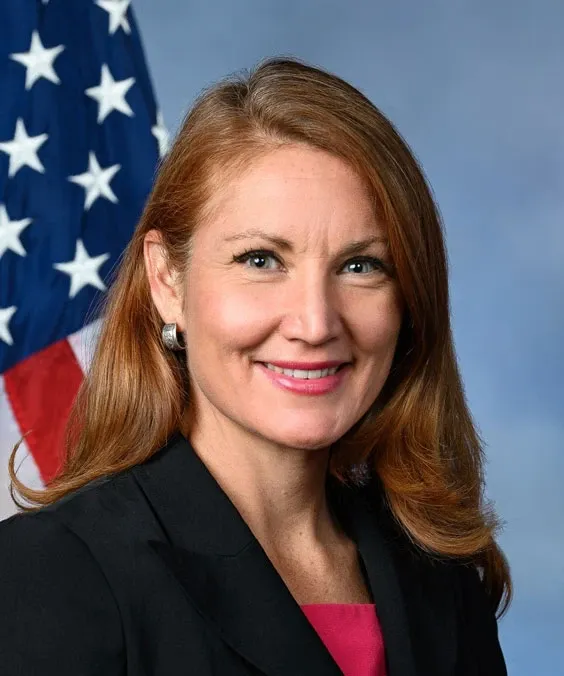
Jeff Bingaman is a former U.S. Senator from New Mexico, serving from 1983 to 2013. A member of the Democratic Party, he was known for his work on energy policy, education, and healthcare. During his tenure, Bingaman played a significant role in shaping legislation related to renewable energy and was a strong advocate for the development of clean energy technologies. He served as the Chairman of the Senate Energy and Natural Resources Committee, where he focused on issues such as energy efficiency and the promotion of alternative energy sources.
We are also grateful for the leadership of Senators Alexander, Cantwell, Udall, and Murray in championing this legislation.
Protecting these resources is something the Los Alamos Historical Society has been working on for nearly fifty years.
The Atomic Heritage Foundation thanks Chairman Jeff Bingaman and co-sponsors Senators Lamar Alexander, Maria Cantwell, Tom Udall and Patty Murray for joining in introducing S. 3300.
The Manhattan Project National Historical Park will, once again, transform these communities, creating an economic driver based on heritage tourism.
I am certain today's hearing will provide the committee a better understanding of my legislation and the Neches River.
The National Trust for Historic Preservation appreciates the Committee on Energy and Natural Resources' Chairman Jeff Bingaman's leadership introducing S. 3300.
Providing visitors with opportunities to form their own intellectual and emotional connections with the significance of sites to be included in the Manhattan Project National Historical Park helps them understand its relevance to our…
With respect to the designation of critical conservation areas under section 2401 of the bill, I would encourage USDA to look to areas where they already have initiatives in place addressing the area. I understand that any funding under…
I understand that the bill before the Senate will make resources available to address the problem of the declining groundwater resources in the Ogallala. It would be helpful to my colleague from Texas and me if the chairwoman and ranking…
I rise to discuss the Ogallala Aquifer-- also known the High Plains Aquifer--region, an area that is impacted on a daily basis by groundwater pumping for agriculture. In fact, that region leads the Nation in the amount of groundwater…
These important incentives are doing exactly what they were meant to do--allow our nation to reap the significant energy, economic and environmental benefits.
Stable, reliable and well-structured tax policy provides the framework that allows for this market-driven innovation.
I believe that the inconsistent approach that we've been pursuing has put the United States at a disadvantage in competing with China for a share of clean energy markets.
If policymakers have the foresight to retain these highly effective tax policies, this short-term investment will yield significant long-term benefits.
I have always thought that there are three primary goals that we have as a country with regard to energy.
I am not defending the status quo. I am just--I am worried about how you do it.
Well, I guess what I am trying to understand is whether it would make sense, in this reauthorization that is contemplated here in the next couple to 3 months, for Congress and for the Federal Government to essentially say, all right, this…
I think you ought to look at that, and I personally would support something that would cause the States to be more responsive during a recession.
Developing new technologies has historically been a great strength of the United States.
The government as a partner the United States can continue to lead in the clean energy sector.
The costs all of us pay in national energy and climate and economic insecurity are unacceptably high
The Clean Energy Standard Act of 2012 employs a market-based approach to accelerate deployment of a wide variety of power generation technologies.
We thank Senator Bingaman and his cosponsors for introducing this bill to create a national clean energy standard (CES).
Politicians like Jeff Bingaman