May 11, 2021
Progress made by the Executive Branch and Congress to address some of the more than 1,100 actions and recommendations made in these reports has improved agency performance and resource management.
The Public Record
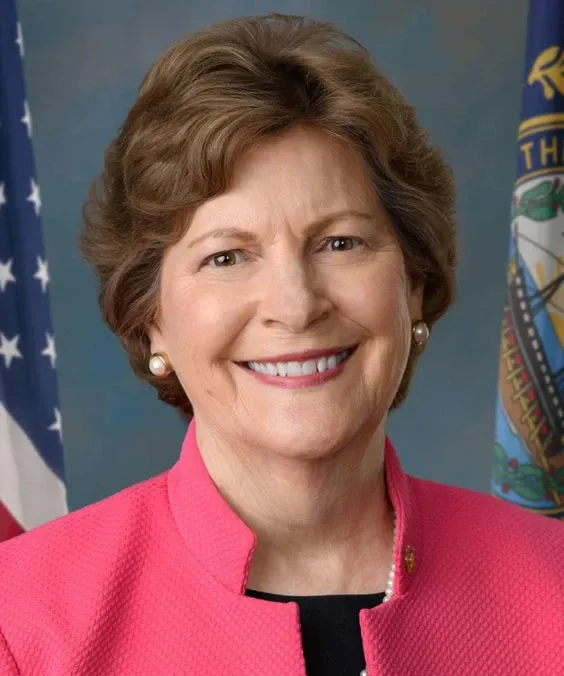
Maggie Hassan is an American politician serving as the junior United States senator from New Hampshire since January 3, 2017. A member of the Democratic Party, she previously held the position of the 81st governor of New Hampshire from January 3, 2013, to January 5, 2017. During her tenure as governor, Hassan focused on expanding access to healthcare, improving the state's economy, and addressing issues related to education and infrastructure.
Progress made by the Executive Branch and Congress to address some of the more than 1,100 actions and recommendations made in these reports has improved agency performance and resource management.
But how might agencies better identify trends in the types of programs or operations that appear in the annual duplication report year after year, in order to address the root causes of that duplication, overlap, or fragmentation?
I am committed to ensuring that Congress does its part to eliminate duplication, overlap, and fragmentation to achieve billions in savings.
I have a request for one committee to meet during today's session of the Senate. It has the approval of the Majority and Minority leaders. Pursuant to rule XXVI, paragraph 5(a), of the Standing Rules of the Senate, the following committee…
I hope you will take this under advisement and get the guidance out as quickly as you can.
I will urge you to keep trying to be as creative as you can be, and innovate there, because people really do need these Economic Impact Payments.
A year ago, I helped lead efforts to ensure that Social Security recipients automatically received Economic Impact Payments.
The Federal Government's use of outdated legacy IT systems... hurts the American people's ability to access benefits.
Social Security programs certainly serve as a lifeline to our most vulnerable citizens, and we have to ensure that these programs are accessible.
We have to protect the rights of workers to organize and collectively bargain, which is why I joined many of my colleagues in support of Chair Murray's bill, the Protecting the Rights to Organize after the Pro Act.
I am working to introduce bipartisan legislation that would work to expand access to suicide awareness and prevention training for students.
I just also want to echo what Senator Kaine said about the behavioral health challenges of all of our first responders.
I re-introduced bipartisan legislation with Senator Murkowski, which would expand access to medication-assisted treatment for those struggling with opioid use disorder.
We need to help people get the care they need for stress and anxiety and depression and more.
We must also remember that telehealth is no replacement for making sure people have quality, affordable providers in their own communities.
I will say our job is to think about it from the veterans' perspective, from the patient's perspective, and to push the institution to do what it needs to do.
I was proud and honored to be able to join him in introducing the TEAM Act earlier this year.
I am a co-sponsor of the VET OPP Act, and I would look forward to additional commentary from Mr. Murray.
To help address this issue, I joined Senator Braun in introducing legislation that would help veterans with a health care background gain employment at the VHA.
They really need to be able to get treatment, and they need to have the certainty, and we need this framework.
COVID-19 has really highlighted the importance of childcare, the need for our country to do better.
I suggest that those tax credits should be eliminated as we transfer to clean energy tax incentives.
I have introduced bipartisan, bicameral legislation, along with Senator Collins, to modernize and expand energy efficiency tax incentives.
Politicians like Maggie Hassan