Sep 14, 2023
I do not think legacy systems will necessarily prevent us from implementing AI, but I do think that the Federal acquisition workforce needs to be more trained on making that analysis.
The Public Record
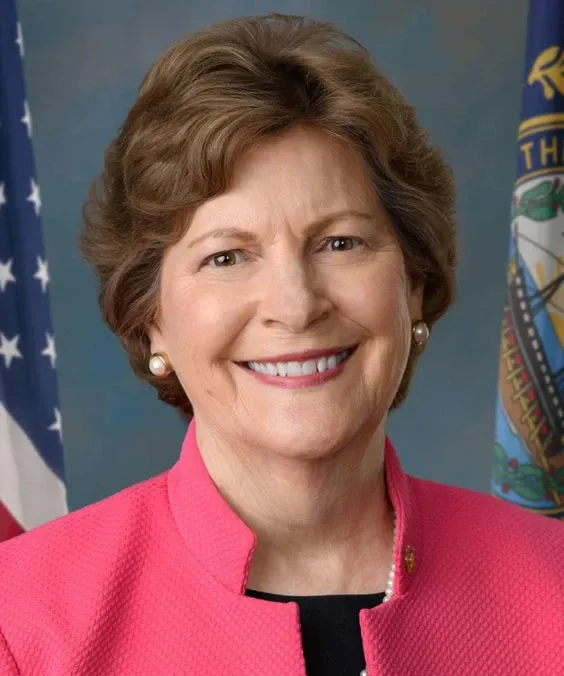
Maggie Hassan is an American politician serving as the junior United States senator from New Hampshire since January 3, 2017. A member of the Democratic Party, she previously held the position of the 81st governor of New Hampshire from January 3, 2013, to January 5, 2017. During her tenure as governor, Hassan focused on expanding access to healthcare, improving the state's economy, and addressing issues related to education and infrastructure.
I do not think legacy systems will necessarily prevent us from implementing AI, but I do think that the Federal acquisition workforce needs to be more trained on making that analysis.
I am really glad we are having this hearing. I am really grateful to all of you for being here and being a part of it.
During my time in the Senate, I have focused on reducing the Federal Government's reliance on aging technology in order to save taxpayer dollars, improve security, and obviously provide better service to the American people.
We must take a systematic approach to ensure that the kind of investment and support of the AI systems we want to develop and deploy reflect our values.
I helped lead a bipartisan effort to codify the General Service Administration's IT Modernization Centers of Excellence, including the Center of Excellence for Artificial Intelligence.
I am concerned that Federal efforts to adopt and use AI may not be successful if we continue to rely on legacy IT.
I am really glad we are having this hearing. I am really grateful to all of you for being here and being a part of it.
I truly appreciate the discussion today. I thank you all for coming before the Subcommittee to discuss what is clearly a really important topic to a lot of us.
I think, the biggest takeaway I hope people watching today or listening to this or reading about it will take is that this is a responsibility that rests with each and every one of us.
Can you share with us some of the ways that New Hampshire schools have worked together to reduce the burden of expensive cybersecurity tools and services?
It is fair to say that when the spirit of collaboration is working among school districts and among various levels of government and various agencies, there are ways to share experience and share best practices that help each individual…
I am pleased to be part of that bipartisan group in Congress that pushed to reauthorize the Institute.
I urged the Department of Homeland Security and Department of Education to improve their coordination efforts to protect K-12 schools from cyberattacks.
Is it fair to say--I am looking at kind of how we talk about what K-12 schools in New Hampshire, what steps they have taken to date to implement this law.
In 2018, the New Hampshire legislature passed a law requiring the State Department of Education to establish minimum standards for the privacy and security of student data.
How are K-12 schools involved in the process of applying for and awarding this Federal grant in New Hampshire?
I spearheaded an effort to create a Federal grant program specifically targeted at improving the cybersecurity of State and local governments.
I take to heart the relationship-building part of it when you speak with task forces post terrorist events, for instance.
Thank you very much both on the prosecution side of things, but on the prevention side of things for similar attacks to continue.
I think it is also important that people understand the impacts of a cyberattack on a K-12 school system.
I think, the biggest takeaway I hope people watching today or listening to this or reading about it will take is that this is a responsibility that rests with each and every one of us.
I truly appreciate the discussion today. I thank you all for coming before the Subcommittee to discuss what is clearly a really important topic to a lot of us.
Politicians like Maggie Hassan