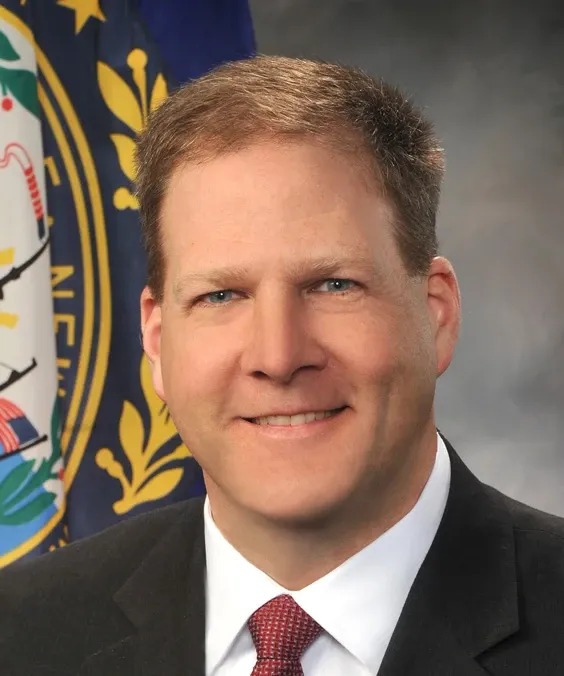
Kelly Ayotte
The Public Record
Kelly Ayotte is a former United States Senator from New Hampshire, serving from January 5, 2011, to January 3, 2017. A member of the Republican Party, she was the first woman to represent New Hampshire in the Senate. During her tenure, Ayotte focused on issues such as national security, fiscal responsibility, and education reform. She was known for her bipartisan approach and worked on various initiatives to strengthen the military and improve veterans' services.
Apr 17, 2012
The Services historically propose annual budgets that contain an amount for base operating support that is significantly less than the known requirements.
Apr 17, 2012
Secretary Westphal and Secretary Matiella, to what extent are these efforts documented sufficiently to help ensure that they will be implemented in a timely and effective manner?
Apr 17, 2012
Secretary Hale, according to the 10-K Securities and Exchange Commission reports that the four top defense contractors recently filed, the difference between their pension plan assets and future pension liabilities range from $2.9 billion…
Apr 17, 2012
Due to a change in Federal accounting rules that would accelerate the amount contractors can recover from DOD for their employee pension costs, DOD may have to pay billions of dollars more for weapons programs than originally planned.
Apr 17, 2012
Without the ability to audit DOD's Statement of Budgetary Resources (SBR), how do we actually know we are saving this money?
Apr 17, 2012
How can we change this process to ensure the budget proposals reviewed by Congress are an accurate accounting of what we expect to pay?
Apr 17, 2012
I am concerned that the annual transfer of funds between defense accounts, especially at the end of the fiscal year, decreases accountability and increases the difficulty in achieving accurate financial statements.
Apr 17, 2012
I appreciate that and we certainly would like to see your policies and appreciate that this is something you have already put a focus on prior to this incident that was really a complete debacle.
Apr 17, 2012
If we have predictability regarding certain budget expenses, why are these accounts not completely funded in DOD's budget requests?
Apr 17, 2012
I think where we become concerned, is when it is leading us in directions that we did not authorize.
Apr 17, 2012
I would suggest if it is not already a criteria, that performance evaluations be part of the measure, how much money did you return to the taxpayers.
Apr 17, 2012
How do we solve this? How do we get to the point where there is not this position?
Apr 16, 2012
The studies show that costs increase between 12 and 15 percent when you include a requirement of a project labor agreement.
Apr 16, 2012
I think it's an unnecessary Federal burden placed on people who want to do good Federal work and do it at the lowest cost possible.
Apr 16, 2012
I'm really struggling with it. And I feel like the contractors in New Hampshire who do things efficiently and very well are being denied an opportunity here to bid because they are non-union shops, and I think it's wrong.
Apr 16, 2012
The absurd result that out of state contractors are the only ones that are bidding on this really important New Hampshire Federal project in our state.
Mar 27, 2012
Do you believe the Army should be reducing its end strength before achieving its dwell time goals?
Mar 27, 2012
That is a very significant number for many who have done multiple tours for us. So I think the American people need to understand that in terms of some of the choices that we are making.
Mar 27, 2012
If future unanticipated contingency operations emerge and the Army's dwell time predictions turn out to be too optimistic, at what point would you recommend pausing or reversing the Army's end strength reductions?
Mar 27, 2012
How many are going to receive involuntary termination in terms of officers and NCOs with the drawdown, the 72,000 drawdown?
Politicians like Kelly Ayotte