Mar 4, 2013
I believe that this is not something that when you are within the Air Force and a victim that you should receive, but I believe that victims across the branches should be receiving this type of support.
The Public Record
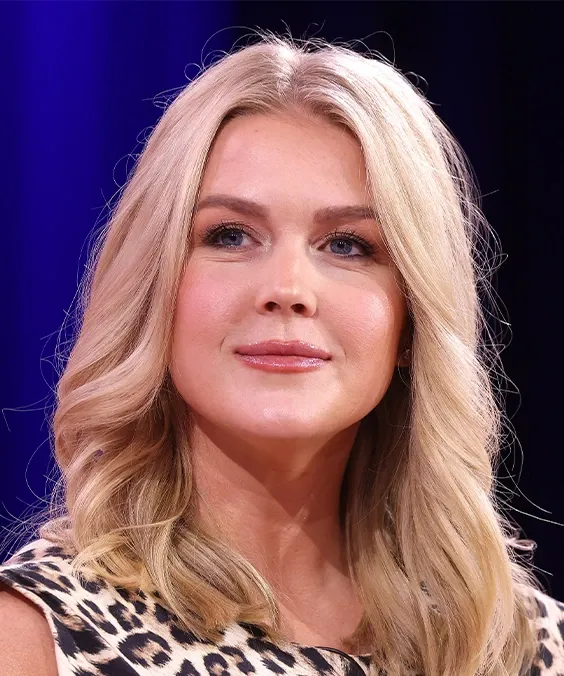
Kelly Ayotte is a former United States Senator from New Hampshire, serving from January 5, 2011, to January 3, 2017. A member of the Republican Party, she was the first woman to represent New Hampshire in the Senate. During her tenure, Ayotte focused on issues such as national security, fiscal responsibility, and education reform. She was known for her bipartisan approach and worked on various initiatives to strengthen the military and improve veterans' services.
I believe that this is not something that when you are within the Air Force and a victim that you should receive, but I believe that victims across the branches should be receiving this type of support.
Today, Senator Murray and I are introducing a bill which, in part, will provide a SVC to all sexual assault victims within all branches of the military.
This is a very important issue that we are concerned about in terms of the readiness of our forces and also making sure that those who are victims receive the support that they need and a proper legal process to see that justice is done…
I want to commend both of you just for the way you have conducted the process thus far.
I understand, General Welsh, from the discussion you and I certainly had this morning in my office that you are in the process, the Air Force is in the process, of making the decision on the basing of this particularly for the Air National…
If sequestration continues into fiscal year 2014, how will it impact the Navy and Marine Corps rebalance to the Asia-Pacific region?
The Virginia-class continues to be a highly successful acquisition program with ships consistently delivering early and within budget.
How important is it that Congress provides the resources for the Navy to build two Virginia-class submarines each year
Sequestration is something that I think is particularly foolish with regard to our national security.
What impact is the across-the-board civilian hiring freeze having on the Navy
Per our 2012 Force Structure Assessment, the Navy's requirement for SSNs is 48.
That would take on tremendous risk, given the challenges we face around the world.
The world's not getting any safer with Iran marching toward a nuclear weapon, with what's happening in the Persian Gulf, with our shift to the Asia-Pacific region, all of which needs naval capacity.
Not providing our soldiers the very best training represents a breach of faith with our soldiers, their families, and the American people?
Sequestration occurring in fiscal year 2014 and beyond will result in the reduction of readiness across the Army.
Only with a credible and capable U.S. land power will the nations of this critical region choose us as their partner of first choice for security and stability.
Do I have your continued commitment that you will avoid involuntary separations as much as possible?
The Army has carefully considered the possible impacts on morale from involuntary separations and has designed programs to minimize unwanted outcomes.
The Army anticipates we will require involuntary separations of approximately 6,500 officers and close to 6,000 enlisted through fiscal year 2017 to achieve an end strength of 490,000.
If the administration and Congress fail to identify alternative spending reductions and defense sequestration goes forward and the Army must cut another 100,000 soldiers, would this force the Army to implement large-scale involuntary…
Do you believe this program has potential value in protecting other military families which, due to no fault of their own, stand to lose all benefits because of UCMJ violations by the servicemember?
Do you believe the Victims' Transitional Compensation Benefit Program could be broadened to protect families, especially cases where retirement benefits are involved?
I recognize this is a difficult problem, so I would ask that--I believe, if--are you both aware of the program in New Hampshire?
Politicians like Kelly Ayotte