Apr 5, 2016
I share your view that transparency is important for the public, especially when we are talking about such critical security issues for the country.
The Public Record
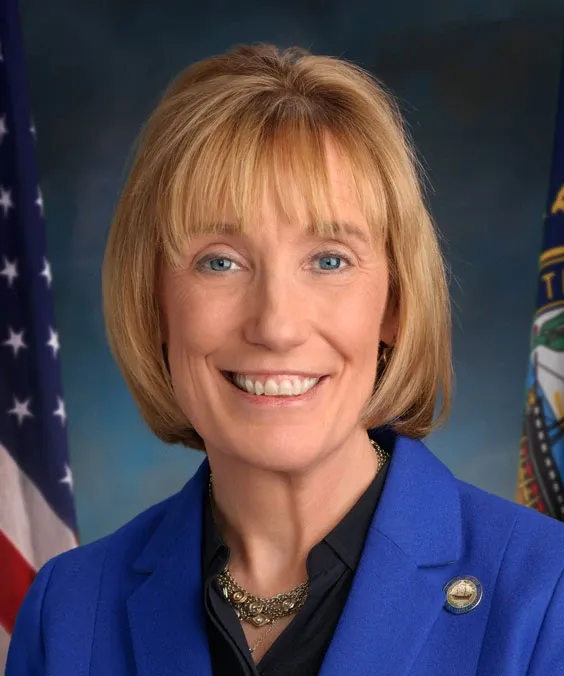
Jeanne Shaheen is an American politician serving as the senior United States senator from New Hampshire, a position she has held since January 3, 2009. A member of the Democratic Party, she is the first woman to be elected governor of New Hampshire, serving from 1997 to 2003. During her tenure in the Senate, Shaheen has focused on issues such as healthcare, education, and national security, often advocating for policies that support working families and promote economic growth.
I share your view that transparency is important for the public, especially when we are talking about such critical security issues for the country.
It is a priority for me to permanently authorize both the SBIR and STTR programs before they expire to avoid repeating those disruptions.
The Rapid Innovation Fund (RIF) is a competitive, merit-based program designed to fund innovative technologies.
So it seems to me that the more we can do in the way of prevention resiliency, as you call it, the better prepared we are going to be when a natural disaster strikes.
I think it is really critical that we take a look at how we are defining these public health emergencies and the threat that is really posed to the population.
Are you sharing what you learn with DOD and the Department of Veterans Affairs (VA), which is the one that comes to mind first when we think of mental health and people who are doing work in that area, because they are facing a lot of…
So if I go to the border crossing in Pittsburgh, New Hampshire, that goes from Canada to the United States, every truck that comes across that border crossing is going to be scanned for nuclear material?
Well, maybe I did not ask the question very well. That was what I was trying to figure out, was why, if we are combining all of the other operational aspects of CBRNE into one office, why are we not combining the R&D part of that into that…
The impact is much more devastating than we are seeing from either of those potential threats.
And any planes that are landing anywhere in the United States, even at private airfields, are going to be met by somebody who would be able to scan for nuclear material?
I think you are absolutely right about resiliency. It was one reason why I found it hard to understand the budget proposal.
The 2017 budget proposes combining all of the chemical, biological, radiological, nuclear, and explosive operations and policy development into one office.
I want to go back to the issue that Senator Tester was raising about the randomizer app.
Okay, let me stop you there, because the other question that I have is, how do we determine what is appropriate for DHS to do in terms of R&D and what is appropriate for the private sector?
DHS dedicates a very small portion of its total budget to R&D, just over 1 percent.
Every dollar we spend in R&D has to count, and taxpayers should expect to receive a good return on investment.
Hopefully we will--and I know this subcommittee and the entire Senate Armed Services Committee is committed to trying to roll back those cuts from sequestration because we appreciate the impact that it is having.
I think I heard you say that these are critical to us as well as our European allies.
I think one of the really unknown secrets that people do not appreciate is just how advanced the military in this country is on addressing energy issues that we have.
I do want to say how pleased I was that this year's budget request includes two MILCON projects in New Hampshire.
I want to thank you all very much for what you are doing to focus on energy and energy use within our military.
To what extent has sequestration affected the ability to make the case for the hiring that you need for those projects?
I want to also add my voice to the support for the waiver of those joint travel regulations.
Politicians like Jeanne Shaheen