Sep 26, 2017
I knew that Senators Rubio and Cantwell were going to focus on what has happened in Puerto Rico, so we brought some pictures of the devastation that I think say it very clearly.
The Public Record
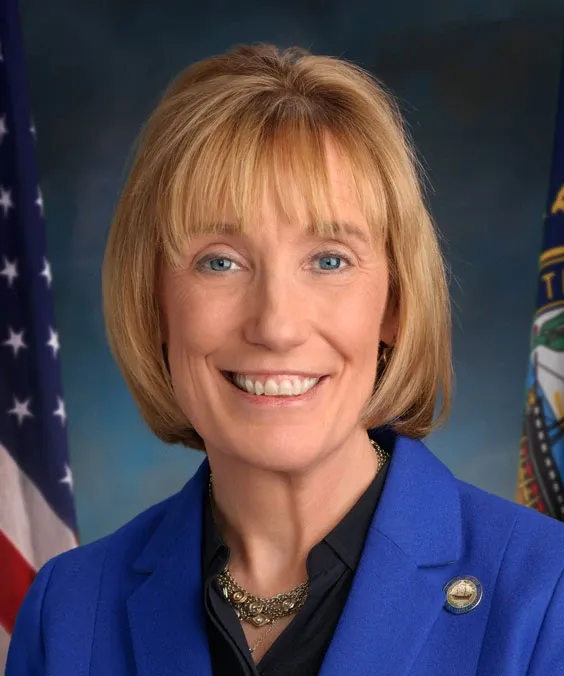
Jeanne Shaheen is an American politician serving as the senior United States senator from New Hampshire, a position she has held since January 3, 2009. A member of the Democratic Party, she is the first woman to be elected governor of New Hampshire, serving from 1997 to 2003. During her tenure in the Senate, Shaheen has focused on issues such as healthcare, education, and national security, often advocating for policies that support working families and promote economic growth.
I knew that Senators Rubio and Cantwell were going to focus on what has happened in Puerto Rico, so we brought some pictures of the devastation that I think say it very clearly.
Our fellow citizens deserve a robust and swift response from both all of us in Congress as well as the Administration.
It is essential to us to be able to provide the service and keep our business running to have these workers come in, and having those programs cut is making it very difficult.
I know that one of the real challenges we've had this summer with the hospitality industry, as the number of visas have been shrunk, has been getting in some of the workers that we need in the industry.
At some point we may need to think about what we did back in the 1930s with rural electrification where we have to step in and really pay for that last mile for broadband to get to some of our homes and communities in the State.
Unfortunately, I think our Federal tax credit for child care has increased only one time since the 1970s, and clearly it's not keeping pace with the cost of child care.
You know, I've also visited some advanced manufacturers who have talked about not just the need to reach out to students but to their parents.
I would like to extend my thanks to Senator Shaheen and the entire New Hampshire congressional delegation for all their efforts in supporting the mission of the New Hampshire Job Corps.
One of the things the Comprehensive Addiction and Recovery Act legislation did at the Federal level was to try to look at some of the forms that are typical that employees fill out when they're applying for a job, or that workers fill out…
We need to think about what we can do primarily at the Federal level to provide some incentives for the private sector to get in and provide service.
I think both of those are really creative ideas. The challenge has been resources, of course.
I want to address one final issue before we close, because it has been such a huge challenge in New Hampshire, and that is the heroin and opioid crisis that we have faced and how that has affected the workforce.
That's a huge role for the Federal Government and a place where we can partner with states.
For me and for my home state of New Hampshire, this is a very personal issue.
I fully support declaring a national health emergency around the opioid epidemic.
I am completely committed to promoting human rights and inclusion for all people.
We would not be here where we are today without your leadership, so thank you very much for that.
Is there a Diabetes Caucus in the Senate? No. Only in the House. Well, guess what? There is going to be one now.
I think the question is where is the commitment to address this challenge, and I don't think we've seen it yet.
There is not the same perceived threat from nation-states that we had at the time of the Cold War.
I would argue, Dr. Lehman, that the problem is not our industrial capacity. It's our commitment.
I think to shift that to the Department of Homeland Security, especially at a time when the issue of refugees and immigration is so controversial, would be the absolutely wrong approach.
Politicians like Jeanne Shaheen