Feb 15, 2012
Why aren't we advancing projects like the Keystone XL pipeline to provide more supply and help bring gasoline prices down?
The Public Record
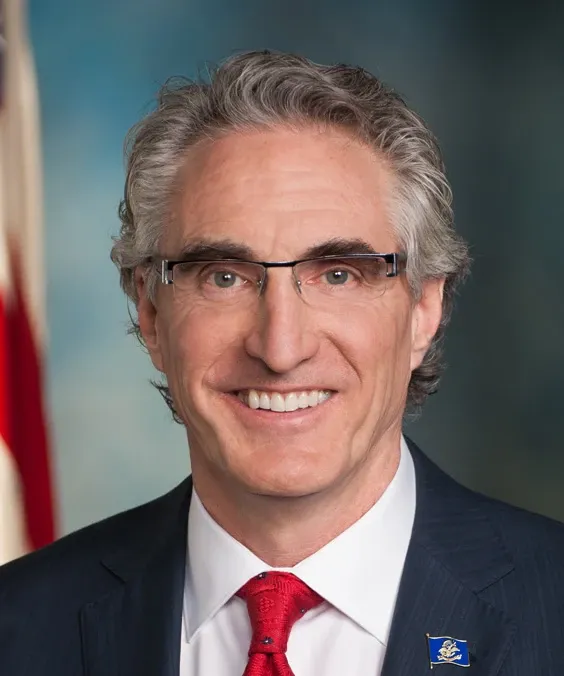
John Hoeven is an American politician serving as the junior United States senator from North Dakota since January 2011. A member of the Republican Party, he previously held the position of Governor of North Dakota from 2000 to 2010. During his tenure in the Senate, Hoeven has focused on issues such as agriculture, energy, and infrastructure, advocating for policies that support North Dakota's economy and rural communities.
Why aren't we advancing projects like the Keystone XL pipeline to provide more supply and help bring gasoline prices down?
I see I am over my time, Mr. Chairman. I will defer for a second round if that's the wishes of the Chair.
I thank my colleague from South Dakota again for organizing this colloquy this morning. I thank him and the esteemed Senator from Nebraska for their support of this legislation. Again, we have taken a problem-solving approach to this…
I thank the Chair. (The remarks of Mr. Hoeven pertaining to the introduction of S. 2041 are located in today's Record under ``Statements on Introduced Bills and Joint Resolutions.'')
I thank the esteemed Senator from Oklahoma. He is so right. That is what it is all about. It is about putting people back to work. It is about American ingenuity, private investment. It is about getting this economy going. We have to find…
I thank the Senator from Texas. Senator Hutchison is, as usual, not only eloquent but has hit the nail on the head. Looking across our country from North Dakota to Texas to Oklahoma, across our country we need these jobs. This is the way…
I thank Senator Isakson and ask the Senator if he has any more he wants to add. I know the Senator has to leave and is on a tight timetable.
I would ask Senator Isakson to join us at this point. He is here specifically to talk a little bit about the issue with oil sands development and China. So Senator Isakson, and then certainly Senator Hutchison as well.
In our State, we've utilized the Interstate Oil and Gas Compact Commission model to put a legal and regulatory structure in place to address liability issues.
If we make it commercially viable, that is how you are truly going to capture CO2.
The key is figuring out how you work with markets to drive that process in a cost-effective way.
This is where we need the technology to help drive the process by driving the cost down, the efficiency higher.
If we're going to have the kind of legal and regulatory climate we need to truly develop our energy resources, to stimulate the private investment, to deploy the technology, to produce all these energy sources, we've got to get fossil and…
Dealing with the realities of crime in rural Alaska Native villages requires comprehensive and innovative solutions.
My bill will give Alaska Tribes the tools to stop domestic violence, alcohol and drug abuse, and suicides in their own communities.
What specifically are you doing at FERC and Secretary Smith, what specifically are you doing at Department of Energy that will help us get more of this gas captured and delivered to a market where it can be sold.
Where I'm going with this and I'll ask Secretary Smith the same question now.
Less than a decade ago the United States was preparing to become a major importer of LNG. Now with the growth of America's natural gas supply there's interest in exporting American natural gas in the form of LNG.
I think it is safe to say and all of us would agree that the developments that we've seen in the last decade are nothing short of extraordinary.
Politicians like John Hoeven