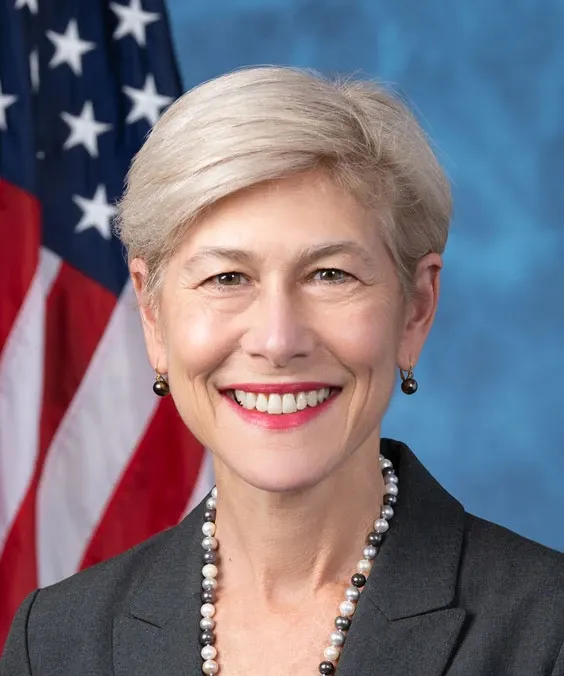
Kay Hagan
The Public Record
Kay Hagan is a former United States Senator from North Carolina, serving from 2009 to 2015. A member of the Democratic Party, she was the first woman to represent North Carolina in the Senate. Hagan focused on issues such as healthcare, education, and economic recovery during her time in office. She was known for her moderate stance and worked across party lines on various initiatives. Hagan lost her re-election bid in 2014 to Republican Thom Tillis, marking the end of her Senate career.
Mar 25, 2014
What can this committee do to support efforts to improve the quality of STEM education being provided to military children?
Mar 25, 2014
We would appreciate your continued support for human resource flexibilities, such as the direct hiring authorities authorized in the NDAA for Fiscal Year 2014.
Mar 25, 2014
What new initiatives are you developing to enhance the quality and diversity of the DOD science, technology, engineering and mathematics (STEM) workforce?
Mar 25, 2014
What is the status of the implementation of these authorities and the delegation of the flexibilities to the laboratory directors?
Mar 10, 2014
I would like to see what steps we can take to strengthen the tie between DOD and HBCUs.
Mar 10, 2014
I think diversity brings so much to the table when we're talking about all areas.
Mar 10, 2014
I want to follow up, Mr. Shaffer. Since fiscal year 2010, the Historically Black Colleges and Universities (HBCU) program has been cut from $67 million down to $36 million.
Mar 10, 2014
If we want to influence the workforce 15 to 20 years from now, we really need to have that outreach in our K through 12 programs.
Mar 10, 2014
It would be, I think, very beneficial for DOD to have a strong focus on our military dependents.
Mar 10, 2014
I think we need to do more in making our workforce as diverse as possible, as representative of America as possible.
Mar 10, 2014
I worry that we're not doing enough to foster diversity within the overall DOD STEM workforce.
Mar 10, 2014
One of the things about this hearing that is exceptional is the fact that before us we have three highly qualified and distinguished women leading large and important technical organizations on behalf of the Nation.
Mar 10, 2014
I want on this subcommittee to do everything we can to support DARPA's efforts at investing in those high-risk, high payoffs.
Mar 10, 2014
I'd like you to address that and then tell me what you can see as a possibility, how we, everybody in this room, can work together to have a focus on our military children in school.
Mar 10, 2014
I think we owe it to the children, we owe it to their parents, to provide the best STEM opportunities possible.
Mar 10, 2014
I want to really look at how we can use STEM activities in education for our military children.
Mar 10, 2014
It seems like as we reduce basic research, though, we're really hurting ourselves in the long-term.
Mar 10, 2014
Ms. Harrington, the fiscal year 2015 request reduces funding for the Cooperative Threat Reduction (CTR) program by roughly 27 percent relative to last year's appropriation.
Politicians like Kay Hagan